Skip to content
Menu

Top 10 Types of Suction and Discharge Hoses

Suction And Discharge Hose systems move water, chemicals, slurry, fuel, and other fluids across demanding industrial environments. Their performance depends on more than diameter or pressure rating. Material compatibility, reinforcement, temperature, flexibility, and coupling design can determine whether a hose works safely or fails early.

Industry research confirms the market’s practical importance. Grand View Research’s Industrial Hose Market analysis reports continued growth, driven by construction, agriculture, mining, oil and gas, and manufacturing applications. MarketsandMarkets also identifies rising demand for durable hoses that handle abrasion, pressure, and corrosive media. These findings support a clear point: hose selection is an engineering decision, not a purchasing shortcut.

This guide examines the top 10 types of Suction And Discharge Hose used in real operating conditions. It considers rubber, PVC, thermoplastic, composite, chemical, food-grade, slurry, petroleum, and layflat designs. Each type serves a different duty. Some remain flexible around tight bends. Others resist vacuum collapse, sharp particles, or aggressive fluids. Small details matter. A steel spiral can preserve suction strength. A smooth inner tube can reduce flow loss. A poorly matched coupling can undermine an otherwise suitable hose.

No hose is universally best. That assumption deserves correction. Manufacturer datasheets, ISO guidance, site experience, and documented pressure tests should guide the final choice. Even experienced teams can overlook sunlight, pulsation, storage damage, or changing fluid temperatures. The following overview provides a practical comparison while recognizing an important limitation: actual service conditions may differ from laboratory ratings.
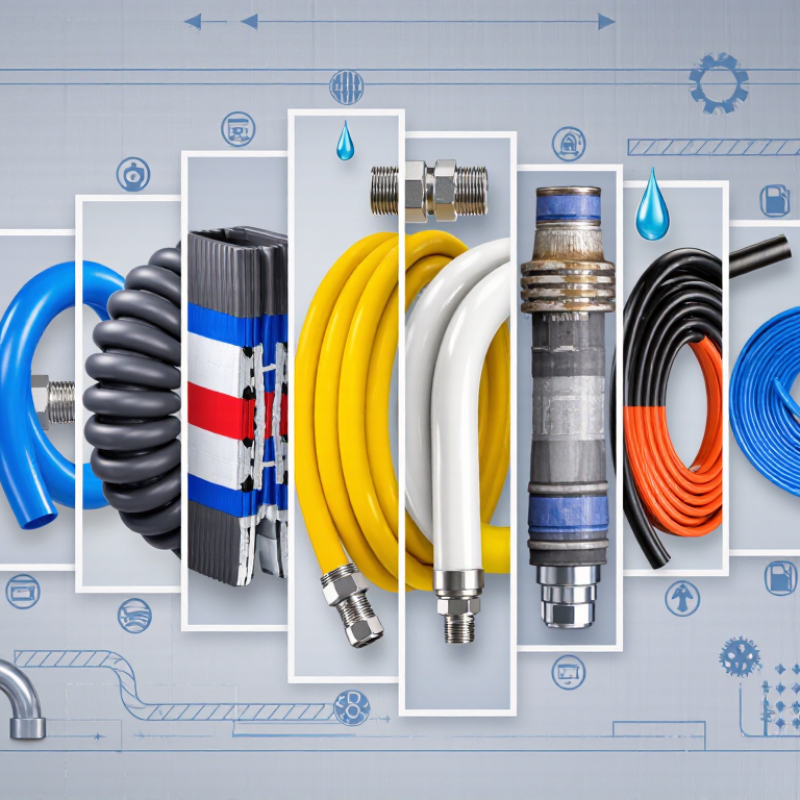
Top 10 Types of Suction and Discharge Hoses

What Suction and Discharge Hoses Are and How They Function

Top 10 Types of Suction and Discharge Hoses

A suction hose draws liquid, slurry, or loose material toward a pump. Its reinforced wall prevents collapse under negative pressure. A discharge hose carries material away from the pump. It must withstand internal pressure, movement, and repeated bending. The difference is important. A delivery hose may burst if used for suction.

Common types include water suction, discharge, oil suction, chemical transfer, food-grade, abrasive slurry, dredging, layflat, hydraulic, and air hoses. Each design uses different tube materials and reinforcement. For example, slurry hoses need abrasion resistance, while chemical hoses require verified fluid compatibility. Temperature also changes performance. A flexible hose can become stiff in cold conditions.

Before installation, technicians check vacuum rating, working pressure, temperature range, diameter, and minimum bend radius. They also inspect fittings, clamps, and gasket surfaces. A loose connection can admit air on the suction side and reduce pump performance. That matters. A hose may look strong but still fail after prolonged exposure to sunlight, oil, or sharp gravel.

A common field mistake is selecting by diameter alone. Length, elevation, flow speed, and pump behavior also affect service life. The safest practice is to compare the hose specification with actual operating conditions, then inspect it regularly for cracks, swelling, soft spots, and crushed sections. Even careful selection is not perfect; real installations often reveal vibration or routing problems that a catalog cannot predict.

Top 10 Types of Suction and Discharge Hoses

Typical maximum working pressure by hose type

Suction hoses are designed to withstand vacuum pressure and prevent collapse, while discharge hoses are engineered to move liquids, slurries, gases, or bulk materials under positive pressure. The values shown represent typical maximum working-pressure ranges for commonly used hose constructions; actual limits depend on diameter, reinforcement, temperature, fluid compatibility, and operating conditions.

How Suction and Discharge Hoses Differ in Design and Application

Top 10 Types of Suction and Discharge Hoses: How Suction and Discharge Hoses Differ in Design and Application

Suction hoses are built to resist collapse under vacuum. Their embedded helix supports the wall when pumps draw water, slurry, oil, or chemicals. Common types include water suction, slurry suction, chemical suction, oil suction, food-grade suction, and dredging hose. Discharge hoses work differently. They carry fluid away from pumps under positive pressure. Layflat, fire, air, chemical discharge, and heavy-duty slurry hoses are typical choices.

The difference is visible inside the hose. Suction designs usually feature rigid spirals, thicker walls, and stronger vacuum ratings. Discharge designs depend more on textile reinforcement, pressure ratings, and bend flexibility. A hose may look suitable but fail after repeated kinking. That detail matters.

Grand View Research valued the global industrial hose market at over 13 billion dollars in 2023. Its 2024 assessment also projected continued growth through 2030, driven by construction, mining, agriculture, and process industries. These figures suggest rising demand, but market growth does not remove selection risks. NAHAD guidance emphasizes checking working pressure, temperature, media compatibility, and coupling security before installation. ISO 1307 provides commonly used hose dimension and tolerance requirements, while EN 12115 addresses chemical-transfer hose performance.

Field inspections often reveal the same error: choosing by diameter alone. A slurry line needs abrasion resistance. A food line needs hygienic construction. A suction line needs verified vacuum performance. I would also question catalog ratings, because temperature and hose length can change real performance. Small details decide service life.

Top 10 Types of Suction and Discharge Hoses - How Suction and Discharge Hoses Differ in Design and Application

No. Hose Type Primary Service Typical Construction Suction or Discharge Role Typical Working Pressure* Temperature Range* Common Applications Key Design Advantage
1 Corrugated PVC Suction Hose Water and light agricultural fluids Flexible PVC tube with integral spiral reinforcement Suction and low-pressure transfer Approximately 2–6 bar About -10°C to +60°C Irrigation, drainage, water transfer, light slurry handling Lightweight, flexible and economical
2 Layflat Discharge Hose Water discharge PVC or polyurethane tube reinforced with textile yarn Discharge only; generally unsuitable for vacuum Approximately 4–20 bar About -20°C to +60°C Flood control, mine dewatering, construction pumping, irrigation Flattens for compact storage and rapid deployment
3 Rubber Water Suction and Discharge Hose Heavy-duty water transfer Synthetic rubber tube with textile plies and embedded helix Both suction and discharge Approximately 5–20 bar About -30°C to +80°C Pump intake and outlet lines, water treatment, marine service Strong vacuum resistance with good abrasion tolerance
4 Oil and Fuel Suction/Discharge Hose Petroleum-based liquids Oil-resistant elastomer tube, textile reinforcement and anti-static cover Both suction and discharge Approximately 5–20 bar About -30°C to +80°C Fuel transfer, oil loading, tank cleaning and petroleum handling Resists swelling, fuel permeation and static-charge buildup
5 Chemical Suction and Discharge Hose Aggressive chemicals Chemical-resistant rubber or thermoplastic lining with reinforced cover and helix Both suction and discharge, subject to chemical compatibility Approximately 5–16 bar About -30°C to +100°C Acid, alkali, solvent and chemical-process transfer Specialized lining protects against chemical attack
6 Food-Grade Suction and Discharge Hose Liquid food and beverage transfer Non-toxic smooth tube with sanitary reinforcement and cleanable cover Both suction and discharge Approximately 5–16 bar About -30°C to +100°C, depending on lining Milk, edible oils, beverages, syrups and liquid ingredients Smooth bore supports hygiene and reduces product retention
7 Concrete Pumping Hose Concrete and cement slurry Thick abrasion-resistant rubber tube with multiple reinforcement layers Primarily discharge Approximately 40–85 bar About -30°C to +80°C Concrete placement, shotcrete and high-pressure grout delivery Withstands severe abrasion and pulsating pressure
8 Sandblast Hose Abrasive media discharge Static-dissipative abrasion-resistant rubber tube with textile reinforcement Discharge only Approximately 7–12 bar About -30°C to +80°C Abrasive blasting, surface preparation and grit conveying Tube resists abrasive wear and helps dissipate static electricity
9 Vacuum Truck Hose Sludge, wastewater and solids Heavy-wall rubber or thermoplastic tube with embedded helix High-vacuum suction and occasional discharge Vacuum to approximately 10–20 bar discharge About -40°C to +80°C Septic service, municipal cleaning, industrial waste removal Thick walls prevent collapse under strong vacuum
10 Hydraulic Suction Hose Hydraulic fluid inlet service Oil-resistant tube with wire helix and textile or wire reinforcement Low-pressure suction; not a high-pressure discharge hose Typically 3–10 bar positive pressure About -40°C to +100°C Hydraulic reservoirs, pump inlet lines and mobile equipment Maintains flow under vacuum while limiting hose collapse

*Pressure and temperature figures are typical service ranges for representative hose constructions. Actual limits vary according to hose diameter, reinforcement, lining, fittings, fluid compatibility, operating temperature and applicable standards. Always verify the manufacturer’s working-pressure and vacuum ratings before use.

Ten Major Types of Suction and Discharge Hoses

Selecting the right hose demands more than matching diameter and pressure. The ten major types serve different materials, temperatures, and flow conditions. Water suction hoses support pumps drawing water from tanks, wells, or drainage areas. Oil suction and discharge hoses manage petroleum-based fluids with suitable inner linings. Chemical hoses require resistance to specific chemicals, not vague “chemical resistance.” Food-grade hoses use smooth, cleanable surfaces for hygienic transfer. Slurry hoses carry water mixed with sand, minerals, or sediment. Abrasive-material hoses need thicker walls because sharp particles cause rapid wear.

Layflat discharge hoses store easily and expand under pressure. Hydraulic hoses handle high-pressure oil in moving machinery. Steam hoses require heat-resistant construction and careful temperature control. Firefighting hoses prioritize fast deployment, flexibility, and dependable coupling security. These categories can overlap. A slurry hose may also need chemical resistance.

During field inspections, I check the fluid, operating temperature, working pressure, bend radius, and connection type. I also examine scuffing near bends and soft spots near couplings. Small defects matter. A hose can appear sound outside while its inner tube is already swelling.

I once treated storage as a minor concern, but sunlight and trapped moisture shortened service life. That assumption needed correction. Clear labeling, regular inspection records, and conservative replacement intervals make hose selection more reliable.

How to Select the Right Hose for Material, Pressure, and Environment

Top 10 Types of Suction and Discharge Hoses

How to Select the Right Hose for Material, Pressure, and Environment

Suction and discharge hoses handle liquids, gases, powders, and abrasive mixtures. Common types serve water, chemicals, oil, food products, air, steam, fuel, slurry, and dry materials. Selection should begin with the conveyed material. Check its temperature, concentration, viscosity, and chemical compatibility. A hose that looks suitable may still fail early.

Pressure ratings need careful attention. Suction service requires a hose with strong vacuum resistance and sufficient flexibility. Discharge service demands a working pressure rating above the system’s maximum pressure. Include pressure surges, pumping cycles, and temperature effects. Never confuse working pressure with burst pressure. That mistake can be costly.

Tips: Measure the hose length accurately. Avoid sharp bends near fittings. Check the inner diameter against flow requirements. Inspect covers for cuts, swelling, flattening, or exposed reinforcement. Confirm coupling compatibility before installation. Review the manufacturer’s technical data and applicable industry requirements. Field conditions often differ from drawings. A hose may face sunlight, mud, vibration, heat, or repeated dragging. These details matter. In practice, choosing a stronger hose is not always better; excessive stiffness can increase handling problems and fitting stress. Keep testing and inspection records, then reassess the selection after real operating experience.

How to Use, Inspect, and Maintain Suction and Discharge Hoses

Suction and discharge hoses serve different jobs, even when they look similar. Suction hoses need strong reinforcement to resist collapse under vacuum. Discharge hoses must tolerate internal pressure, movement, and repeated bending. Before use, confirm the hose type, diameter, pressure rating, temperature range, and fluid compatibility. A mismatch can cause failure quickly.

Inspect both ends carefully. Look for cuts, blisters, flattened sections, exposed reinforcement, loose couplings, and damaged gaskets. Run your hand along the cover, but wear suitable gloves. Never inspect a pressurized hose. Release pressure and drain the line first. I once focused on the middle section and missed a small crack near a coupling. That mistake changed my inspection routine.

Use wide bends and prevent the hose from rubbing against sharp edges or hot surfaces. Support heavy lengths to reduce stress at the connections. During operation, watch for unusual movement, swelling, leaks, or sudden pressure changes. Stop the equipment if any appear. After use, flush compatible residue, drain trapped liquid, and let the hose dry before storage. Keep both ends capped and store the hose away from sunlight, chemicals, and heavy objects. Do not drag it across concrete. Record inspections and replacement dates, though records are often neglected. A clean hose can still be unsafe when its inner wall has weakened.