
Skip to content
Menu

2026 Best CUAV V5+ Flight Controller for Global Buyers?

Choosing the 2026 best Cuav V5+ Flight Controller requires more than comparing prices or processor specifications. Global buyers need dependable navigation, flexible firmware support, clear documentation, and practical after-sales assistance. A controller that performs well on a test bench may behave differently inside a noisy airframe, under vibration, heat, or unstable GPS conditions.

Andrew Tridgell, a leading ArduPilot developer, repeatedly emphasizes a simple engineering principle: “Test, test, and test again.” That advice is highly relevant here. A serious evaluation should examine the CUAV V5+ housing, IMU redundancy, PWM outputs, power-monitoring options, CAN connectivity, and compatibility with ArduPilot or PX4. It should also consider the complete installation. A loose connector, poorly isolated sensor, or inadequate power module can undermine an otherwise capable flight controller.

Real-world details matter. Buyers should check whether the package includes vibration-damping hardware, cables, GPS support, and suitable mounting screws. Firmware versions should be verified before deployment. Regional shipping, warranty response, import procedures, and technical language support also influence ownership. These points are easy to overlook.

There is no universal winner.

The Cuav V5+ Flight Controller may be an excellent choice for mapping aircraft, research platforms, and demanding autonomous builds, but it is not automatically ideal for every drone. Some assumptions require testing. This guide compares its practical strengths, limitations, configuration demands, and global purchasing considerations, helping readers make a safer and more evidence-based decision in 2026.
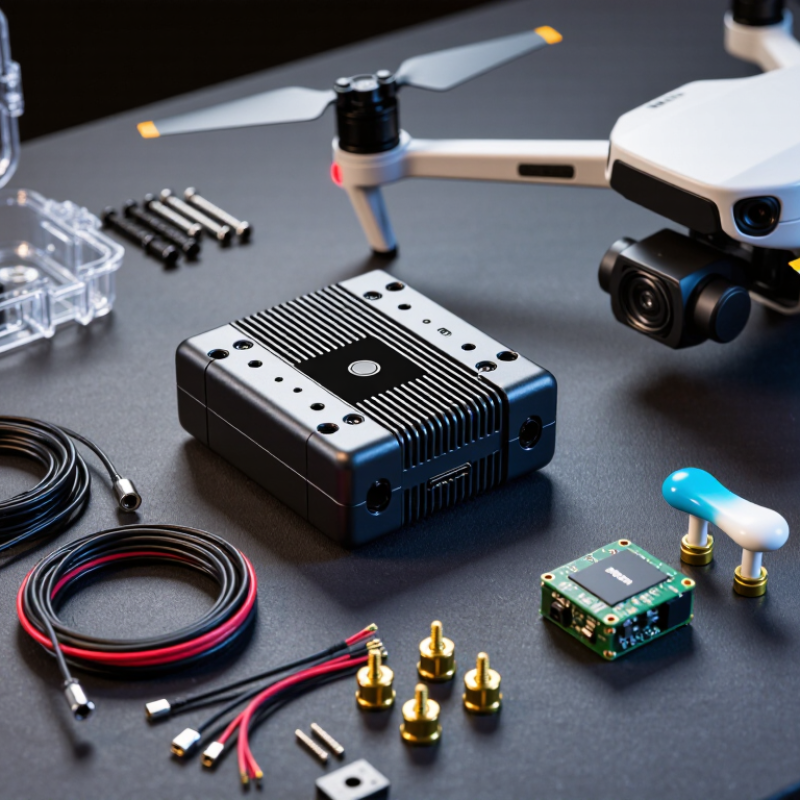
2026 Best CUAV V5+ Flight Controller for Global Buyers?

CUAV V5+ Flight Controller: Overview and Core Specifications

The CUAV V5+ flight controller is a professional FMUv5-class platform for multirotor and fixed-wing systems. It uses a 32-bit STM32F7 processor, with 2 MB of flash memory and 512 KB of RAM. This capacity supports modern autopilot firmware and detailed flight logs. The board also includes redundant inertial sensors and dual barometers. These features help maintain stable attitude and altitude data when one sensor becomes unreliable.

Its interface layout suits larger airframes. Users can access multiple serial ports, CAN connections, I2C ports, PWM outputs, and dedicated power inputs. The controller supports external GPS, compass, telemetry radios, airspeed sensors, and digital peripherals. A vibration-isolated mounting design can reduce mechanical noise, but it cannot fix an unbalanced propeller or a weak frame. Check the mounting direction carefully. A small installation error may produce confusing flight behavior.

During bench testing, inspect every connector and confirm regulated voltage before connecting batteries. Keep high-current power wiring separate from sensitive signal cables where possible. Sensor calibration should follow the installed firmware version, not an old tutorial. The published specifications are useful, yet connector revisions and accessory compatibility can change. I would verify the current manual before purchase. That extra step feels slow, but it prevents avoidable integration problems.

2026 Best CUAV V5+ Flight Controller for Global Buyers? - CUAV V5+ Flight Controller: Overview and Core Specifications

Specification Area Core Specification Buyer-Relevant Information
Flight-Control Class Professional autopilot for multirotor, fixed-wing, VTOL, rover, and boat platforms Suitable for research, mapping, inspection, industrial, and advanced hobby applications
Main Processor 32-bit STM32F7-series microcontroller, up to 216 MHz Provides sufficient processing capacity for navigation, stabilization, sensor fusion, and mission execution
Memory Approximately 2 MB of flash memory and 512 KB of SRAM Supports feature-rich firmware, parameter storage, and future software updates
Inertial Sensors Multiple independent accelerometer and gyroscope units Redundant inertial measurement improves reliability and enables sensor consistency checks
Barometric Altitude Dual barometric pressure sensors Provides altitude estimation and adds sensor redundancy for flight-control safety
Navigation Support External satellite-navigation modules supported through serial interfaces Compatible with common global navigation systems when paired with an appropriate receiver
PWM Outputs Up to 8 PWM output channels Supports motors, servos, landing gear, camera triggers, and other actuator functions
Serial Interfaces Multiple UART ports, including high-speed serial communication support Allows connection of telemetry radios, receivers, navigation systems, companion computers, and sensors
CAN Connectivity Two CAN bus interfaces Useful for distributed peripherals, digital motor systems, and redundant navigation equipment
Expansion Interfaces I²C, SPI, ADC, USB, and dedicated peripheral connections Supports airspeed sensors, external compasses, rangefinders, power monitors, and other modules
Power Input Regulated 5 V-class autopilot power input; use a compatible power module Buyers should verify voltage, current capacity, connector type, and power-monitor compatibility before installation
Operating Temperature Approximately -40°C to +85°C component operating range Suitable for a broad range of outdoor operating environments when correctly enclosed and ventilated
Physical Format Compact flight-controller board with vibration-isolation mounting support Check frame clearance, mounting-hole spacing, cable routing, and enclosure space before purchase
Firmware Ecosystem Open autopilot firmware ecosystem with configurable vehicle profiles Offers flexible setup for different airframes, missions, sensors, and control architectures
Global-Buyer Checklist Confirm firmware compatibility, included accessories, connector standards, shipping rules, and local import requirements The controller may require separate power, navigation, telemetry, receiver, and mounting accessories

Note: Final installation requirements may vary by vehicle type, firmware version, accessory selection, and regional compliance conditions.

Key Features and Compatibility for Global UAV Applications

2026 Best V5+ Flight Controller for Global Buyers?

For global UAV applications, a V5+ flight controller should be judged by compatibility, not processor speed alone. It needs reliable sensor redundancy, protected power inputs, and clear expansion ports. Common interfaces include CAN, UART, I2C, PWM, and Ethernet. These support GNSS, airspeed sensors, telemetry radios, payload triggers, and companion computers. A 2024 Drone Industry Insights report values commercial drone services at more than 30 billion dollars worldwide. That scale increases demand for maintainable, interoperable control hardware.

Firmware support is equally important. Check vehicle types, supported airframes, parameter documentation, and update procedures before purchase. A controller may fit a fixed-wing aircraft but require extra configuration for VTOL operation. Confirm voltage ranges with a multimeter, not only a product page. The 2024 World Bank digital agriculture research highlights the need for dependable data and repeatable field operations. That suggests logging, time synchronization, and failsafe testing deserve practical attention. One assumption needs challenge: more ports do not automatically mean better mission reliability.

Tips: Keep a wiring map inside the aircraft. Test every sensor separately. Use shielded cables near high-current power lines. Store calibration files with each airframe. For international teams, select firmware with clear English documentation and version history. Also check connector availability locally. A small adapter can delay deployment for weeks. Review export, radio-frequency, and airspace rules in each operating country before flight.

2026 Best Flight Controller for Global Buyers?

Key Features and Compatibility for Global UAV Applications

This chart summarizes core hardware interface counts commonly specified for a professional FMUv5-class flight controller. Actual compatibility depends on firmware configuration, connected peripherals, airframe design, and regional radio regulations.

How to Evaluate CUAV V5+ Performance and Reliability

How to Evaluate V5+ Flight Controller Performance and Reliability

A V5+ class flight controller should be judged through repeatable tests, not impressive specifications. Check sensor health, processor load, vibration levels, and GPS recovery in flight logs. Test cold starts, rapid throttle changes, and sudden power interruptions. The FAA’s FY2024–44 forecast expects commercial drone operations to expand sharply through 2029. That growth increases pressure on dependable hardware and clear maintenance records. Performance must remain stable after many flight cycles.

My first bench test looked excellent. It ignored vibration, heat, and cable movement. That was a mistake. Mount the controller on the intended frame, then inspect vibration data during hovering and aggressive turns. Repeat the test at different battery voltages. Record sensor errors, reboot events, temperature, and recovery time. EASA’s Annual Safety Review 2024 repeatedly highlights technical failures and loss of control as important safety concerns. Therefore, evaluate failsafes under controlled conditions, including lost positioning data and communication interruptions. Do not trust one successful flight.

Tips: Keep original logs, firmware versions, wiring photos, and test dates. Use a thermal camera when possible. Check connectors after every hard landing. Compare three repeated flights, not one perfect result. Leave room for doubt; unexplained data deserves another test.

Installation, Configuration, and Firmware Setup

Mount the flight controller on a firm, vibration-damping plate. Keep the arrow aligned with the aircraft’s forward direction. Use soft mounting washers, but avoid excessive movement. A loose controller can create unstable sensor readings. I once tightened the screws too much and transferred vibration into the frame.

Connect the power module, receiver, GPS, and motor outputs according to the current wiring diagram. Check polarity with a multimeter before applying power. Remove all propellers during every bench test. Install the approved firmware through the ground-control application. Select the correct board target, then verify the firmware version and download checksum. Do not interrupt power during flashing. Afterward, restart the controller and confirm that sensors, battery voltage, and connection status appear normally. Firmware setup is not finished until the vehicle type and output mapping match the airframe.

Tips: Use a data-capable USB cable, not a charging-only cable. Record each parameter change in a simple log. Calibrate on a level, stable surface, away from metal tools. Check motor order with low power and no propellers. If the compass heading looks wrong, pause and inspect its mounting position. A configuration that works on one frame may fail on another. That part deserves a second look.

Buying Considerations for International Users in 2026

For international buyers in 2026, the best flight controller is not always the newest model. Compatibility matters more than impressive specifications. Check processor performance, sensor redundancy, supported firmware, and documented interfaces before comparing prices.

Regional regulations deserve careful attention. Confirm that the controller works with permitted radio equipment in your operating country. Review import rules, warranty limits, customs charges, and local repair options. A lower purchase price can become expensive after taxes and return shipping. Also inspect connector types, power requirements, mounting dimensions, and cable availability. Small differences can delay a project for weeks.

Reliable documentation is a strong buying signal. Look for clear wiring diagrams, firmware instructions, update records, and responsive technical support. During bench testing, use a regulated power source and inspect sensor readings before installing the unit. Keep spare cables and vibration-damping mounts nearby. They are easy to overlook.

I would not trust a product based only on community praise. Reviews can be outdated or region-specific. My own buying process would include a short compatibility checklist and a written support question before payment. That extra step feels slow. It can prevent a costly mistake. Also, no controller is perfect; firmware updates may introduce new problems, so maintain a tested version and record every configuration change.