Skip to content
Menu

2026 Top MBBR System for Wastewater Treatment

Wastewater plants face changing flows, tighter discharge targets, and limited room for expansion. A Mbbr System For Wastewater Treatment can support biological treatment by holding biofilm on moving plastic carriers. Air keeps the carriers in motion and supplies oxygen. The process can fit upgrades where adding large tanks is difficult. Small details matter.

This 2026 guide examines leading MBBR system options through practical criteria: treatment capacity, carrier design, aeration needs, controls, maintenance access, and supplier support. It also considers how influent strength, temperature, and operating schedules affect results. A compact reactor may look efficient on a drawing, yet poor mixing or clogged screens can undermine performance. That takes testing. Selection should rely on site data, pilot results where appropriate, and clear performance guarantees—not a product label alone.

There is no universal winner. A municipal plant handling steady flows has different needs from an industrial facility with sharp load swings. Buyers should check the carrier fill ratio, blower energy demand, tank compatibility, and plans for routine inspection. They should also ask how the system performs during peak loads and what happens when equipment needs service. No system is magic. Even a well-designed unit needs trained operators and consistent monitoring. The sections ahead compare key technologies and explain which questions can help narrow the field. Some trade-offs remain, and that is worth acknowledging before a purchase decision.
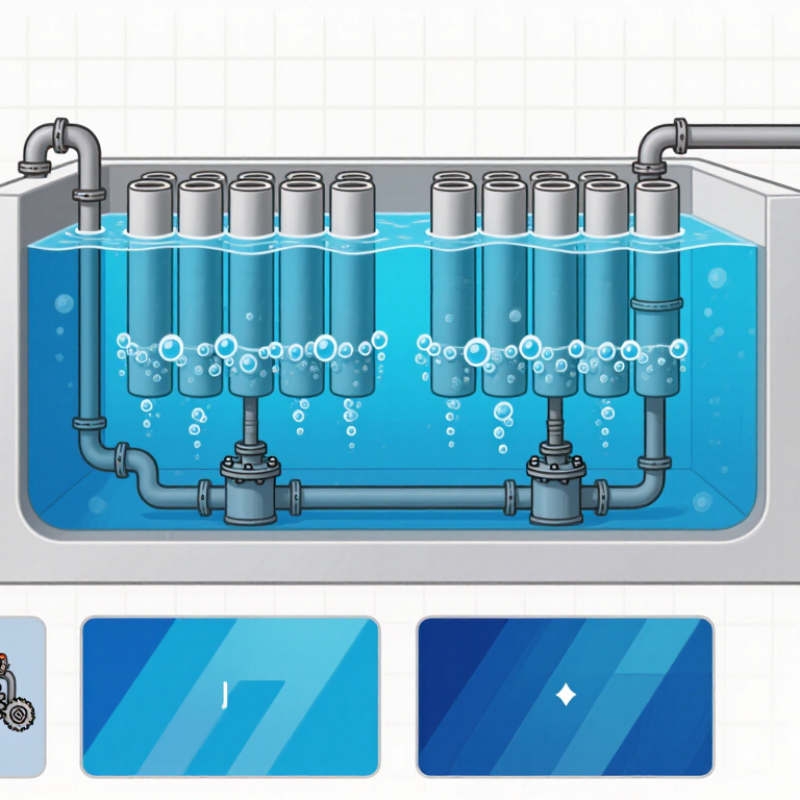
2026 Top MBBR System for Wastewater Treatment

What Is an MBBR System for Wastewater Treatment?

2026 Top MBBR System for Wastewater Treatment

What Is an MBBR System for Wastewater Treatment?

A moving bed biofilm reactor, or MBBR, treats wastewater using small plastic carriers that move freely inside a tank. Microorganisms grow on the carriers’ protected surfaces and break down organic matter as wastewater passes around them. Air diffusers or mechanical mixers keep the media moving. The tank looks simple, but its performance depends on the right balance of airflow, carrier movement, and biofilm growth.

Unlike a conventional activated-sludge process, an MBBR retains much of its active biomass on the media. This can help operators increase treatment capacity within existing tanks, without relying on a large return-sludge flow. Screens at the tank outlet keep carriers inside, while downstream clarification or filtration may still be needed. It is not a one-tank fix. Poor mixing can leave media crowded in corners, and excess biofilm may need to shed before treatment stabilizes.

The need for dependable treatment is substantial. The WHO and UN-Habitat 2024 wastewater report estimates that 42% of household wastewater was not safely treated before discharge in 2022. MBBR is one process option, not a guarantee of safe discharge; results depend on influent quality, temperature, loading, and maintenance. A site assessment and pilot testing can reveal issues that equipment specifications alone miss. Real tanks are less tidy than diagrams.

How MBBR Technology Treats Wastewater

MBBR treats wastewater by growing microorganisms on small plastic carriers that move through an aerated tank. Wastewater flows around them, while the attached biofilm consumes biodegradable pollutants and can convert ammonia into nitrate. The carriers keep biomass inside the reactor, even as excess growth sheds from their surfaces and leaves with the treated water. Small carriers. Busy biology. UN-Water’s 2024 wastewater update estimates that 42% of household wastewater worldwide was not safely treated in 2022, underscoring the need for reliable treatment processes.

Carrier design matters. Ødegaard’s 2006 review describes MBBR media with protected surface areas around 500 square metres per cubic metre, although actual usable area varies by shape and operating conditions. Air bubbles keep carriers moving and supply oxygen; screens at the tank outlet stop the media from escaping. Operators must also watch airflow, loading, and biofilm thickness. Too little oxygen can limit treatment, while poor mixing may leave quiet pockets in the tank. The concept is compact, but not effortless. Published removal figures cannot be transferred blindly between sites: wastewater strength, temperature, and pretreatment all change results. A pilot test is often more revealing than a tidy design estimate.

Key Components and Biofilm Development in MBBR Systems

2026 Top MBBR System for Wastewater Treatment

Key Components and Biofilm Development in MBBR Systems

A moving bed biofilm reactor depends on more than its plastic carriers. The key components are the tank, carrier media, aeration grid or mixers, and outlet screens that keep media inside. Each carrier offers protected surfaces where microorganisms attach and grow. Screens matter: a blocked screen can restrict flow and disrupt treatment. Practical designs also leave room to inspect and clean these parts.

Biofilm develops in layers. The outer surface receives oxygen and food first; deeper zones may support slower-growing organisms. Aeration or mixing keeps carriers moving, while contact with other media trims excess growth. Some scouring is useful. Too much can strip the biofilm; too little may let it thicken unevenly. The U.S. EPA’s 2010 Nutrient Control Design Manual uses a temperature coefficient of 1.072 for nitrification kinetics. In that model, a 10°C temperature drop roughly halves the rate. That is the neat model, not the whole tank: loading, dissolved oxygen, and carrier movement also affect performance. Operators should track these conditions and verify results with site data. A clean-looking carrier is not always a healthy one.

How to Evaluate Top MBBR Systems in 2026

2026 Top MBBR System for Wastewater Treatment
How to Evaluate Top MBBR Systems in 2026

A sound MBBR evaluation starts with wastewater data, not a product brochure. Record average and peak flows, temperature swings, and influent BOD, ammonia, and suspended solids. Ask how the proposed system handles your actual discharge targets, including seasonal changes. One design rarely fits every site. Carrier fill ratio, tank volume, and aeration should match the treatment duty rather than a generic rule of thumb. Check that retention screens can hold the carriers while allowing water to pass freely. Small details matter.

Request operating data from installations with similar wastewater and loads. Look for results across several months, not one favorable sample. Compare energy use, media replacement expectations, cleaning access, and the time operators need for routine checks. Ask how dissolved oxygen is monitored and how the system responds to blower outages or unusual inflow. A neat spreadsheet can still miss awkward access or noisy equipment. Visit a comparable plant if possible, and speak with the people who maintain it. Pilot testing may be worthwhile when influent quality is uncertain, though it adds time and cost. Be cautious with guaranteed figures that lack test conditions, sampling methods, and clear assumptions.

2026 Top MBBR System for Wastewater Treatment - How to Evaluate Top MBBR Systems in 2026
Evaluation Dimension What to Check Practical Benchmark or Design Consideration Evidence to Request
Treatment Objective Confirm whether the system is designed for carbon removal, nitrification, denitrification, or a combination of these processes. Performance depends on wastewater characteristics, temperature, loading, aeration, and process configuration; there is no single removal-rate benchmark that applies to every MBBR installation. Design basis showing influent and target effluent concentrations, design flows, temperature assumptions, and process-stage configuration.
Carrier Fill Fraction Check the proportion of reactor volume occupied by moving carriers and whether the tank allows adequate mixing and circulation. Fill fractions commonly fall within approximately 30%–60% of reactor volume, although the appropriate value is project-specific. Higher fill fractions require careful hydraulic and aeration review. Carrier volume calculation, reactor layout, mixing analysis, and confirmation that the proposed operating fill is within the carrier supplier’s design limits.
Carrier Protected Surface Area Compare protected surface area using the same measurement basis, such as area per cubic metre of carrier. Published values vary with carrier geometry and with how protected or effective surface area is defined. Do not compare area figures unless their test methods and definitions match. Technical data sheet stating the measurement method, units, usable area, and assumptions behind the quoted value.
Organic and Ammonia Loading Evaluate design loads per reactor volume and per unit of effective carrier area, including peak and seasonal conditions. Loading limits are specific to the treatment objective and wastewater. Nitrification capacity is particularly sensitive to temperature, dissolved oxygen, alkalinity, and inhibitory substances. Loading calculations for average and peak conditions, process assumptions, and any pilot or reference-plant data for comparable wastewater.
Aeration and Dissolved Oxygen Check oxygen demand, air distribution, mixing, blower turndown, and dissolved-oxygen monitoring locations. Aerobic treatment commonly uses a dissolved-oxygen operating target around 2 mg/L or higher, but the required setpoint depends on the process, load, and reactor conditions. Anoxic zones require a different operating strategy. Oxygen-transfer calculations, diffuser layout, blower duty and standby details, control sequence, and operating setpoints.
Carrier Retention Screens Verify that screens retain the carriers without causing excessive headloss, clogging, or restricted flow. Screen openings must be smaller than the carrier’s smallest relevant dimension. Screen area and hydraulic capacity should be checked at peak flow and with realistic fouling allowances. Screen aperture and open-area data, hydraulic calculations, cleaning method, and access provisions for inspection and maintenance.
Hydraulics and Mixing Assess short-circuiting, dead zones, carrier movement, inlet and outlet arrangement, and flow distribution between tanks. Carriers should remain well distributed throughout the active reactor volume without accumulating at screens or corners. Tank and baffle drawings, mixing or circulation analysis, and commissioning procedures for confirming carrier movement.
Energy Use Compare aeration and pumping demand at the same flow, treatment target, and operating conditions. Energy consumption is site-specific. Compare energy per treated volume or pollutant removed, and include blower control, diffuser losses, and auxiliary equipment. Energy calculations with stated assumptions, equipment power ratings, expected operating hours, and any measured data from comparable installations.
Temperature and Seasonal Performance Review the minimum wastewater temperature and how seasonal changes affect biological reaction rates and capacity. Lower temperatures can reduce biological treatment rates, particularly for nitrification. Design capacity should reflect the expected cold-season temperature rather than annual average conditions alone. Seasonal design calculations, temperature assumptions, and contingency measures for cold-weather operation.
Materials and Durability Check tank, carrier, screen, diffuser, and pipe materials for compatibility with wastewater chemistry and operating conditions. Material selection should account for corrosion, abrasion, ultraviolet exposure where relevant, and the chemical composition of the wastewater. Material specifications, applicable test or conformity documents, warranty terms, and recommended inspection intervals.
Operation and Maintenance Assess access for screen cleaning, diffuser servicing, carrier inspection, sampling, and equipment replacement. A practical design should provide safe access and a clear procedure for routine maintenance without unnecessary process interruption. Operation and maintenance manual, maintenance schedule, spare-parts list, safety provisions, and operator training plan.
Expandability and Retrofit Fit For upgrades, confirm available tank volume, structural capacity, existing aeration capacity, hydraulic constraints, and downstream process compatibility. Carrier addition alone does not guarantee higher treatment capacity; oxygen supply, screening, hydraulics, and downstream solids handling may also need modification. Site survey, retrofit design drawings, structural review, interface schedule, and a phased commissioning plan.
Performance Verification Define how treatment performance will be measured during commissioning and ongoing operation. Acceptance criteria should specify sampling points, test methods, operating period, flow and loading conditions, and any allowable performance variability. Commissioning protocol, monitoring plan, laboratory methods, and clearly defined performance guarantees and exclusions.

Applications, Benefits, and Operational Considerations of MBBR

Moving Bed Biofilm Reactor (MBBR) systems support wastewater treatment by growing microorganisms on carriers that circulate inside an aeration tank. They are used in municipal plants and industries such as food processing, where organic loads can change during the day. The moving carriers provide protected surface area for biofilm growth without requiring a fixed bed. This can increase treatment capacity within an existing tank footprint. A retrofit may still require changes to aeration, screens, or pumping. Compact, but not effortless.

Operational results depend on wastewater strength, temperature, oxygen supply, and carrier movement. Operators should monitor dissolved oxygen, flow, treatment performance, and screen condition. A blocked retention screen can restrict circulation or allow carriers to escape. During startup, biofilms need time to develop, so performance may not stabilize immediately. Too little aeration can limit oxygen transfer; excessive aeration wastes energy and may disturb process balance. Carrier fill levels also matter: more media does not automatically mean better treatment. Not magic.

Before selecting a system, assess load variation, tank geometry, and downstream treatment needs. Routine inspections and reliable operating records help identify changes before they affect effluent quality. Site conditions differ, so design assumptions should be checked against actual wastewater data. Field data matters.

2026 Top MBBR System for Wastewater Treatment

Indicative pollutant-removal ranges for Moving Bed Biofilm Reactor (MBBR) applications

MBBR systems are used for carbon removal, nitrification, and—in suitable configurations—denitrification. Actual removal depends on influent characteristics, temperature, loading, dissolved oxygen, carrier fill, and reactor stages. Total nitrogen removal generally requires an anoxic stage; the ranges shown are indicative, not guaranteed.