7 Best Pan Tilt Video Platforms for Global Buyers
Choosing among the 7 Best Pan Tilt Video Platforms for Global Buyers requires more than comparing camera resolution. A reliable Pan Tilt Video Platform must move smoothly, preserve detail during zoom, and remain stable across different networks. Buyers should examine control latency, optical zoom, night performance, weather protection, storage options, and cybersecurity practices. Small delays matter. A security operator may miss a vehicle, doorway, or moving person within seconds.
John Honovich, founder of IPVM and a respected video surveillance analyst, offers a practical warning: “Specifications alone cannot predict real-world performance.” That view remains important when comparing global platforms. A product may advertise 4K imaging, but weak software can make daily monitoring frustrating. A low-cost system may also become expensive after licensing, installation, maintenance, and regional support are added.
This guide evaluates seven platforms through real purchasing concerns. It considers cloud access, local recording, mobile control, API support, ONVIF compatibility, and integration with existing security systems. It also reviews service coverage across regions, because technical help should not depend on one time zone. Weather ratings deserve attention too. Rain, dust, heat, and unstable power can expose hidden weaknesses.
No ranking can fit every buyer. A retail chain needs different controls than a port, campus, or remote warehouse. Some conclusions may remain debatable. That is intentional. Buyers should test live video, pan-and-tilt response, and playback quality before committing. A polished demonstration is not enough. Real conditions tell the harder truth.
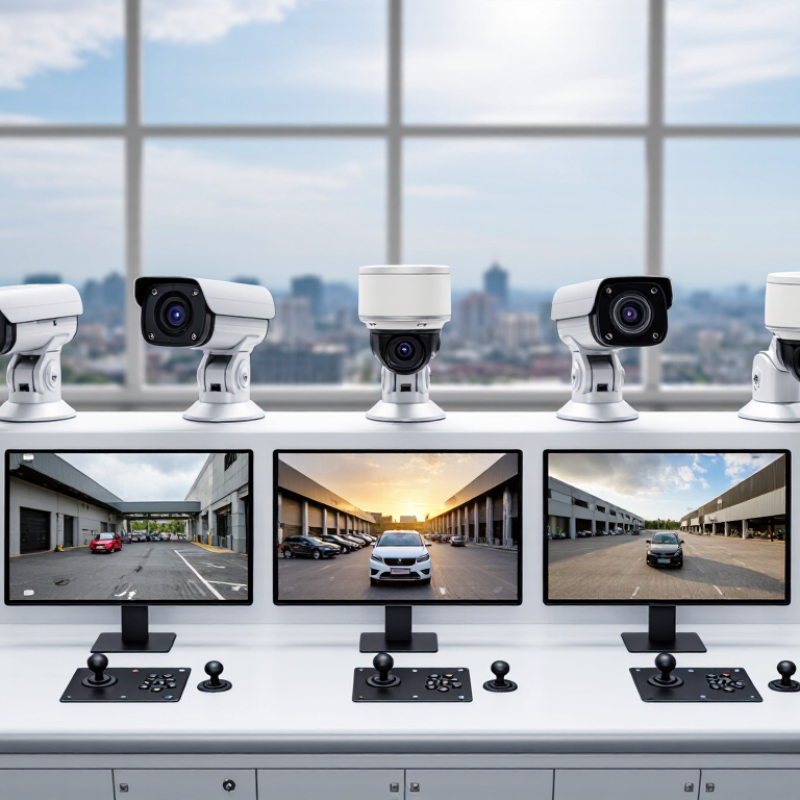
What Pan-Tilt Video Platforms Are and How They Work
7 Best Pan Tilt Video Platforms for Global Buyers
What Pan-Tilt Video Platforms Are and How They Work
A pan-tilt video platform combines a camera, motorized movement, control software, and network access. Pan moves the lens horizontally. Tilt moves it vertically. Some systems add optical zoom for closer views. Operators can control movement through a browser, mobile application, or security console.
Inside the unit, motors follow commands from a controller. Position sensors report the camera’s angle. Software can save preset views, schedule patrol routes, and trigger movement after detected activity. A practical test matters here. A camera may cover a wide courtyard, yet lose a person behind a tree or vehicle. No preset is perfect. Lighting, wind, network delay, and mounting height still affect results.
Industry data supports this growing category. Grand View Research reported that the global video surveillance market reached about USD 53.7 billion in 2022. It also projected a 12.8% compound annual growth rate from 2023 to 2030. MarketsandMarkets has separately identified cloud-managed video as a major growth area. These figures suggest strong demand, but buyers should not treat growth as proof of suitability.
Tips: Check the platform’s horizontal and vertical ranges before purchase. Test movement latency across the target region. Confirm low-light performance with real night footage. Review storage, user permissions, maintenance access, and export quality. Ask for independent test results, not only manufacturer claims.
Seven Leading Pan-Tilt Video Platforms for International Use
7 Best Pan Tilt Video Platforms for Global Buyers
Seven Leading Pan-Tilt Video Platforms for International Use
International buyers need more than smooth pan, tilt, and zoom control. They need reliable video across different networks, climates, and operating standards. Seven leading platform types deserve attention: cloud-managed PTZ, edge-AI PTZ, open-standard systems, hybrid video management, mobile-site platforms, thermal-visible platforms, and rugged industrial PTZ. Each serves a different field reality.
Cloud-managed systems simplify remote access and firmware updates. Edge-AI platforms reduce bandwidth by analyzing movement locally. Open-standard systems support broader equipment choices through common interfaces. Hybrid platforms keep critical footage onsite while enabling secure remote review. Mobile platforms suit temporary construction or emergency-response sites. Thermal-visible platforms improve detection in darkness, while rugged systems handle dust, rain, and vibration. MarketsandMarkets reported that the global video surveillance market could reach USD 83.1 billion by 2028, driven partly by analytics and networked monitoring.
Selection should begin with field testing, not glossy specifications. Check joystick latency, night detail, tracking accuracy, encryption, storage ownership, and recovery after network loss. A 30-second delay can matter during a perimeter event. According to the U.S. National Institute of Standards and Technology, cybersecurity depends on continuous identification, protection, detection, response, and recovery. That framework is useful for international procurement. No platform is perfect. Cloud access may increase subscription dependence, while local systems require stronger maintenance skills. I would also question claimed detection ranges; weather, lens choice, and operator training can change results sharply.
7 Best Pan Tilt Video Platforms for Global Buyers
Seven Leading Pan-Tilt Video Platforms for International Use. This neutral comparison uses common video-resolution benchmarks to help buyers evaluate image-detail requirements across different pan-tilt deployments.
Pixel counts are calculated from standard frame dimensions. Higher resolution can improve scene detail, but it may also require greater storage capacity, network bandwidth, and processing power.
How to Choose the Right Pan-Tilt Video Platform for Your Needs
Choosing among the seven best pan-tilt video platforms starts with the operating environment, not the camera count. A warehouse with weak uplink needs local recording and stable reconnection. A retail chain may need centralized viewing, user permissions, and audit trails. According to MarketsandMarkets’ 2024 report, the global video surveillance market could grow from about USD 52 billion in 2024 to nearly USD 83 billion by 2029. That growth makes platform quality more important than attractive specifications.
Check movement accuracy, delay, and night performance during a real trial. A useful platform should support ONVIF profiles, secure streaming, role-based access, and exportable evidence. Test a camera at the farthest site, not beside the router. Look for automatic recovery after power or network loss. Grand View Research projects strong growth in cloud-based video surveillance through 2030, but cloud dependence can increase bandwidth costs and outage exposure. Local failover matters.
Security claims require evidence. Ask for encryption details, update policies, penetration-test summaries, and data-retention controls. Confirm whether data can remain within required regions. The NIST Cybersecurity Framework recommends identifying assets, protecting access, detecting incidents, responding, and recovering; use these stages when comparing platforms. No scorecard is perfect. I would still reserve a budget for storage, installation, and training, because these costs are often missed. A cheap subscription can become expensive after expansion. Pan-tilt control also needs practical limits: slow presets, weak zoom, or crowded user access can frustrate operators quickly.
