
Skip to content
Menu

7 Best Vibratory Dryers for Global Buyers?

Choosing the right Vibratory Dryer is rarely a simple matter of comparing prices or motor ratings. Global buyers must examine material behavior, moisture targets, throughput, energy use, and local service support. A fine powder may fluidize smoothly, while a sticky granule can bridge, cake, or block the discharge. Small details matter. A poorly matched dryer can waste heat, increase cleaning time, and damage sensitive products.

Professor Arun S. Mujumdar, a leading drying-technology authority, has stated, “Drying is one of the most energy-intensive unit operations in industry.” That warning remains practical on the factory floor. Operators often notice it through rising utility bills, uneven outlet moisture, or a hot exhaust carrying valuable product fines. These signals deserve careful investigation, not quick assumptions.

This guide reviews seven Vibratory Dryer options for international buyers, using practical criteria such as drying uniformity, vibration control, residence-time adjustment, hygienic design, and maintenance access. It also considers different production realities, from compact food-processing lines to demanding chemical and mineral applications. Some models may appear powerful but perform poorly with fragile materials. Others may offer excellent efficiency yet require stronger installation support than expected. The ranking is therefore not absolute. Buyer priorities differ. A dryer that suits one plant may disappoint another. Readers should verify test data, contact materials, warranty terms, and after-sales coverage before making a final decision. Mistakes happen. Good evaluation reduces their cost.
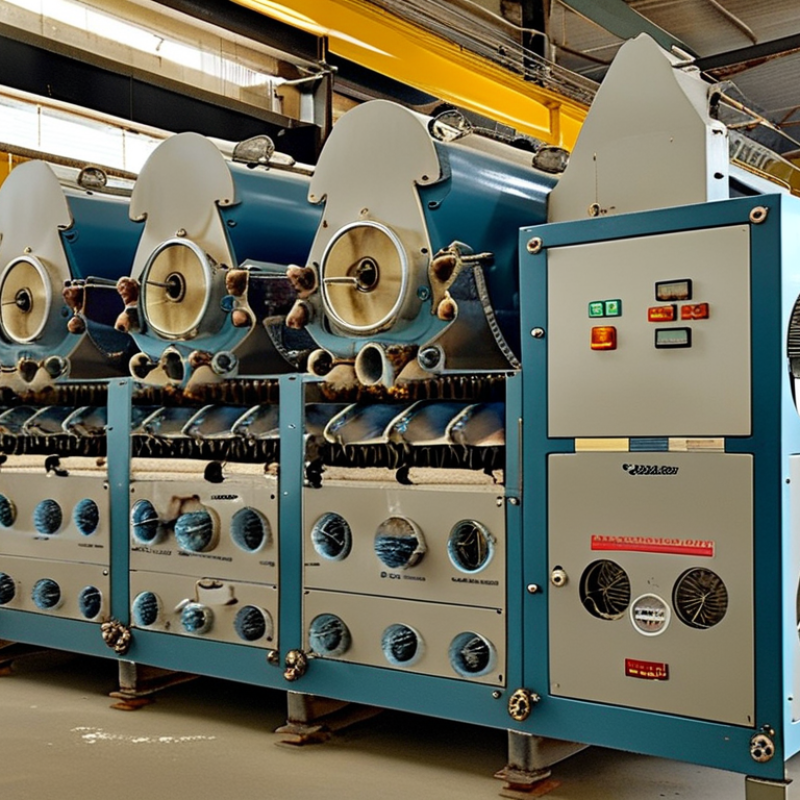
7 Best Vibratory Dryers for Global Buyers?

What Is a Vibratory Dryer and How Does It Work?

A vibratory dryer is an industrial machine that removes moisture from solid materials. It uses controlled vibration, heated air, and continuous material movement. Unlike a rotating drum, it keeps products on a vibrating perforated surface. The material moves forward while air passes around each particle. This creates steady contact between hot air and wet surfaces.

Inside the chamber, vibration separates material layers and reduces clumping. Heated air carries moisture away through an exhaust system. Operators adjust temperature, airflow, vibration intensity, and residence time. Lower temperatures protect heat-sensitive products, while stronger airflow can shorten drying time. Airflow must remain balanced. Too much heat may damage the product.

In real plants, performance depends on more than machine settings. A damp feed may enter unevenly, causing wet pockets at the discharge. Particle size, surface moisture, and feeding speed can change results. The dryer may need careful adjustment during production. That variation is easy to underestimate. Regular checks of moisture levels, bearings, screens, and insulation support reliable operation. I would test a small batch before full production. Small trials expose problems early. They also reveal whether the selected dryer matches the material. Access doors should allow safe cleaning, although some designs make maintenance less convenient.

Key Factors for Comparing Vibratory Dryers Worldwide

Comparing the 7 Best Vibratory Dryers for Global Buyers requires more than checking price or appearance. Start with measurable performance: feed rate, moisture reduction, residence time, heat-transfer area, and energy use per kilogram of evaporated water. The U.S. Department of Energy’s Industrial Decarbonization Roadmap (2022) estimates that process heating represents about 51% of manufacturing energy use. This makes thermal efficiency a serious purchasing factor. The IEA’s Energy Efficiency 2023 report also places industry near 37% of global final energy demand. A dryer’s small efficiency difference can become a large operating cost.

Global buyers should compare vibration amplitude, frequency control, airflow, and product temperature stability. Ask for test data using your actual material, not only laboratory powder. Check whether the machine handles sticky feed, uneven moisture, or fragile particles without excessive breakage. Stainless-steel contact surfaces, inspection access, dust containment, and cleaning time matter in food, chemical, and pharmaceutical facilities. Electrical compatibility also needs attention, including voltage, frequency, grounding, and local certification requirements. A perfect comparison is impossible.

Tips: Request a witnessed trial. Record inlet and outlet moisture, feed rate, exhaust temperature, and power consumption. Compare energy per kilogram of water removed. Review three operating conditions, not one. I would also question unusually high capacity claims; they may assume ideal feed conditions. Include spare-part lead time, remote support, noise data, and maintenance labor in the total-cost model. The best dryer is rarely the cheapest unit. It is the one that remains stable after real production becomes messy.

Seven Leading Vibratory Dryer Options for Global Buyers

Seven Leading Vibratory Dryer Options for Global Buyers

Global buyers can compare seven practical vibratory dryer designs for different production needs. A continuous vibrating fluid-bed dryer suits steady powder flows and even heat transfer. A batch vibratory dryer offers closer control for changing product recipes. An indirect vibrating dryer protects sensitive materials from direct hot air. A vacuum vibratory dryer supports lower-temperature processing and helps retain product quality. An inert-gas model can reduce oxidation during controlled drying. A vibrating tray dryer works well for smaller batches and careful observation. A combined vibrating dryer and cooler can shorten handling time after drying. Each option has limits. Real factory conditions may reveal them.

Tips: Request test data using your material, not a substitute powder. Check moisture uniformity at several discharge points. Confirm contact materials, insulation, noise levels, and cleaning access. Ask about voltage, documentation, spare parts, and service response in your region. A compact design may save floor space but restrict maintenance access. This detail is often missed.

Experienced buyers should compare residence time, airflow, vibration amplitude, temperature range, and energy use together. Product fragility matters too. Excessive vibration can create dust or break particles. Insufficient movement can leave wet zones. Review hygienic design and applicable local safety requirements before purchase. A reliable supplier should explain assumptions, test methods, and expected performance clearly. Do not accept perfect efficiency claims without operating conditions. Results can vary.

How to Match Dryer Features With Material and Production Needs

Choosing among the 7 best vibratory dryers for global buyers starts with the material, not the machine.

A free-flowing mineral may tolerate higher heat and stronger vibration. Fine powders often need gentler movement to reduce dust and product loss. Moisture content also matters. A wet feed can overload a compact dryer, even when its rated capacity seems adequate. Measure feed temperature, particle size, bulk density, and final moisture before comparing models. These details are easy to overlook.

Production targets shape the equipment choice. Continuous lines need stable residence time, adjustable vibration, and accurate airflow control. Smaller batches may benefit from flexible settings and easier cleaning. For heat-sensitive materials, select indirect heating or precise temperature zones. Stainless steel contact surfaces can support hygiene requirements, but polished surfaces do not replace proper cleaning procedures. Ask for test data using your actual material. Laboratory results with a substitute powder may look convincing, yet behave differently in production.

Energy use deserves close attention. Insulation, heat recovery, and variable-speed drives can reduce operating costs, but only when matched correctly. Dust collection should fit the powder’s behavior and local workplace standards. Noise levels, spare-part access, installation space, and operator training also affect long-term reliability. I have seen buyers focus on hourly capacity and underestimate discharge consistency. That mistake can create rework, downtime, and uneven product quality. A practical review should include several days of trial operation, not just a polished specification sheet.

7 Best Vibratory Dryer Configurations for Global Buyers

Application-fit scores are engineering guide values on a 1–5 scale. Select a dryer by matching heat sensitivity, material flow behavior, dust level, moisture target, and production demand.

Key: Higher scores indicate stronger suitability for the listed material or production requirement. Final sizing depends on feed moisture, particle size, residence time, bulk density, and required evaporation rate.

Installation, Maintenance, Safety, and Operating Considerations

A vibratory dryer can look simple, yet installation decides much of its lifetime performance. Confirm floor loading, anchor points, airflow, drainage, and discharge clearance before delivery. Check local voltage, frequency, earthing, and guarding requirements against IEC 60204-1. Process heating represents about 51% of industrial energy use, according to the U.S. Department of Energy’s Industrial Decarbonization Roadmap (2022). Therefore, measure inlet and outlet temperatures, airflow, and product moisture during commissioning. Dryer capacity alone is not enough.

Maintenance should follow operating hours, not guesswork. Inspect springs, bearings, screens, seals, and fasteners weekly during the first month. Record motor current and vibration trends. ISO 20816 guidance supports condition assessment through measured machine vibration, but limits depend on machine type and installation. Clean product buildup from perforations and exhaust paths. It can quietly reduce drying uniformity. A practical checklist beats memory. Still, checklists can miss unusual feed behavior. Review them after every material change.

Safety planning must address heat, moving parts, dust, noise, and unexpected startup. Use lockout/tagout under OSHA 1910.147, and provide fixed guarding under OSHA 1910.212 where applicable. The U.S. Chemical Safety Board recorded 281 combustible-dust incidents, causing 119 deaths and 718 injuries, from 1980 through 2005. Use dust collection, bonding, grounding, and a documented hazard review. NFPA 652 recommends a Dust Hazard Analysis for combustible particulate solids. Do not assume damp feed is always safe. Verify the actual powder, temperature, and cleaning method.

7 Best Vibratory Dryers for Global Buyers? – Installation, Maintenance, Safety, and Operating Considerations
Dryer Configuration Typical Application Indicative Throughput Typical Product Temperature Moisture Removal Capability Installation Requirements Maintenance Focus Safety and Operating Considerations Best-Fit Buyer
1. Compact Batch Vibratory Dryer
Single-deck, electrically heated
Small batches of powders, granules, crystals, herbs, and laboratory materials. 10–150 kg/h, depending on bulk density, feed moisture, and residence time. 40–120°C product temperature; adjustable with temperature control. Approximately 1–8 percentage points of moisture in one pass under suitable conditions. Level floor, electrical supply, access for loading and cleaning, and local exhaust for vapor or dust. Inspect springs, clamps, screen deck, seals, and motor fasteners regularly. Clean product-contact areas between batches. Use guards around moving parts, over-temperature protection, grounding, and dust-control measures where combustible powder is present. Pilot plants
2. Continuous Vibratory Fluid-Bed Dryer
Perforated deck with heated air
Continuous drying of free-flowing granules, pellets, salts, fertilizers, and food ingredients. 0.3–5 t/h, based on material density, inlet moisture, air temperature, and deck loading. 50–150°C product temperature; lower temperatures are used for heat-sensitive products. Typically reduces surface or free moisture by 2–12 percentage points, subject to air capacity and residence time. Requires level foundations, hot-air ducting, exhaust handling, access for screen removal, and adequate electrical power. Check perforated plates, air seals, vibration isolators, bearings, drive components, and filter loading. Control air velocity to prevent carryover. Provide emergency stops, guarding, temperature alarms, and suitable dust extraction. High-volume production
3. Multi-Deck Vibratory Dryer-Cooler
Integrated drying and cooling zones
Pellets, coated products, pharmaceutical granules, food products, and materials requiring controlled discharge temperature. 0.5–8 t/h, depending on the number of decks and material characteristics. Drying zone commonly 60–140°C; cooling zone typically approaches ambient temperature. Suitable for staged moisture reduction and final cooling in one enclosed process line. Needs a rigid, level support structure, separate hot and cool air circuits, discharge access, and sufficient maintenance clearance. Inspect deck seals, transfer chutes, vibration motors, temperature sensors, and inter-deck buildup. Verify airflow balance between decks. Interlock heaters with airflow and vibration status to reduce overheating risk. Integrated lines
4. Enclosed Sanitary Vibratory Dryer
Hygienic stainless-steel construction
Food, nutraceutical, pharmaceutical, and other applications requiring frequent sanitation and controlled contamination risk. 50–2,000 kg/h, depending on product and hygienic design. 35–110°C product temperature; process limits depend on formulation and quality requirements. Commonly used for controlled removal of free moisture while maintaining product hygiene and appearance. Requires hygienic utilities, washable surroundings where applicable, filtered process air, drainage planning, and easy access for inspection. Perform documented cleaning, inspect gaskets and weld areas, verify screen integrity, and lubricate only with approved lubricants. Use validated cleaning procedures, allergen controls, dust containment, and appropriate explosion protection for combustible powders. Hygienic processing
5. Indirect-Heat Vibratory Dryer
Heated surface with isolated process air
Pigments, chemicals, minerals, and products that must avoid direct contact with combustion gases or heating media. 100–3,000 kg/h, depending on heat-transfer area and material residence time. 50–180°C product temperature, with indirect heating selected for contamination control. Effective for moderate moisture removal where product purity and controlled atmosphere are priorities. Requires thermal-fluid, steam, or electric-heating connections, insulation, condensate or fluid-return arrangements, and ventilation. Inspect heat-transfer surfaces, expansion joints, insulation, temperature controls, seals, and vibration components. Protect operators from hot surfaces. Install pressure relief and isolation devices when steam or thermal fluid is used. High-purity products
6. Vacuum Vibratory Dryer
Low-pressure batch or continuous operation
Heat-sensitive, oxygen-sensitive, solvent-bearing, or high-value products requiring low-temperature drying. 20–1,500 kg/h, depending on vacuum level, solvent load, and condenser capacity. 25–90°C product temperature; lower boiling temperatures are possible under vacuum. Suitable for substantial moisture or solvent reduction while limiting oxidation and thermal degradation. Requires a sealed chamber, vacuum pump, condenser, solvent recovery system, compatible gaskets, and structural support for pressure differential. Test vacuum tightness, inspect door seals, clean condensers, check pump oil or seals, and verify pressure instrumentation. Assess implosion, solvent vapor, and static-electricity hazards. Use pressure-rated equipment and explosion-protected electrical components when required. Heat-sensitive materials
7. Vibratory Dryer with Dehumidified Air
Low-humidity process-air system
Hygroscopic powders, polymers, specialty chemicals, and products needing consistent final moisture. 100–4,000 kg/h, depending on air dew point, product load, and residence time. 35–130°C product temperature, often lower than conventional hot-air drying. Well suited to low final moisture targets when ambient air humidity would otherwise limit drying performance. Needs a sealed air circuit, dehumidifier, insulated ducting, condensate drainage, and adequate room clearance for filters and service panels. Replace or regenerate desiccant as specified, inspect filters, check dew-point sensors, and examine duct seals for air leakage. Monitor dew point and temperature continuously. Prevent condensate accumulation and provide guarding for fans, drives, and vibration mechanisms. Humid climates

Reference note: The values above are representative engineering ranges for generic vibratory drying systems, not guaranteed performance figures. Final selection should be confirmed through material testing using the actual feed rate, particle-size distribution, initial moisture, target moisture, bulk density, allowable temperature, local electrical requirements, and applicable safety regulations.