10 Best Carbon Steel Mesh Suppliers for Global Buyers
Carbon Steel Mesh appears in filtration, fencing, machine guards, construction, and agricultural equipment. The right supplier can help match mesh openings, wire diameter, and steel grade to the work. A mismatch may cause uneven fit, premature wear, or costly changes after delivery. Small details matter.
This guide introduces 10 suppliers for global buyers and compares practical factors, not just catalog breadth. It considers product range, customization, quality documentation, sample availability, packaging, and export support. Buyers should confirm aperture size, wire tolerance, roll or sheet dimensions, coating requirements, and edge finish before requesting a quotation. Ask whether inspection records or material certificates can be provided for the specific order. Clear answers are useful; vague assurances are not.
Supplier capabilities and delivery terms can change, so treat this list as a starting point rather than a guarantee. No shortlist replaces direct checks. Request recent samples, compare them with your drawings, and review lead times and packing details in writing. Price alone can hide differences in consistency or service, though higher prices do not automatically mean better quality. That is worth remembering. A careful comparison helps buyers identify a supplier whose products and communication fit their actual project needs.
Understanding Carbon Steel Mesh and Its Common Applications
Carbon steel mesh is formed by welding or weaving steel wires into a repeating grid. Its strength, stiffness, and practical cost make it useful in construction, manufacturing, and agriculture. Mesh openings range from fine screening gaps to broad structural spaces. Details matter.
On building sites, welded mesh can reinforce concrete slabs and help control cracking when specified for the design. Around workshops, heavier panels can serve as machine guards or partitions. Farms and storage yards use mesh fencing to define boundaries and protect equipment. In sorting operations, screens separate materials by size. A small change in wire diameter or opening size can affect load capacity, visibility, and airflow. That matters.
Carbon steel can rust when exposed to moisture, especially where coatings are damaged or cut edges remain bare. It may need a protective finish, and highly corrosive settings can call for another material. Before selecting a panel, check wire diameter, aperture, mesh type, finish, dimensions, and intended load. A drawing may look precise, yet overlook how a panel will be fixed on site. Fit and installation deserve a second look.
Key Criteria for Evaluating Global Mesh Suppliers
A dependable carbon Steel Mesh Supplier should make specifications easy to verify. Check wire diameter, aperture size, sheet dimensions, weld integrity, and coating requirements against your drawing. Ask for a recent sample and a lot-specific inspection record, not just a general brochure. Ask for evidence. The World Steel Association’s World Steel in Figures 2024 reports 1,892.2 million tonnes of crude steel production in 2023. That huge figure says little about any supplier’s mesh quality, so verify the actual steel source and batch traceability.
Quality systems matter, but certificates need context. ISO’s 2023 Survey counted about 1.27 million valid ISO 9001 certificates worldwide across sectors; certification alone does not prove consistent mesh tolerances. Request the certificate’s scope, validity dates, and inspection method. For welded mesh, clarify how the supplier checks joint strength and dimensional variation. A simple test report with measured values is more useful than a broad quality promise.
Also assess production flexibility and shipping discipline. Confirm minimum order quantities, repeat-order consistency, packaging that prevents bent edges, and realistic lead times for your destination. Ask how deviations are recorded and corrected. Small details matter. I would still compare trial batches before committing to a large order; paperwork can look excellent while a few panels arrive slightly bowed. Check that the supplier can discuss those failures plainly, rather than hiding them behind capacity claims.
Profiles of 10 Carbon Steel Mesh Suppliers for International Buyers
For international buyers, supplier profiles matter more than polished catalogs. World Steel Association’s World Steel in Figures 2024 reports 1,888.2 million tonnes of crude steel production in 2023. That scale signals broad raw-material capacity, not consistent mesh quality. Buyers should compare aperture tolerance, wire diameter, weld strength, coating options, and inspection records. Small details count. A sample panel can reveal uneven welds that a product sheet may miss.
A useful ten-profile shortlist spans mill-integrated producers, regional stockists, welded-mesh specialists, woven-wire makers, cut-to-size fabricators, coating-focused suppliers, custom-aperture workshops, export consolidators, construction distributors, and small-batch service centers. Each model solves a different problem. Stockists may ship quickly; custom shops may handle unusual dimensions but need longer lead times. These are supplier types, not audited company rankings. I would verify each profile against current production evidence before treating it as a capability claim.
Tips: Send the same drawing and specification to every candidate. Ask for mesh opening, wire tolerance, material grade, coating thickness, packing method, and test documentation in writing. Confirm whether samples match the planned production run. One limitation: published capacity figures can be outdated, so request a recent shipment example and clarify who performs final inspection.
How to Verify Suppliers and Choose the Right Partner
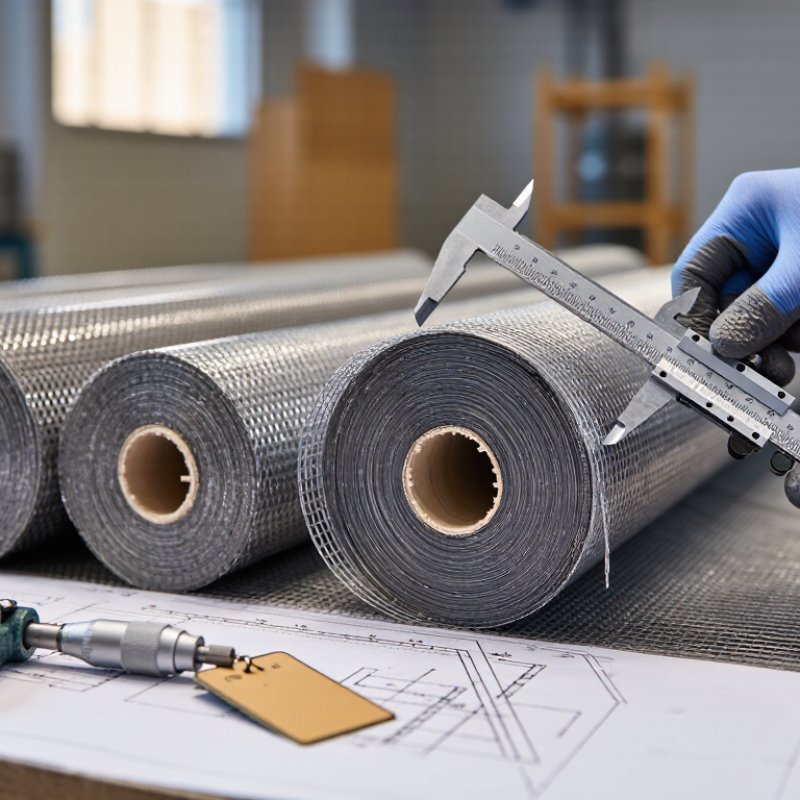
A reliable carbon steel mesh supplier should prove what each shipment contains, not merely promise consistent quality. Request a mill test certificate, batch number, wire diameter, aperture size, roll width, and coating details. Compare these records with a sample measured using calipers and a mesh gauge. Ask how the supplier controls weld spacing and tensile strength, and whether inspection results are traceable to the production batch. Small details matter. A certificate without matching batch identification offers limited assurance.
The World Steel Association’s World Steel in Figures 2024 reports global crude steel production of 1,892.2 million tonnes in 2023. That scale makes documented sourcing and clear production controls important when comparing suppliers.
The International Energy Agency’s Iron and Steel Technology Roadmap (2020) estimates that steel production accounts for about 7% of global energy-system emissions; ask suppliers for verifiable material and process information rather than broad sustainability claims.
Ask for evidence. Check sample mesh against the purchase specification, then review packaging, lead times, and remedies for out-of-tolerance goods. A factory visit or live video inspection can reveal storage conditions, labeling, and measuring practices. Not every buyer can inspect every batch, and paper checks can miss defects. Use risk-based sampling, record deviations, and agree on acceptance criteria before placing a large order.
