
Skip to content
Menu

Who Are the Best Industrial Cable Manufacturers in China?

Choosing the best Industrial Cables manufacturers in China takes more than comparing catalog prices. The right supplier must match cable design to its actual duty: voltage, current, temperature, movement, moisture, and installation conditions. A cable running through a hot factory line faces different stresses from one buried outdoors or flexing beside a robot arm. Details matter.

Cable engineer and author William A. Thue’s reference work on cable engineering offers a useful principle for this guide: “Match the cable to the duty, not just the price.” This wording is an editorial paraphrase, not a verbatim quotation. It captures a practical point: impressive brochures cannot replace clear specifications, traceable test results, and consistent production controls. Ask manufacturers how they verify conductor size, insulation thickness, and performance across production batches. Request samples and technical documents, then check whether the stated construction fits your operating environment.

This guide compares Chinese manufacturers by product range, technical capability, quality evidence, customization, and export support. It also considers how clearly suppliers answer practical questions, such as minimum bend radius or delivery lead time. Those answers can reveal more than a polished sales presentation. No single ranking fits every project. A supplier suited to a high-volume building order may not be right for a demanding industrial installation. Some details may still need independent verification; that is worth acknowledging. The aim is a grounded shortlist, not a promise that one manufacturer is best for every buyer.
Who Are the Best Industrial Cable Manufacturers in China?

What Industrial Cable Manufacturers in China Produce

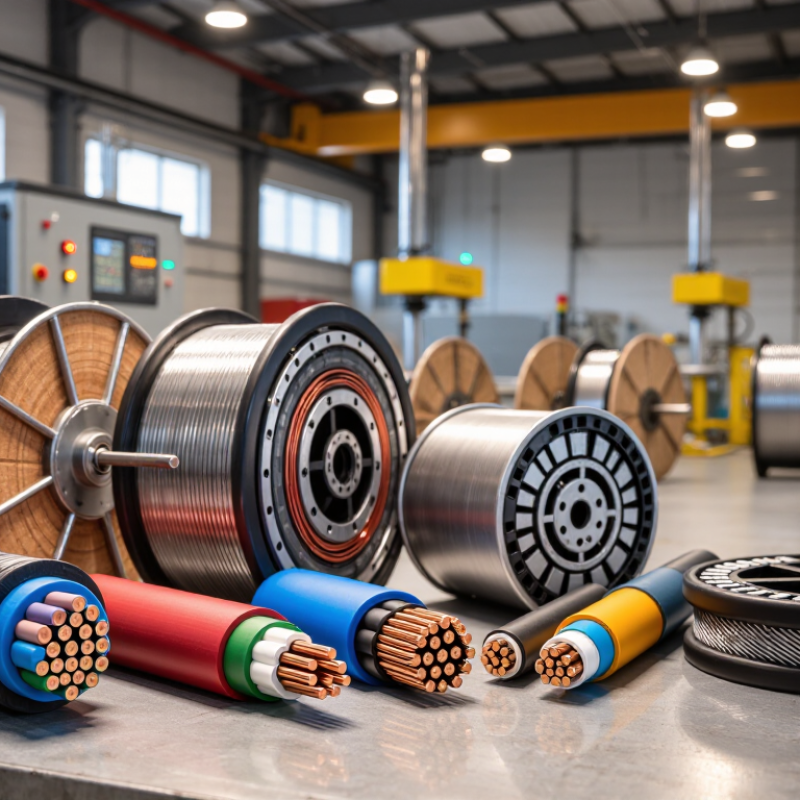
Industrial cable manufacturers in China produce power cables for factories, pumps, motors, and distribution equipment. Common designs use copper or aluminum conductors, with insulation selected for voltage, heat, and installation conditions. PVC, XLPE, and rubber compounds serve different operating needs. The outer sheath may resist oil, abrasion, moisture, or sunlight. Some cables also include steel armor for mechanical protection. Details matter.

Manufacturers also make control and instrumentation cables for sensors, switchgear, and automated production lines. These often use multiple color-coded cores, numbered markings, and shielding to reduce electrical interference. Data and communication cables carry signals between machines, control rooms, and monitoring systems. For moving equipment, flexible conductors and tighter bend-radius specifications can be important. A catalog can make this sound simple. It isn’t always.

Many factories offer variations in conductor size, core count, insulation, shielding, and jacket material. Buyers should match the cable’s rated voltage and temperature range to the actual service conditions, not just the equipment label. Ask for construction drawings, test records, and clear details about sample testing and production checks. A cable that performs well on a clean factory floor may face dust, vibration, tight trays, or chemical exposure in real use. Those conditions deserve careful review.

How to Assess Quality, Certification, and Manufacturing Capacity

Choosing an industrial cable manufacturer in China requires more than checking a certificate. Start with the cable’s intended voltage, conductor material, insulation, temperature range, and installation environment. Then compare test records against the relevant IEC requirements, such as IEC 60228 for conductor resistance. Ask for batch-specific results, not just a sample certificate. A document can look convincing. The production details matter.

Manufacturing capacity should be verified on the factory floor. Review conductor-drawing and extrusion lines, calibration records, laboratory equipment, shift capacity, and recent delivery performance. The International Energy Agency’s 2023 report, Electricity Grids and Secure Energy Transitions, estimates that 80 million kilometres of grids must be added or refurbished by 2040. That points to rising cable demand, but large claimed output does not prove reliable supply. Check whether stated capacity includes all product types, and ask how the factory handles material traceability and failed tests. I would still want to see a real production run; paperwork alone leaves a gap.

Tips: Request a recent factory audit, a traceable test report, and a small pre-shipment sample. Confirm certification scope and expiry dates. Keep one question open: do the test conditions match your actual installation?

Who Are the Best Industrial Cable Manufacturers in China? — How to Assess Quality, Certification, and Manufacturing Capacity
Assessment Dimension Suggested Weight What Strong Evidence Looks Like How to Verify Warning Signs
Product and application fit 15% Clear technical specifications for the required voltage, conductor, insulation, sheath, temperature range, installation environment, and applicable cable standard. Compare the proposed datasheet and construction details with the project specification. Confirm that the standard edition and cable rating match the intended application. Generic datasheets, missing construction details, or claims of suitability without a stated standard or test basis.
Material and conductor quality 15% Documented conductor material and dimensions, traceable incoming-material controls, and routine checks of conductor resistance and cable dimensions. Request material records, inspection procedures, and recent test reports for the offered cable construction. Check conductor requirements against IEC 60228 where applicable. Untraceable raw materials, unexplained substitutions, or reluctance to provide product-specific inspection records.
Product testing and quality control 20% Defined incoming, in-process, and final inspections, with recorded results and a process for handling nonconforming products. Review sample test reports and the quality-control plan. For relevant power cables, check whether testing references applicable requirements such as IEC 60502-1 or IEC 60502-2. Reports without product identification, test dates, methods, or measurable results; reliance on verbal assurances instead of records.
Certification and compliance 15% Valid certificates or approvals that cover the specific product, factory, and destination-market requirements—not merely a general company quality-system certificate. Check the issuing body's official records, certificate scope, validity, covered models, and factory address. Treat ISO 9001 as evidence of a quality-management system, not as proof that every cable product is certified. Expired or unverifiable certificates, mismatched factory details, or broad claims that a certificate covers products outside its stated scope.
Manufacturing capacity and process control 15% Suitable production equipment, documented process controls, realistic capacity information, and the ability to manage the requested cable type and order volume. Request a production plan, capacity assumptions, process flow, and evidence of relevant equipment. Where practical, arrange a factory audit or live production review. Capacity figures without a stated basis, excessive reliance on subcontracting without disclosure, or inability to explain production bottlenecks.
Traceability and documentation 10% Consistent batch or drum identification linked to inspection records, material records, and shipping documents. Ask for a sample traceability package and confirm that identifiers remain consistent across labels, reports, and packing lists. Missing or inconsistent batch numbers, test records that cannot be linked to the delivered goods, or incomplete documentation.
Delivery and service capability 10% Clear lead-time commitments, export packing procedures where needed, responsive technical support, and a documented process for handling complaints or corrective actions. Review a proposed delivery schedule, packaging requirements, communication arrangements, and examples of corrective-action documentation. Unclear delivery commitments, slow technical responses, or no documented method for resolving quality issues.
Use these criteria to compare shortlisted suppliers; confirm all certificates, test reports, capacity claims, and product specifications directly before purchase. Standards and required approvals depend on the cable type, application, and destination market.

Leading Industrial Cable Manufacturers in China

Who Are the Best Industrial Cable Manufacturers in China?
Leading Industrial Cable Manufacturers in China

Choosing among leading industrial cable manufacturers in China requires more than comparing prices or catalog thickness. Strong suppliers can explain conductor materials, insulation compounds, shielding, and temperature limits in clear technical terms. Ask for drawings, traceable test records, and samples matching the quoted specification. Details matter. A cable for a vibrating production line needs different construction from one installed in a fixed indoor tray.

Experienced manufacturers should demonstrate repeatable production controls, not just modern equipment during a factory tour. Look for documented checks on conductor resistance, insulation dimensions, spark testing, and finished-coil labeling. For demanding applications, ask how cables perform under oil exposure, repeated flexing, heat, or electromagnetic interference. Request test methods and acceptance limits before ordering. Clear answers are useful; vague promises are not.

The best fit depends on the machine, installation route, operating environment, and expected service life. Discuss bending radius, pulling distance, and connector compatibility with the engineering team. Verify that samples and production batches are consistent. No checklist catches everything. When a failure could stop a production line, reviewing test results with an independent specialist is sensible. A supplier may look convincing on paper, yet communication after delivery deserves equal attention.

Industries and Applications Served by Chinese Cable Makers

Chinese cable manufacturers serve a wide range of industries, from power generation and construction to transport and factory automation. In substations, cables carry power between equipment exposed to heat, dust, and vibration. On production lines, flexible control cables connect moving machines and sensors. Details matter.

Renewable energy projects use cables designed for outdoor exposure, changing temperatures, and long installation runs. Rail and building projects may require fire-resistant or low-smoke designs, depending on the application and project specifications. Mining, ports, and marine environments can call for tougher jackets that resist abrasion, oil, or moisture. The right choice depends on the actual site conditions, not just a product label.

For buyers, reviewing conductor size, insulation material, voltage rating, bending radius, and test documentation helps narrow the options. A cable that works well in a dry control room may fail sooner beside a vibrating motor. I have seen specifications look complete while leaving installation details unclear. Not always. Asking how the cable will be routed and maintained can reveal gaps before production begins. Samples and documented tests provide useful evidence, though they cannot replace checking performance under real operating conditions.

How to Select a Manufacturer for Your Project

Choosing an industrial cable manufacturer in China starts with your project conditions, not a catalog photo. Define voltage, conductor material, insulation, temperature range, and installation environment. A cable routed through a hot factory floor may need different protection from one installed indoors. Share drawings and technical requirements, then check whether the manufacturer asks practical questions about use and operating conditions. That exchange can reveal more than a polished sales sheet.

Tips: Request current test reports and material specifications. Confirm production lead times, minimum order quantities, and inspection steps in writing. Ask for a sample. Check its markings, dimensions, and flexibility against your requirements. Details matter.

Evaluate technical support and quality control alongside price. Ask how incoming materials are checked and how finished cable batches are tested. If possible, arrange a factory review or use an independent inspection service. Clear answers should be specific and consistent. A low quote may omit packaging, testing, or delivery costs, so compare equivalent terms. Even careful checks can miss a detail; record agreed specifications and keep a retained sample for later comparison.

Who Are the Best Industrial Cable Manufacturers in China? — How to Select a Manufacturer for Your Project

This chart compares the maximum nominal voltage ratings covered by two IEC 60502 cable standards. Use the voltage range required by your project to check whether a manufacturer can supply compliant cable, and request relevant test documentation before making a decision.

Values show the upper nominal rated voltage specified by each standard: IEC 60502-1 covers cables rated up to 3 kV, while IEC 60502-2 covers cables rated up to 30 kV. Sources: IEC 60502-1 and IEC 60502-2. This is a standards comparison, not a manufacturer ranking.