Skip to content
Menu

Who Are the Best Pastry Maker Manufacturers in China?

Choosing the best Pastry Maker manufacturers in China takes more than comparing glossy product photos. Buyers need equipment that performs reliably during real production: steady mixing, even baking, clean finishes, and parts that are practical to maintain. A compact bakery may value a small footprint, while a larger operation may need higher output and consistent results across shifts.

Pastry chef Pierre Hermé is known for treating precision as essential to creative pastry. Put as a paraphrase, not a verbatim quotation: “Precision gives creativity a reliable foundation.” That principle also helps when assessing machinery. A machine should support the maker’s skill, not promise to replace it. The details matter. Ask about materials, temperature control, production capacity, cleaning access, spare parts, and after-sales support. Request product specifications and, where possible, observe a sample run before deciding.

This overview will compare Chinese manufacturers through practical criteria, including product range, customization, quality controls, and service. It will also distinguish documented information from claims that need direct confirmation. Some suppliers may look similar on paper. They may not perform alike in a working bakery. No shortlist is perfect. Manufacturing details can change, and buyers should verify current specifications with each company. The aim is a useful starting point for choosing a Pastry Maker partner with clear expectations and fewer surprises.
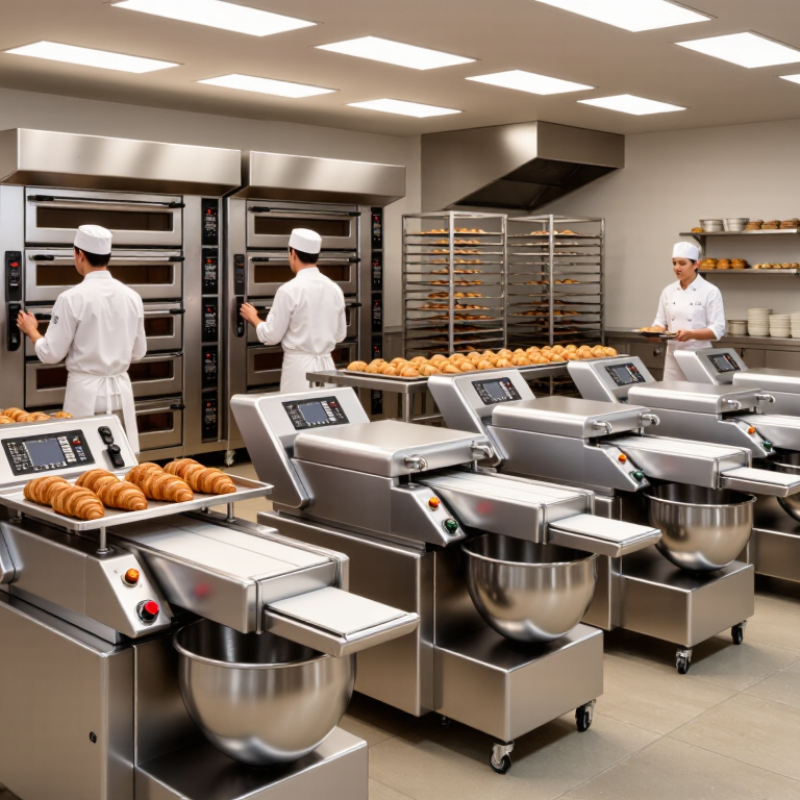
Who Are the Best Pastry Maker Manufacturers in China?

What Is a Pastry Maker Manufacturer?

A pastry maker manufacturer is a company that designs and produces equipment used to prepare, shape, fill, or bake pastries. Its products may include dough mixers, sheeters, forming machines, filling depositors, and production-line ovens. Some factories build complete systems, while others focus on a single machine. The term describes the maker of the equipment, not necessarily a bakery or pastry producer.

The work involves more than assembling metal parts. Manufacturers select food-contact materials, set machine dimensions, and test how dough moves through rollers, cutters, and conveyors. A small change in dough temperature or thickness can affect the final shape, so practical testing matters. Buyers can ask for operating videos, material specifications, sample runs, and details about cleaning and maintenance. Useful evidence is specific. “High quality” alone tells little.

A brochure can make every machine look precise. It cannot show how easily an operator clears dough from a corner or adjusts a filling nozzle during a busy shift. That gap deserves attention. Some manufacturers offer customization, but changes may affect output speed, spare parts, or service time. A careful comparison looks at the machine’s intended pastry type, production capacity, test records, and support after delivery, rather than relying only on appearance or price.

Who Are the Best Pastry Maker Manufacturers in China? - What Is a Pastry Maker Manufacturer?

Manufacturer Type Typical Equipment Best Suited For Key Details to Compare Verification Before Purchase
Commercial bakery-equipment manufacturer Planetary mixers, dough mixers, ovens, and proofers Businesses assembling or upgrading a bakery production line Batch capacity, electrical supply, temperature controls, available configurations, and after-sales support Request model-specific specifications, operating manuals, warranty terms, and a production test where practical
Pastry sheeter and dough-processing equipment manufacturer Dough sheeters, dough dividers, and moulders Pastry kitchens and bakeries that need repeatable dough thickness or portioning Roller width, thickness adjustment range, belt dimensions, cleaning access, and safety guards Check the usable working width, adjustment method, safety features, and suitability for the intended dough
Bakery oven manufacturer Deck ovens, convection ovens, and rotary rack ovens Operations choosing equipment around product volume, available space, and baking requirements Tray or rack capacity, heating method, temperature range, power or fuel requirements, and heat distribution Confirm local utility compatibility, installation requirements, ventilation needs, and service availability
Food-processing machinery manufacturer Depositors, filling machines, and automated pastry-production equipment Manufacturers producing filled or portioned pastries at higher volumes Product compatibility, dosing range, changeover time, line speed, and contact-part materials Ask for a trial using the actual filling or dough and inspect cleaning and maintenance procedures
Small-appliance manufacturer Compact mixers, countertop ovens, and other small pastry appliances Home users, cafés, and small kitchens with limited production needs Rated capacity, dimensions, power rating, controls, included accessories, and replacement-part access Check the product label, user manual, electrical requirements, warranty coverage, and applicable market approvals
Custom equipment and OEM manufacturer Configured or integrated machinery produced to agreed requirements Buyers needing a particular layout, capacity, or production-line connection Design scope, drawings, materials, control system, delivery schedule, commissioning, and documentation Agree on measurable acceptance criteria, inspection stages, spare parts, and responsibilities in the contract
A pastry maker manufacturer is a company that designs or produces equipment used to prepare, shape, bake, or finish pastries. There is no single manufacturer that is best for every buyer: suitability depends on the product, production volume, budget, utilities, and service requirements. The categories above are comparison guides, not a ranked list or verified claims about individual factories.

How China's Pastry Equipment Industry Is Structured

China’s pastry-equipment industry is a chain, not one uniform manufacturing sector. It includes component suppliers, makers of individual machines, and integrators that assemble complete production lines. Typical equipment ranges from mixers and dough sheeters to ovens, cooling conveyors, and packaging units. Smaller bakeries often need flexible, easy-to-clean machines; centralized factories prioritize consistent output and automated handling.

Demand helps explain this structure. The China Association of Bakery and Confectionery Industry’s 2024 industry report puts China’s baked-goods market at about RMB 300.2 billion in 2023. This is a market-demand figure, not equipment sales. Globally, Grand View Research’s bakery-processing-equipment report projects about 6.6% annual growth from 2024 to 2030. The figures indicate an expanding equipment opportunity, but they do not show how much demand reaches Chinese manufacturers.

In practice, a buyer may source an oven from one specialist and conveyors from another, then rely on an integrator to connect the line. The boundary blurs. Service capability matters: technicians need to calibrate temperatures, belt speeds, and portion weights on site. Yet published market reports rarely separate pastry machinery from broader bakery equipment. That makes direct comparisons between manufacturers difficult, and a clean category map would be misleading.

What Criteria Identify the Best Chinese Manufacturers?

Choosing the best Chinese pastry maker manufacturer takes more than comparing catalogue prices. Look for a clear record of producing equipment suited to your pastry types, output volume, and workspace. Ask how mixers, sheeters, or forming machines perform during a real production run. Details matter.

Reliable manufacturers can explain their material choices, quality checks, and maintenance requirements without relying on vague claims. Request food-contact material documents and test records relevant to the equipment. Check whether key parts are easy to replace, and ask how quickly technical support can respond. A detailed manual and practical troubleshooting guidance are useful signs of a considered process.

Production capacity matters, but consistency matters more. Ask to inspect a sample unit or review a live factory test, then compare its finish and operation with the written specifications. Confirm lead times, customization limits, spare-parts availability, and warranty terms in writing. Ask for proof. A polished showroom can still hide uneven assembly or unclear service arrangements, so independent checks are worthwhile. No single checklist guarantees a perfect supplier; even experienced buyers may overlook small details, such as cleaning access around rollers or guards.

Which Manufacturers Stand Out and What Do They Specialize In?

Chinese pastry-equipment manufacturers stand out through specialization, not one-size-fits-all catalogs. Some focus on sheeters and laminators for croissants, producing even layers and consistent dough thickness. Others build depositors and filling systems for tarts, buns, and delicate choux pastries. Larger factories may integrate mixers, proofers, ovens, and cooling conveyors into complete production lines. Grand View Research valued the global bakery-products market at USD 480.9 billion in 2023, underscoring demand for dependable, scalable equipment. That figure covers products worldwide, not Chinese machinery sales, so it is useful context—not a ranking of manufacturers.

When comparing suppliers, look beyond output claims. Ask for a live test using your dough, filling, and target pastry size. Check whether operators can adjust speed without uneven edges or crushed layers. Request details on cleaning access, spare-part lead times, and service support. These practical checks reveal more than polished showroom videos. Still, a short test cannot predict years of wear; that deserves careful thought.

Tips: Bring a real recipe and specify target weight, hourly output, and acceptable variation. Ask for test results in writing. A machine that fits your product matters more than the longest feature list.

Who Are the Best Pastry Maker Manufacturers in China? — Equipment Specializations at a Glance

Pastry equipment manufacturers commonly specialize in different oven formats. This chart shows indicative operating-temperature ranges for major commercial oven types—not company rankings or specifications for any particular manufacturer. Actual ranges vary by model and application.

How Can Buyers Compare Manufacturers for Their Needs?

When comparing pastry maker manufacturers in China, start with the products you actually plan to make. A machine that handles laminated dough may not suit filled buns or delicate tart shells. Ask for the working width, output per hour, adjustment range, and changeover time. Details matter. Request a trial using your own dough, filling, and target size. Observe whether pieces hold their shape and whether weights stay consistent across a batch.

Check the parts that affect daily cleaning and repairs. Food-contact surfaces should be clearly identified, and removable components should be practical to wash. Ask how operators access rollers, cutters, and guards; a polished brochure cannot answer that. Ask for proof. Compare written specifications with a live demonstration, then request a parts list, warranty terms, and expected response times for technical support. If possible, speak with a buyer who runs similar products at a similar production volume. Be cautious when quoted capacity lacks details about dough type or product size. I have seen comparison tables look precise while hiding those variables; a small test run often reveals more than another sales call.