
Skip to content
Menu

China Best AC Motor Wolong Supplier?

Selecting the China best AC motor supplier requires more than comparing prices and catalog sizes. Motor efficiency affects energy bills, equipment temperature, maintenance intervals, and production stability. The International Energy Agency has reported that electric motor systems consume a substantial share of global electricity. The U.S. Department of Energy also identifies motor systems as one of the largest industrial electricity loads. Small efficiency gains can matter greatly.

This is where Ac Motor Wolong enters the discussion. Wolong Electric Group offers motors for industrial machinery, pumps, fans, compressors, and other demanding applications. Its product evaluation should include rated power, voltage, frequency, insulation class, protection rating, bearing design, and service conditions. IEC 60034-30-1 provides a recognized framework for comparing motor efficiency classes, including IE2, IE3, and IE4 models. Certification is important. So is field performance.

A reliable supplier should provide test data, traceable documentation, and practical technical support. Factory audits can reveal details that brochures cannot show, such as winding workmanship, balancing procedures, noise control, and final inspection routines. These details become visible on a production floor.

No supplier is perfect.

Buyers should verify delivery records, warranty terms, spare-parts access, and regional compliance before signing an agreement. Public company disclosures, independent inspections, and customer references can strengthen that review. This article examines whether Ac Motor Wolong deserves consideration among China’s leading AC motor suppliers, while recognizing that the “best” choice depends on application, lifecycle cost, and operating environment.
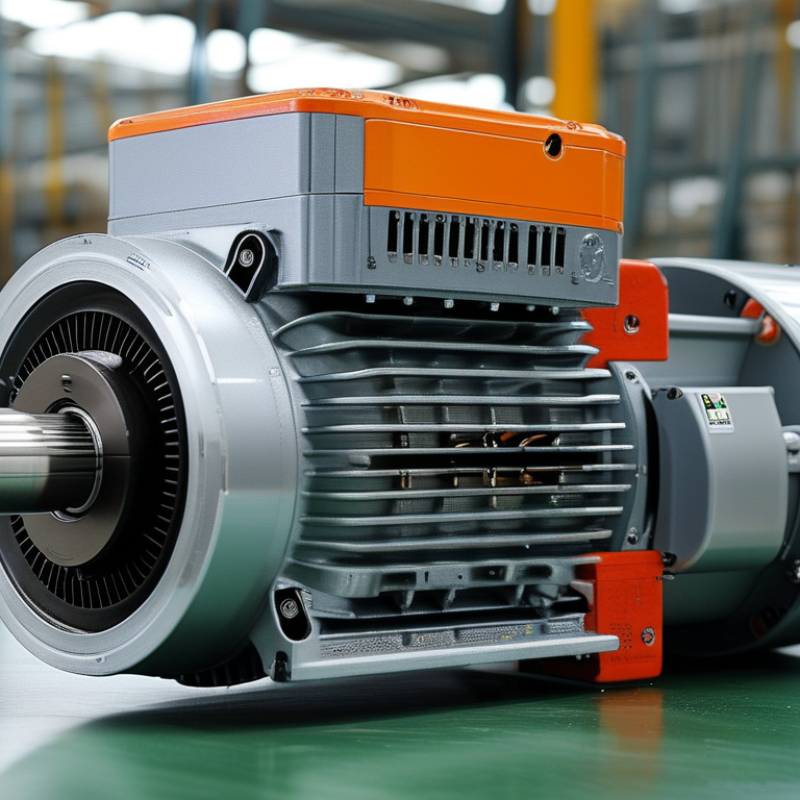
China Best AC Motor Wolong Supplier?

Wolong’s Position in China’s AC Motor Industry

China’s AC motor industry holds a strong position in global manufacturing. Its advantages include broad production capacity, mature component networks, and competitive engineering costs. The International Energy Agency’s Energy Efficiency 2023 report estimates that electric motor systems consume nearly half of global electricity. This makes motor efficiency a serious purchasing concern.

Chinese suppliers increasingly provide motors across pumps, compressors, conveyors, and industrial fans. Many products follow IEC 60034-30-1 efficiency classifications, including IE2, IE3, and IE4. However, certification alone does not guarantee reliable field performance. Buyers should check test conditions, insulation systems, bearing quality, and load profiles. My practical concern is simple: a low purchase price can hide higher energy losses and maintenance costs. The best supplier is not always the cheapest supplier.

Tips: Request a complete efficiency test report, factory inspection record, warranty terms, and spare-parts plan. Compare lifetime energy costs, not only the quotation. Check whether the motor matches local voltage, frequency, duty cycle, and installation space. Chinese manufacturing remains powerful, but supplier evaluation still needs independent verification and careful technical review.

Core AC Motor Products and Technical Capabilities

Core AC Motor Products and Technical Capabilities

A reliable AC motor supplier should offer more than standard catalog models. Common products include three-phase induction motors, single-phase motors, brake motors, and variable-frequency-drive compatible units. Each design should match the application’s load, speed, torque, voltage, and duty cycle. In factory inspections, I check terminal boxes, cooling paths, bearing noise, and nameplate accuracy. Small details matter.

Technical capability also appears in customization. A capable manufacturer can adjust shaft dimensions, mounting forms, insulation systems, protection levels, and cable entries. Motors for pumps may need stable continuous operation, while conveyors often require stronger starting torque. Efficiency classes help reduce operating costs, but efficiency alone does not guarantee suitability. A motor with poor ventilation may overheat in a dusty workshop. This is easy to overlook.

Tips: Request a complete datasheet, efficiency test report, vibration limits, and protection rating. Confirm compatibility with the local power supply and inverter. Ask how rotor balancing, winding tests, and final inspection are recorded. Do not rely only on attractive pricing. A perfect selection is rare. Real performance depends on installation, alignment, load changes, and maintenance. Even experienced buyers sometimes specify power correctly but miss starting conditions. That mistake deserves a second look.

China Best AC Motor Supplier? - Core AC Motor Products and Technical Capabilities

Product Family Typical Output Range Common Voltage and Frequency Pole Options Protection and Cooling Typical Applications
Three-Phase Squirrel-Cage Induction Motor 0.12–1,000 kW 220/380 V, 380/660 V, or 3.3/6.6/10 kV; 50 or 60 Hz 2, 4, 6, 8, 10, or 12 poles IP55 is common; TEFC and IC411 cooling are widely used Pumps, fans, compressors, conveyors, machine tools, and general industrial equipment
High-Efficiency IE3 Motor 0.75–375 kW in common industrial frame sizes 380–690 V; 50 or 60 Hz 2, 4, 6, or 8 poles IP55 or higher; IC411 cooling; class F insulation is typical Energy-conscious industrial drives and continuously operating machinery
High-Efficiency IE4 Motor 0.75–315 kW, depending on frame size and design 380–690 V; 50 or 60 Hz 2, 4, 6, or 8 poles IP55–IP66 options; TEFC or application-specific cooling High-duty-cycle pumps, fans, compressors, conveyors, and energy-saving retrofit projects
Variable-Frequency-Drive Motor 0.37–500 kW Typically 380–690 V; suitable for inverter-based operation 2, 4, 6, or 8 poles Forced ventilation may be used; insulated bearings and shaft grounding are available for larger ratings Variable-speed pumps, HVAC fans, extruders, mixers, hoists, and process lines
Brake Motor 0.12–90 kW 220/380 V or 380/660 V; 50 or 60 Hz 2, 4, 6, or 8 poles Electromagnetic spring-applied brake; manual release and IP-rated brake options Cranes, hoists, elevators, conveyors, packaging machines, and positioning systems
Explosion-Protected Motor 0.12–500 kW 380–690 V; 50 or 60 Hz 2, 4, 6, or 8 poles Flameproof or increased-safety designs; certification depends on the target market and zone classification Petrochemical, chemical, pharmaceutical, mining, grain, and gas-handling facilities
Large Synchronous or Special-Purpose Motor 500 kW–10 MW or higher for engineered projects 3.3, 6.6, or 10 kV; 50 or 60 Hz Application-specific speed and pole configuration Open or enclosed cooling systems; bearing, winding, and vibration monitoring options Cement, steel, mining, water treatment, compressors, mills, and large process equipment

Core Technical Capabilities for Supplier Evaluation

Capability Area Relevant Technical Details Verification Points
Design and Engineering Electromagnetic design, thermal analysis, mechanical strength calculations, bearing-life assessment, and duty-cycle matching Motor datasheets, dimensional drawings, load calculations, and performance curves
Efficiency and Performance Efficiency classes commonly evaluated under IEC 60034-30-1; starting torque, locked-rotor current, slip, power factor, and temperature rise Routine test reports, type-test records, efficiency data, and certified performance documentation
Manufacturing and Quality Control Rotor balancing, winding insertion, vacuum-pressure impregnation where applicable, machining control, and assembly inspection Quality-management certification, process inspection records, traceability, and nonconformance procedures
Testing and Validation Resistance, no-load, load, high-voltage, vibration, noise, temperature-rise, and overspeed tests as applicable Calibrated test equipment, test procedures, inspection plans, and complete factory acceptance records
Customization Voltage, frequency, mounting arrangement, shaft extension, terminal-box position, enclosure, brake, encoder, heater, and sensor options Approved drawings, interface dimensions, bill of materials, and change-control records
Standards and Compliance IEC 60034 series is widely used; additional requirements may include local electrical, energy-efficiency, hazardous-area, and environmental regulations Applicable certificates, conformity documents, marking requirements, and project-specific compliance review
After-Sales and Technical Support Installation guidance, commissioning support, spare-parts planning, troubleshooting, maintenance recommendations, and warranty procedures Response-time commitments, spare-parts availability, service network coverage, and documented warranty terms

Specifications are typical industry ranges. Final motor selection should be confirmed against the required load, duty cycle, ambient conditions, installation environment, efficiency regulations, and applicable technical standards.

Manufacturing Quality, Certifications, and Testing

Choosing the right AC motor supplier requires more than comparing prices. Manufacturing quality starts with controlled materials, accurate machining, and stable assembly procedures. Inspectors should check rotor balance, winding insulation, shaft dimensions, and bearing fit. Small errors can create vibration, heat, and early failure.

Certifications offer useful evidence, but they are not the whole answer. Ask for a valid quality management certificate, relevant IEC or regional compliance documents, and traceable test records. A dependable factory should perform insulation resistance, no-load, load, temperature-rise, noise, and vibration tests. Request sample reports with dates and equipment details. Factory experience matters too. During an audit, look for calibrated instruments, organized production lines, and workers who understand the inspection points. A clean showroom is not proof of consistent output.

Tips: Confirm the motor’s duty cycle, voltage, frequency, protection rating, and installation environment. Request a sample unit before bulk production. Compare test data with the agreed specification. I have found that vague answers often signal weak process control. Still, even a careful supplier can make mistakes, so define acceptance limits and keep written records. Testing plans should be reviewed when the application changes.

Applications, Customization, and Global Supply Support

Choosing a China AC Motor Supplier: Applications, Customization, and Global Supply Support

Industrial motors are not bought by name alone. The application decides the real specification. Fans, pumps, compressors, and conveyors require different torque profiles. Speed control also changes efficiency, heat, and service life. The International Energy Agency reports that electric motor systems consume roughly half of global electricity. The U.S. Department of Energy notes that optimized motor and drive systems may reduce industrial energy use by 20–30 percent. These figures make efficiency testing more than a marketing detail.

Customization should begin with operating conditions. Engineers should confirm voltage, frequency, insulation class, enclosure protection, mounting size, duty cycle, ambient temperature, and starting torque. A food-processing line may need washable surfaces. A dusty workshop may require stronger protection. Small details matter. A neat datasheet is not proof. Independent testing, routine inspection records, and IEC 60034 efficiency classification provide stronger evidence.

Global supply support needs equal attention. A capable supplier should provide drawings, test reports, serial traceability, spare-parts planning, and clear export documents. It should also support remote troubleshooting across time zones. Comparing only the unit price is a weak habit. Freight, lead time, warranty handling, and replacement compatibility can change the total cost sharply. The first quotation is not always the best decision. Pilot orders and site feedback can expose assumptions before larger procurement commitments.

China AC Motor Supplier: Applications, Customization & Global Supply Support

Typical industrial three-phase supply requirements by market. Voltage values are nominal reference levels commonly used for motor selection, while frequency affects motor speed and design.

These regional differences demonstrate why AC motor suppliers often provide customized winding designs, rated voltages, frequencies, enclosures, cooling methods, and certifications for pumps, fans, compressors, conveyors, and other industrial equipment.

How to Evaluate Wolong as an AC Motor Supplier

Choosing an AC motor supplier requires more than comparing catalogue prices. In plant projects, I check rated power, voltage, frequency, duty cycle, enclosure, insulation class, and mounting dimensions. A motor that fits the drawing may still overheat under repeated starts. Ask for efficiency data at realistic loads, not only the best laboratory point. Request sample nameplates, routine test records, and clear tolerances. Small details matter.

Evaluate manufacturing control through an on-site audit or credible third-party report. Inspect winding equipment, rotor balancing, bearing storage, paint protection, and final inspection stations. Confirm whether serial numbers link each unit to test results. Ask how defects are handled, including root-cause analysis and replacement timing. Certificates help, but they do not replace evidence. Check relevant standards and verify certificates with issuing bodies. Speak with users running similar pumps, fans, compressors, or conveyors.

After-sales support deserves equal attention. A reliable supplier should provide drawings, installation guidance, spare-parts advice, and practical troubleshooting. Clarify response times, warranty boundaries, packaging quality, and local service coverage before signing. I have learned that sales promises can sound precise while technical documents remain vague. That is a warning. One weak point is enough to pause. Price still matters, but lifecycle cost matters more: energy use, bearing life, downtime, and repair access. A pilot order can reveal communication gaps before a large purchase. Leave room for doubt. Good evaluation is evidence-based, yet never careless.