Skip to content
Menu

China Top Mud Pump Piston Manufacturers and Suppliers?

China’s Mud Pump Piston manufacturers and suppliers serve drilling contractors, equipment distributors, and repair teams seeking dependable replacement parts. The market operates within a substantial upstream sector. The International Energy Agency’s World Energy Investment 2024 report estimated that global oil and gas upstream investment would rise 7% in 2024, reaching about US$570 billion. That figure is not a piston-demand forecast. It does, however, show why reliable drilling equipment remains commercially important.

A Mud Pump Piston works under repeated pressure, abrasive drilling fluids, and demanding operating cycles. Material choice, dimensions, elastomer bonding, and fluid compatibility can affect service life. Small details matter. When comparing Chinese suppliers, buyers should check product drawings, material documentation, inspection procedures, and consistency between samples and production batches. API Specification 7K covers drilling and well-servicing equipment, including mud pumps; buyers should confirm which requirements apply to their equipment and verify any claimed compliance directly. A polished catalog is not enough.

This guide introduces manufacturers and suppliers while highlighting practical questions for procurement teams. Ask how a piston performs with the intended mud, temperature, and pump configuration. Request traceable specifications and clear explanations of warranty limits. Published investment data cannot establish a supplier’s product quality, and website claims are not independent evidence. That gap deserves attention. Careful qualification takes time, but it can prevent avoidable mismatches in the field.
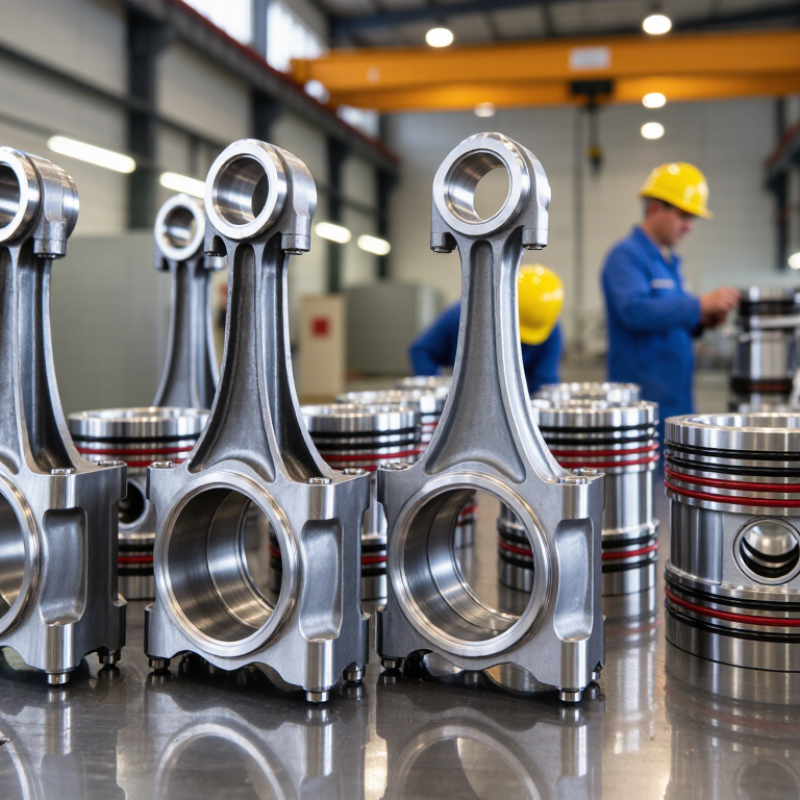
China Top Mud Pump Piston Manufacturers and Suppliers?

How Mud Pump Pistons Work: Two Pistons in Duplex and Three in Triplex Pumps

In a duplex mud pump, two pistons move in separate liners, usually in a double-acting arrangement. Each piston draws drilling fluid through suction valves and forces it through discharge valves as it travels. The pulsating pressure is easy to feel as vibration in the discharge line.

In a triplex pump, three single-acting pistons make one pumping stroke per revolution, with crank throws spaced about 120 degrees apart. Their outputs overlap, giving steadier flow, though not perfectly smooth flow.

The U.S. Energy Information Administration reported average U.S. crude-oil production of 12.9 million barrels per day in 2023, in its Monthly Energy Review. That scale helps explain why dependable circulation equipment matters, but it does not measure pump performance.

API Specification 7K covers drilling and well-servicing equipment, while API Standard 674 addresses reciprocating pumps; operators should check the applicable edition and equipment documentation.

In practice, piston condition depends on fluid abrasiveness, liner fit, stroke rate, and seal wear. A small cut in an elastomer can let pressure leak past the piston. It may not be obvious at first. Record pressure, flow, and leakage trends during routine inspections; replacing parts only after a visible failure can be too late.

Core Specifications: Common 4–7½-Inch Liner Sizes, Materials, and API 7K Scope

Common mud-pump liner schedules span 4 to 7½ inches, with intermediate bores such as 4½, 5, 5½, 6, 6½, and 7 inches. These are nominal sizes; confirm the pump model and liner drawing before ordering. At equal stroke length and speed, a 7½-inch bore has about 3.5 times the cross-sectional area of a 4-inch bore. That changes theoretical displacement substantially. API Spec 7K covers drilling and well-servicing equipment, but it is not a universal piston-size catalog. Check the applicable edition and the supplier’s stated certification scope.

Liner materials commonly include hardened steel and ceramic, while piston assemblies often use elastomer or polyurethane sealing elements bonded to a metal hub. Ceramic can resist abrasive wear, but impact damage and handling matter. Steel may suit rougher service, though coating condition needs inspection. Match the piston to the liner bore, mud chemistry, solids content, pressure, and operating speed. A glossy specification sheet cannot show every field condition. API’s equipment requirements provide a useful reference, but verify dimensions, material certificates, and pressure ratings against the actual assembly before purchase.

China Top Mud Pump Piston Manufacturers and Suppliers? - Core Specifications: Common 4–7½-Inch Liner Sizes, Materials, and API 7K Scope

Specification dimension Typical information Selection or verification note
Common liner sizes 4, 4½, 5, 5½, 6, 6½, 7, and 7½ in These are common nominal mud-pump liner sizes, not a guarantee that every pump model accepts every size. Confirm the pump and liner configuration.
Piston-to-liner fit Piston size and profile must match the specified liner bore and fluid-end arrangement. Check the pump model, liner type, piston style, and supplier dimensional drawing; nominal size alone may not establish interchangeability.
Elastomer options Common options include nitrile rubber (NBR) and polyurethane (PU); other elastomer formulations may be offered for particular service conditions. Material suitability depends on temperature, drilling-fluid chemistry, solids, and operating conditions. Confirm compatibility with the fluid and service environment.
Piston construction A typical assembly combines an elastomer sealing element with a metal core or hub; designs vary by piston type and pump configuration. Verify core material, retention design, and connection details against the required assembly drawing and pump service instructions.
Operating pressure Allowable working pressure is application- and assembly-specific; it cannot be determined from liner diameter or elastomer type alone. Use the limits stated by the pump and component manufacturers, and confirm that the piston, liner, and fluid-end ratings are appropriate for the intended service.
API 7K scope API Specification 7K addresses drilling and well-servicing equipment, including requirements relevant to mud pumps and specified equipment components. Do not assume that every replacement piston is independently API 7K certified. Confirm the applicable edition, product scope, and documented conformity with the supplier.
Purchasing checks Request nominal size, piston type, material specification, dimensional drawing, traceability information, and applicable inspection records. Compare the offered part with the pump manufacturer’s requirements and the operating conditions before ordering or installation.

China’s Leading Mud Pump Piston Manufacturers and Supplier Profiles

China’s mud pump piston suppliers are best compared by process capability, not catalog size. Some factories focus on molded elastomer pistons; others machine metal hubs and coordinate bonding in-house. Ask for material specifications, dimensional inspection records, and batch traceability. A useful profile also explains how the supplier checks fit against the liner, since small dimensional errors can cause leakage or uneven wear. Catalog claims still need checking.

The market backdrop is substantial, but not piston-specific. Grand View Research’s Oilfield Equipment Market report estimated the global market at USD 119.6 billion in 2023 and projected USD 174.9 billion by 2030. This wider category includes many products, so the figures should not be treated as mud-piston demand. They do, however, show why buyers should examine suppliers’ production capacity and quality controls rather than rely on export claims alone.

When reviewing Chinese manufacturers, request a clear profile of molding or casting capability, machining tolerances, and inspection methods. Ask how samples are tested under pressure and repeated reciprocation, and whether test results match the intended fluid and operating temperature. Check lead times against actual production schedules. A polished factory tour helps, but it cannot replace records. One practical question is often overlooked: how does the supplier investigate early seal wear? The answer may reveal more than a long specification sheet.

How to Audit Suppliers: ISO 9001, Batch Traceability, and Wear-Test Records

When evaluating Chinese mud pump piston suppliers, treat ISO 9001 as a starting point, not proof of performance. Request the current certificate and confirm its scope covers the relevant site and manufacturing processes. Check issue and expiry dates. A logo on a brochure is not enough. Ask how staff isolate nonconforming parts, approve corrective actions, and link records to your production line. Small gaps matter.

For batch traceability, select a finished piston and trace it back to its production lot, material certificate, processing date, and inspection results. The lot code should remain readable on packaging and shipping documents. Try a sample audit, not a prepared presentation. If staff need an hour to locate one record, traceability may be weak under pressure. This test can feel awkward, but it reveals the real workflow.

Wear-test records should identify the elastomer compound, test conditions, duration, temperature, pressure or abrasive medium, and acceptance limits. Compare results across several batches; one excellent sample proves little. Ask whether tests are conducted in-house or by an independent laboratory, and check calibration records for measuring equipment. A clear report links the tested sample to a production lot. Numbers without methods are hard to interpret. Note missing information rather than assuming it is harmless. Audits are imperfect snapshots, so repeat checks after process changes or recurring field failures.

China Mud Pump Piston Supplier Audit: Evidence Checklist

A practical comparison of the evidence areas to review when auditing mud pump piston suppliers.

The counts represent checklist prompts, not supplier ratings or measured industry results. Verify the ISO 9001 certificate’s validity and scope; trace a production batch from material records through inspection and shipment; and review wear-test methods, sample identification, results, and acceptance criteria.

How to Match Piston Designs with Mud Type, Operating Pressure, and Pump Model

Matching a mud pump piston to the mud is more than choosing a hard-wearing part. Water-based fluids, oil-based fluids, and chemically treated mixtures can affect elastomer swelling and sealing. For abrasive mud containing sand or cuttings, inspect the piston face and sealing edges regularly. Solids can score the liner and shorten service life. High temperatures and poor lubrication add stress. Small details matter. Select the compound and piston style based on fluid chemistry, solids loading, temperature, and expected run time—not mud type alone.

Check operating pressure against the piston’s rated range and the pump’s actual duty cycle. Pressure spikes, frequent starts, and high stroke speeds can increase heat and wear, even when average pressure looks acceptable. Confirm piston diameter, rod connection, liner size, and stroke requirements against the exact pump model. A near-fit is not a fit. A specification sheet cannot predict every field condition, so record leakage, washout, and service hours after installation.

Tips: Share the mud formulation, solids range, pressure, temperature, and pump model with the supplier. Request dimensional drawings and material-compatibility data, then verify measurements before ordering. If wear is uneven, check alignment and liner condition; replacing the piston alone may not solve the problem.

Article Source: