Skip to content
Menu

China Best Cast Iron Butterfly Valve Manufacturers?

Choosing a reliable China-based Cast Iron Butterfly Valve manufacturer takes more than comparing prices. The right supplier should understand the valve’s service conditions, from water-treatment lines to HVAC systems, and explain how its design fits them. Ask about casting grades, pressure ratings, face-to-face dimensions, seat materials, and inspection records. Details matter. A smooth-looking body alone cannot confirm sound casting or dependable sealing.

Casting expert John Campbell’s published work emphasizes controlling metal flow and solidification. Put simply, and as a paraphrase of that guidance: “Sound castings begin with disciplined control of metal flow and solidification.” That principle matters when evaluating a Cast Iron Butterfly Valve, because internal defects may not show on a painted surface. Request material certificates, dimensional checks, pressure-test procedures, and traceable batch records. If a supplier gives vague answers, pause. It is a small warning, not proof of poor quality.

This guide examines manufacturers in China through practical criteria: production capability, quality controls, customization, delivery consistency, and after-sales support. It also considers how to match a valve’s size, connection type, and operating environment to the project. No single factory suits every application. Some buyers prioritize short lead times; others need documented testing or nonstandard dimensions. The best choice is the supplier that can support its claims with clear records and technically specific answers. Even then, verify the details. That extra step can prevent costly surprises after installation.
China Best Cast Iron Butterfly Valve Manufacturers?

What Defines a Cast Iron Butterfly Valve? Key Parts and Quarter-Turn Operation

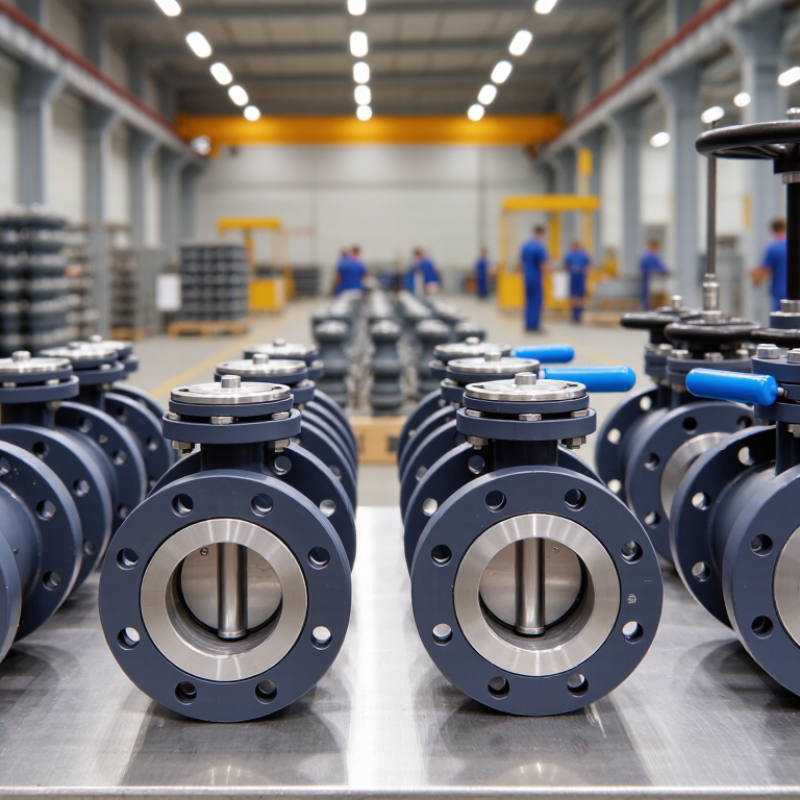
A cast iron butterfly valve controls flow with a compact disc that turns inside a circular body. The body connects to the pipeline, while a stem links the disc to a handle or actuator. A seat around the disc helps limit leakage when the valve closes. Each part matters; a poor fit can affect operation.

The valve works through a quarter-turn motion. Turn the stem about 90 degrees, and the disc moves from open to closed. When open, the disc sits roughly parallel to the flow. When closed, it rests across the passage. Simple in principle. In practice, seat wear, debris, and incorrect installation can make movement stiff or sealing uneven. Cast iron suits many general water and utility services, but pressure, temperature, and fluid compatibility depend on the valve’s design and materials. Check the specifications rather than assuming all cast iron valves perform alike.

Tips: Confirm the pipe size, pressure rating, and seat material before selection. Rotate the disc by hand during inspection, if the design permits. A small detail, like a misaligned stem, can cause trouble later. Manufacturers’ testing and material records are useful checks, though they do not replace correct installation.

Which Standards Apply? API 609, EN 593, and ISO 5752 Dimensions

For cast iron butterfly valves, “compliant” is not a complete purchasing specification. API 609 and EN 593 address butterfly valve design, but they are not interchangeable labels. API 609 covers valve categories and includes relevant design and dimensional provisions. EN 593 specifies requirements for metallic butterfly valves, including pressure-temperature considerations and testing. Check the edition listed in the supplier’s documents; requirements can change.

ISO 5752 focuses on face-to-face and centre-to-face dimensions for metal valves. These measurements help confirm that a valve fits between pipe flanges or aligns with nearby equipment. ISO 5752 does not, by itself, confirm pressure rating, materials, leakage performance, or disc clearance. Check the specified series and nominal size against the valve drawing. A few millimetres matter. Especially in a retrofit.

For cast iron bodies, verify the material grade and pressure-temperature limits alongside the selected standard. Also match flange drilling, connection style, operating torque, and seat material to the line conditions. Request dimensional drawings, inspection records, and pressure-test evidence, not just a compliance statement. One detail is easy to miss: the pipe bore and disc position can restrict flow even when face-to-face dimensions match. Do not assume one standard automatically satisfies another. State each required standard and edition, plus the size range, pressure class, and test criteria. That may feel repetitive, but it can prevent costly fit-up surprises.

How Do PN10 and PN16 Ratings Affect Valve Selection and Testing?

For cast iron butterfly valves, PN10 and PN16 indicate nominal pressure classes, commonly associated with 10 and 16 bar under reference conditions. That number is not a blanket working-pressure guarantee. Temperature, fluid, valve design, seat material, and flange arrangement can all affect the safe operating limit. Small details matter.

PN10 may suit lower-pressure water lines, while PN16 can provide more pressure margin when system demands justify it. But choosing the higher class automatically is not always better. Mating flanges, bolts, and pipework must also be compatible. Check peak pressure, pump shutoff pressure, and water-hammer risk, not only the normal gauge reading. Not a guarantee.

Ask for documented shell and seat-leakage test results under the applicable standard and stated procedure. Confirm test pressure, duration, medium, and acceptance criteria against the valve’s declared rating. Before installation, inspect the casting, flange alignment, and disc clearance. One point deserves a second look: passing a factory test does not replace checking actual site conditions.

China Best Cast Iron Butterfly Valve Manufacturers? — How Do PN10 and PN16 Ratings Affect Valve Selection and Testing?

Selection Factor PN10 Cast Iron Butterfly Valve PN16 Cast Iron Butterfly Valve Practical Selection and Verification
Pressure designation PN10 is a nominal pressure designation associated with a 10-bar reference rating. PN16 is a nominal pressure designation associated with a 16-bar reference rating. PN is not a guarantee of the valve’s allowable working pressure under every condition. Check the valve’s pressure–temperature limits and applicable product standard.
Typical system fit Often considered for systems whose specified pressure class and operating conditions are within the valve’s documented limits. Often considered where the design specification requires the higher PN class, subject to the valve’s documented limits. Base the choice on maximum operating pressure, surge or transient pressure, temperature, medium, and the project’s required pressure class—not on nominal pressure alone.
Flange compatibility Check that the valve’s flange drilling and mating pipe flanges match the project’s PN10 connection specification. Check that the valve’s flange drilling and mating pipe flanges match the project’s PN16 connection specification. Confirm flange standard, DN, facing, bolt pattern, and gasket arrangement. Do not assume PN10 and PN16 flanges are interchangeable.
Body and material limits Pressure capability depends on the actual body material, design, size, temperature, and other wetted components. A PN16 designation does not by itself establish that every component or operating condition is suitable for 16 bar. Review the material specification and manufacturer’s pressure–temperature chart. Check seat, shaft, disc, and body limits for the service medium.
Shell pressure testing Test pressure and duration depend on the specified valve standard, test procedure, and declared allowable pressure. The same principle applies; the required test pressure must be established from the governing standard and the valve’s declared rating. Request a documented test procedure and results. Standards such as EN 12266-1 define pressure-testing requirements; do not infer a mandatory test pressure from the PN marking alone.
Seat / closure testing Acceptance criteria depend on the specified test standard, leakage rate, test medium, and direction of testing. Acceptance criteria likewise depend on the applicable standard and valve design; PN16 does not automatically mean zero leakage. Specify the required leakage acceptance, test medium, differential pressure, and test direction in the purchase specification.
Documentation to request Confirm the marked PN class, applicable design and test standards, material details, and pressure–temperature limits. Request the same records and verify that the complete valve—not only the flange connection—meets the required rating. Ask for the nameplate or marking details, inspection and test records, material certificates where required, and traceability documents specified by the project.
When to choose Suitable only when the complete design and operating requirements fall within the valve’s certified limits. Consider when the project requires PN16 and the selected valve’s materials and documented limits support the intended service. Select the lowest class that safely meets the documented system requirements, while allowing for applicable code, surge, temperature, and project margins.

Note: PN values are nominal pressure-class designations, not substitutes for a product-specific pressure–temperature rating. Confirm the governing standard, test pressures, and acceptance criteria with the project specification and the valve’s certified documentation.

How to Assess Chinese Manufacturers: ASTM A126 Materials, QA, and Traceability

Choosing a cast iron butterfly valve manufacturer takes more than comparing prices. ASTM A126 covers gray iron castings for pressure-retaining service, but it does not verify the complete valve’s suitability.

Ask which A126 class and edition apply to the body, and request material test reports linked to the casting batch. Check that heat or pour numbers on documents match the foundry records.

Paperwork matters.

Review how the manufacturer inspects castings, machines sealing surfaces, and tests finished valves. Ask for dimensional records and pressure-test results, including the test method and acceptance criteria.

During a factory visit, compare a sample valve’s nameplate and inspection record with its actual markings. Look closely for casting defects, uneven coating, or a disc that binds during operation.

A polished certificate can still leave gaps if batch numbers cannot be traced back to the foundry.

I would also ask how rejected castings are recorded; this answer is not always tidy, but it can reveal whether quality checks are routine or merely documented after the fact.

A clear trail builds confidence.

Which China-Based Manufacturer Best Fits Your Industry, Service, and Export Needs?

Choosing a China-based cast iron butterfly valve manufacturer starts with service conditions, not the catalog. Specify the medium, temperature, pressure, pipe standard, and operating frequency. A valve for cooling water may not suit abrasive slurry or frequent throttling. Ask about body and disc materials, seat compounds, coating details, and documented pressure-test procedures. Details matter.

Then assess production and quality controls. Request drawings, material traceability records, inspection criteria, and recent test reports for the relevant size range. If possible, inspect a sample or arrange a factory audit; photographs alone cannot confirm machining tolerances or assembly practices. Check whether the supplier can explain failures, not just pass rates. Test the basics.

Export capability is equally practical. Confirm packing methods for sea freight, spare-part availability, lead times, and who handles technical questions across time zones. Ask for clear installation guidance and support if a valve leaks after commissioning. A responsive engineering contact may matter more than a low unit price. Still, no supplier is perfect: small orders, custom dimensions, or rushed schedules can expose gaps. Compare quotations against the same specification, then discuss exceptions openly before placing an order.

China-Based Cast Iron Butterfly Valve Manufacturers: A Material Benchmark for Comparing Options

Minimum tensile strength requirements for two commonly specified iron casting grades (ksi).

ASTM A126 Class B specifies a 31 ksi minimum tensile strength, while ASTM A536 Grade 65-45-12 specifies 65 ksi. Use material specifications as one comparison point when reviewing manufacturers for your application; tensile strength alone does not determine a valve’s pressure rating or suitability. Confirm the applicable standard, design, and service conditions with the manufacturer.