China Best Cylinder Piston Rod Manufacturers?
Choosing among China’s cylinder piston rod manufacturers requires more than comparing prices or product photos. A Cylinder Piston Rod must match its operating load, stroke, fluid, and working environment. Differences in steel grade, heat treatment, chrome thickness, and surface finish can affect service life and sealing performance. Small details matter. Ask suppliers for material certificates, dimensional inspection records, and clear tolerances for straightness, diameter, and coating thickness. These documents help buyers compare claims with verifiable production data.
China has a broad manufacturing base, but capabilities vary between factories. Some suppliers focus on standard rods, while others offer custom machining, induction hardening, or corrosion-resistant coatings. Confirm which processes happen in-house and which are outsourced. Request samples or inspection reports where practical, and clarify packaging, lead times, defect handling, and after-sales support before placing an order. A polished website is not proof of consistent quality. Nor does a low quotation explain the full cost of inspection, freight, or replacement risk.
This guide explores how to assess manufacturers, compare technical capabilities, and shortlist suppliers for different applications. It also considers questions worth asking during supplier discussions, from coating specifications to production traceability. No single factory is the best choice for every buyer. The right match depends on documented quality, reliable communication, and a rod designed for the actual equipment—not just the catalogue description. Even careful checks cannot remove every uncertainty, so buyers should record their requirements and review samples against them.
What Is a Cylinder Piston Rod and How Does It Work?
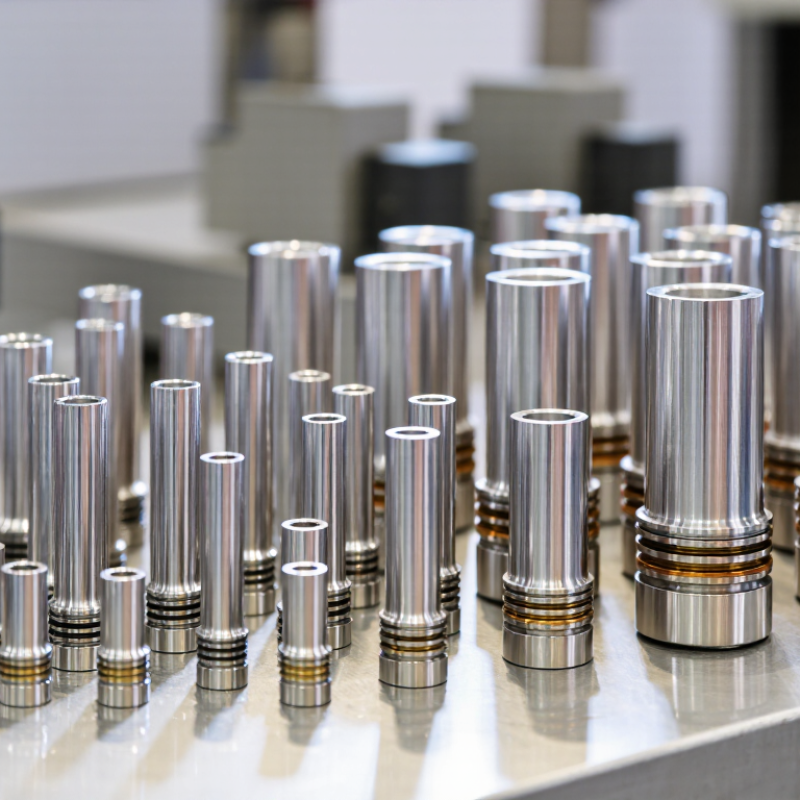
A cylinder piston rod is the steel shaft attached to the piston inside a hydraulic cylinder. It passes through the cylinder head and gland, where seals limit fluid leakage and a wiper helps keep dust off the moving surface. When pressurized oil pushes the piston, the rod extends and transfers force to a machine part, such as a loader arm or press platen. That is the cycle. On retraction, pressure acts on the rod side of the piston. Because the rod occupies part of that area, retracting force is usually lower than extending force at equal pressure.
The force relationship is straightforward: pressure multiplied by effective piston area produces force. For extension, the effective area is the full piston face; for retraction, subtract the rod’s cross-sectional area. ISO 6020-2:2015 specifies a medium-duty cylinder dimensional series based on 16 MPa nominal pressure. This is a standard design reference, not a safe operating rating for every cylinder. Real limits depend on construction, mounting, fluid, and service conditions. Check the manufacturer’s rated pressure and installation details.
In practice, a polished rod may look robust, yet side loading can score its surface and damage seals. Alignment matters. A bent rod can also increase friction and cause uneven wear. ISO 4413:2010 sets general safety requirements for hydraulic systems, including protection against pressure-related hazards. For maintenance, inspect the rod for scratches, corrosion, and oil traces near the gland. Small leaks are easy to dismiss, but they can signal seal wear or misalignment.
How Are Piston Rods Made and Quality-Tested in China?
China Best Cylinder Piston Rod Manufacturers?
How Are Piston Rods Made and Quality-Tested in China?
Piston rods typically start as selected steel bars, cut to length and machined close to their final dimensions. In capable Chinese factories, turning and grinding help create a smooth, straight surface. Heat treatment may improve strength, while a protective coating helps resist wear and corrosion. Details matter. A small runout can affect seal life inside a hydraulic cylinder. Shops should check dimensions, straightness, and surface roughness against agreed specifications, not just visual appearance.
Quality testing depends on the material and coating requirements. Inspectors may use hardness testers, micrometers, and coating-thickness gauges. They can also examine coating adhesion and surface defects. For a finished cylinder, pressure testing checks the assembled unit; it does not replace inspection of the rod itself. Ask for test records linked to the production batch. Useful evidence is specific. A polished report alone is not proof of consistent control, and sampling can miss occasional defects.
Tips: Share drawings, tolerances, operating conditions, and coating expectations before ordering. Request a sample and its inspection data. Ask how rejected parts are recorded and handled. One overlooked point: packaging matters. Rods need protection from knocks and moisture during transport, or a well-made surface may arrive damaged.
Which Factors Distinguish China’s Top Piston Rod Manufacturers?
A reliable way to compare China’s piston rod manufacturers is to look beyond price and production photos. Ask how steel grades are identified and tracked from incoming stock to finished rods. Ask for evidence. Material certificates, heat-treatment records, and inspection reports help verify the process behind a sales claim. Heat treatment should suit the rod’s load and operating conditions, not simply follow a standard setting.
Surface quality matters because seals run directly against the rod. Check how the manufacturer controls chrome thickness, adhesion, straightness, and surface roughness. Ask for measured results against your drawing. A polished sample can look excellent while concealing uneven coating across a production batch. Details matter. Packaging also deserves attention; scratches from handling can undermine careful machining before the parts reach your workshop.
Strong manufacturers explain their inspection steps and flag drawing concerns before production begins. Request a sample or trial batch, then check key dimensions and finish independently. Ask how rejected parts are recorded and corrected. A lower quotation may still be suitable, but only if its material, tolerances, and test requirements match your application. No factory is perfect. Clear answers, consistent records, and a willingness to discuss limitations are often more useful than broad claims of quality.
What Industries Use Chinese-Made Cylinder Piston Rods?
Chinese-made cylinder piston rods serve construction, agriculture, mining, transport, and factory automation. On excavators, rods push and lift heavy booms through repeated dusty cycles. Tractors use them for steering and implements. Mining equipment needs rods that tolerate shock, grit, and long operating hours. Forklifts, cranes, and production lines also rely on hydraulic motion. The working conditions differ. A rod suited to a clean factory press may not last on a muddy farm.
Fortune Business Insights valued the global hydraulic cylinder market at USD 14.12 billion in 2023 and projects USD 21.24 billion by 2032, a 4.6% compound annual growth rate. This market-wide estimate indicates demand across equipment sectors; it is not a piston-rod-only figure. That distinction is easy to miss. For buyers, application details matter more than broad market growth.
Tips: Check material certificates, rod straightness, surface hardness, and chrome-layer thickness. Ask for corrosion-test results when equipment operates outdoors or near saltwater. Match the rod’s coating and dimensions to the actual seal and cylinder design. A polished sample can look convincing. It still cannot replace inspection records and repeatable production checks.
How Can Buyers Evaluate and Select a Chinese Supplier?
When evaluating a Chinese cylinder piston rod supplier, look beyond price and catalog claims. Grand View Research estimated the global hydraulic cylinder market at USD 14.7 billion in 2023 and projected 4.5% annual growth from 2024 to 2030. This growth makes consistent component quality important. A polished sample is useful, but it cannot confirm batch consistency.
Ask for steel grade certificates, heat-treatment records, coating-thickness measurements, and inspection results for straightness and surface hardness. Compare these records with your drawing and operating conditions. Request a sample from regular production, then check dimensions and coating condition independently. A factory audit can reveal whether inspection equipment is calibrated and whether each rod has traceable batch records. Paper is not proof. Ask how the supplier handles rejected parts and corrective actions; this is where a tidy brochure may fall short.
Tips: Specify rod diameter, length, tolerance, coating, and working environment in writing. Ask for recent test reports tied to a production lot, not a generic example. Confirm packaging protects the chrome surface during transport. If reports use unfamiliar test methods, ask for clarification before approving the order.
How to Evaluate Chinese Cylinder Piston Rod Suppliers
Suggested weighting for a structured supplier evaluation (total: 100%). These are decision-making weights, not measured market statistics.
Prioritize quality verification and technical fit. Check material certificates, inspection records, delivery capability, warranty terms, and total cost before making a selection.
