Skip to content
Menu

China Best Micro Hydraulic Actuator Supplier?

Choosing the China best Micro Hydraulic Actuator supplier requires more than comparing prices or polished product photographs. A reliable evaluation begins with application details. Consider the required force, stroke length, operating pressure, response speed, mounting space, and fluid compatibility. A compact actuator may look suitable on a workbench, yet fail after thousands of cycles. Small dimensions do not guarantee stable performance.

Anthony Esposito, author of Fluid Power with Applications, explained the core principle clearly: “Hydraulics transmits power through a confined liquid.” That principle remains practical in modern micro systems. Buyers should request pressure-test records, leakage limits, material specifications, and repeatability data. Factory audits also matter. Look for controlled assembly areas, calibrated testing equipment, traceable components, and clear inspection procedures. ISO certification helps, but it is not proof of every product’s quality.

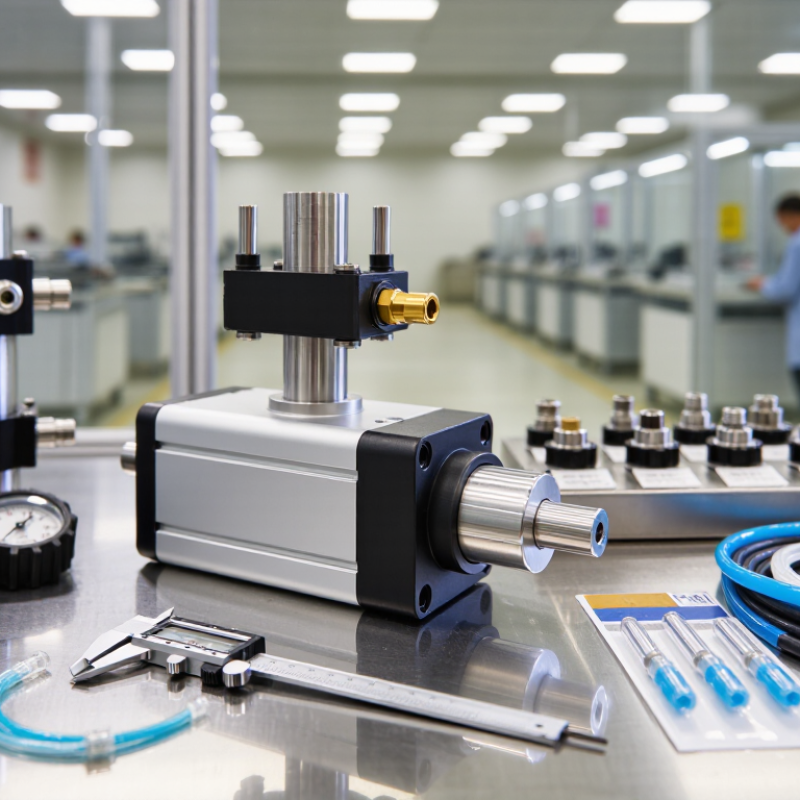
The strongest China-based supplier should provide engineering support before production. Ask for drawings, sample validation, and a written tolerance review. Test the Micro Hydraulic Actuator under realistic loads, temperatures, and duty cycles. Listen for uneven movement. Check oil leakage around seals. Measure stroke accuracy after repeated operation. These details expose weaknesses early.

No supplier is perfect. That deserves honesty. Some manufacturers communicate quickly but lack deep testing experience. Others offer excellent machining but weak documentation. This outline will compare technical capability, customization, quality control, delivery reliability, and after-sales support. The final choice should fit the application, not merely win a search ranking. Mistakes happen when “best” is treated as a permanent label rather than a verified result.

China Best Micro Hydraulic Actuator Supplier?

What Is a Micro Hydraulic Actuator?

A micro hydraulic actuator is a compact device that converts pressurized fluid into controlled linear or rotary motion. A small cylinder may push, pull, clamp, tilt, or position a component inside limited spaces. Its basic parts include a pressure chamber, piston or rotor, seals, ports, and a mounting structure.

The working principle is direct. Hydraulic pressure acts on an effective piston area, producing force. For example, 100 bar acting on a 1 cm² piston creates roughly 1,000 newtons, before friction and pressure losses. Size is not the whole story. Seal quality, stroke length, response time, heat, and contamination often decide real performance. In field testing, a compact actuator can look efficient on paper but move unevenly when oil viscosity changes.

Industry demand supports this design direction. MarketsandMarkets estimated the global hydraulic equipment market at about 42.9 billion US dollars in 2023, with steady growth expected through 2028. Grand View Research also reports continued expansion in hydraulic components, driven by automation, mobile machinery, and industrial equipment. These reports do not isolate micro actuators, so their figures need careful interpretation. That limitation matters.

For engineers evaluating a supplier, pressure testing, leakage control, material traceability, and repeatability deserve close attention. A lighter actuator may reduce installation space, yet it can sacrifice strength or service life. I would request cycle-test data, not only a catalog rating. Small hardware can carry serious loads. Weak assumptions cannot.

How Micro Hydraulic Actuators Work

China Best Micro Hydraulic Actuator Supplier?

How Micro Hydraulic Actuators Work

A micro hydraulic actuator converts fluid pressure into controlled mechanical movement. A compact pump sends oil through a narrow passage. The pressurized fluid enters a small cylinder and pushes against a piston. Force depends on pressure and piston area. Even a tiny piston can produce strong movement.

Valves control the fluid direction and speed. When the valve opens, the piston extends. When the flow reverses, the piston retracts. A reservoir collects returning fluid. Seals prevent leakage around the piston rod, while filters protect the pump and valves from fine particles. Small systems demand accurate machining.

A practical bench check should measure stroke, response time, noise, and temperature. Watch the rod under repeated loads. It should move smoothly, without shaking or sudden stalls. Excess heat may indicate restricted flow, poor sealing, or an incorrectly sized pump. This simple test often reveals problems earlier than visual inspection.

The actuator’s small size creates trade-offs. Narrow channels can respond quickly, but contamination may block them. Higher pressure increases output, yet it can accelerate seal wear. Engineers must match pressure, stroke, load, and duty cycle carefully. The calculation may look simple. Real behavior is less perfect. Temperature changes and small manufacturing differences can still affect performance.

Key Specifications for Selecting a Micro Hydraulic Actuator

China Best Micro Hydraulic Actuator Supplier?

Key Specifications for Selecting a Micro Hydraulic Actuator

Choosing a China-based micro hydraulic actuator supplier requires more than comparing unit prices. In field testing, compact actuators often fail when stroke data ignores mounting loads. Start with required force, stroke length, retraction time, and working pressure. Add a safety margin, but avoid excessive sizing. Oversized units waste energy and slow response. Measure the available envelope carefully, including ports, fittings, and service access. Small spaces expose poor planning quickly.

Material selection should match the operating environment. Stainless steel can resist moisture, while coated steel may reduce cost in dry equipment. Ask for seal material, temperature range, leakage limits, and cycle-life evidence. A reliable supplier should provide pressure curves, tolerance data, inspection records, and traceable test results. Request samples before volume production. Check the actuator under real oil temperature, side loading, and repeated starts. Laboratory figures are useful, but installation behavior matters more.

Control compatibility deserves equal attention. Confirm valve response, sensor options, connector protection, and hydraulic fluid compatibility. Noise and vibration should be measured, not guessed. One overlooked detail is idle pressure; it may create heat during long operating periods. I have seen compact systems pass bench tests yet struggle after thousands of cycles. That gap deserves honest discussion. Ask how failures are analyzed and design changes are documented. A supplier that explains limitations clearly is often more dependable than one promising perfect performance.

How to Evaluate a Micro Hydraulic Actuator Supplier

China Best Micro Hydraulic Actuator Supplier?

When evaluating a micro hydraulic actuator supplier, start with engineering evidence, not attractive catalog photos. Ask for force, stroke, retracted length, pressure range, response time, and leakage limits. These figures must match your working conditions. A reliable supplier should explain material choices, seal compatibility, temperature limits, and expected service life. Vague answers deserve caution.

Request a sample and a complete test report. Check whether each actuator receives pressure, endurance, and dimensional testing before shipment. Traceable serial numbers are useful when a batch problem appears months later. Review the supplier’s quality system, inspection records, and technical drawings. Experience matters here. A compact actuator may fit the machine, yet fail because its mounting load was underestimated. I have seen specifications change during discussions. That is not always a failure, but every change should be documented.

Tips: Compare at least three suppliers. Verify response speed with your actual fluid. Ask for failure analysis procedures. Confirm production capacity before approving custom tooling. Test samples under cold starts and repeated cycles. Do not judge reliability from one successful prototype. It is only evidence, not proof. Clear communication also matters, especially when drawings, tolerances, or delivery dates change. A dependable supplier admits limits and proposes measurable corrections.

Applications and Quality Standards of Micro Hydraulic Actuators

Micro hydraulic actuators convert fluid pressure into controlled linear force where space is limited. They serve compact medical positioning equipment, robotic grippers, aerospace valves, and agricultural sensing mechanisms. In a 30-millimeter housing, one actuator can move a precision slide through a short, repeatable stroke. Engineers often choose them for high force density, smooth motion, and resistance to shock loads. However, miniature components leave little room for contamination or design errors. Oil viscosity also changes with temperature, affecting response time and positioning accuracy. That matters in real installations.

Reliable production should verify material certificates, dimensional tolerances, pressure ratings, leakage performance, cycle life, and cleanliness. Each unit needs traceable inspection records, not only a final visual check. Pressure testing should reflect the operating range, including peak loads and frequent starts. Seal compatibility must match the hydraulic fluid and temperature range. ISO 9001-based systems support process control, but certification alone cannot prove actuator performance. Practical testing remains essential. A supplier may meet a datasheet while missing your installation reality.

Tips: Define stroke, load, speed, mounting space, and duty cycle before requesting quotations. Ask for pressure-test results and sample inspection reports. Check for burrs, uneven finishes, and connector damage during incoming inspection. Test prototypes under cold starts and repeated cycles. Do not select solely by price; that choice can create expensive adjustments later. Even experienced teams sometimes underestimate fluid cleanliness requirements. Review that assumption.

China Best Micro Hydraulic Actuator Supplier? - Applications and Quality Standards of Micro Hydraulic Actuators
Evaluation Dimension Typical Application Typical Technical Range Recommended Design or Quality Requirement Relevant Standard or Test Reference Supplier Verification Point
Compact automation Small clamping, indexing, positioning, and pick-and-place mechanisms Bore: approximately 8–25 mm
Stroke: approximately 10–100 mm
Confirm that the actuator can provide the required force within the available installation envelope and maintain stable movement at low speed. Dimensional inspection based on the approved engineering drawing; functional testing under rated hydraulic conditions. Request dimensional reports, rated-load test records, and a defined acceptance tolerance for stroke and mounting features.
Robotics and end-effectors Grippers, tool changers, compact wrist mechanisms, and mobile robotic equipment Working pressure: commonly 70–210 bar
Stroke: application-specific
Use low-friction seals, controlled internal leakage, protected rod surfaces, and a compact port arrangement. Pressure and leakage testing; cleanliness control; repeatability verification over multiple operating cycles. Check cycle-life data, leakage limits, seal compatibility, and repeatability results using the intended hydraulic fluid.
Medical and laboratory equipment Height adjustment, sample handling, precision positioning, and controlled linear motion Force: application-dependent
Motion: low-speed, smooth travel
Prioritize smooth motion, low noise, corrosion-resistant surfaces, clean manufacturing, and materials compatible with the operating environment. Risk-based product verification, material traceability, cleanliness inspection, and application-specific safety testing. Review material certificates, cleaning compatibility, surface-finish data, and documented process controls.
Agricultural and outdoor machinery Compact implements, dosing systems, small steering mechanisms, and auxiliary actuators Working pressure: commonly 100–210 bar
Environment: dust, moisture, temperature variation
Provide corrosion protection, robust wiper seals, contamination tolerance, and protection against water and dust ingress. Environmental exposure testing, pressure testing, corrosion evaluation, and seal performance testing. Verify coating thickness, rod hardness, seal material, ingress protection design, and cold-start performance.
Material handling Small lifting, diverter, gate, locking, and positioning mechanisms Force: calculated from load, friction, and safety factor
Duty: intermittent or cyclic
Size the actuator for static and dynamic loads, avoid side loading, and include mechanical end stops where required. Rated-load functional test; buckling assessment for extended rods; fatigue or cycle testing for repetitive applications. Ask for load calculations, allowable side-load guidance, cycle-life results, and inspection records for rod alignment.
Operating pressure All applications using hydraulic power Common miniature-system ranges include approximately 70–210 bar; actual ratings depend on design and materials. Define nominal, peak, and proof pressure separately. The actuator should not be operated above its documented rated pressure. Hydrostatic pressure test and proof-pressure test according to the product specification and applicable hydraulic-cylinder practice. Confirm pressure ratings, test duration, test medium, calibrated gauges, and recorded acceptance results.
Force capacity Linear pushing and pulling applications Approximate theoretical force is calculated as F = p × A; actual output is reduced by friction and pressure losses. Consider extension and retraction forces separately, especially where the rod occupies part of the piston area. Force verification at specified pressure, temperature, and flow conditions. Request force-versus-pressure data and confirmation that the test setup matches the intended operating conditions.
Position accuracy and repeatability Precision fixtures, inspection devices, and automated positioning Performance depends on valve control, mounting rigidity, fluid compressibility, load variation, and sensor resolution. Specify accuracy, repeatability, backlash, and acceptable drift separately instead of using a single generic tolerance. Repeatability test over a defined number of cycles and operating points; measurement equipment should be calibrated. Review test method, sample size, measurement uncertainty, and actual results under representative loads.
Leakage control Systems requiring clean operation, stable holding, or minimal pressure loss Limits should be stated as an application-specific internal and external leakage rate. Use suitable piston, rod, wiper, and static seals; define leakage criteria at both ambient and operating temperature. Static pressure-hold test, dynamic leakage test, and visual inspection after operation. Confirm the leakage test pressure, hold time, fluid viscosity, temperature, and pass/fail threshold.
Materials and surface protection Indoor, humid, corrosive, or washdown environments Typical construction may include alloy steel or stainless steel components with engineered seal materials. Match material selection and coating system to humidity, chemicals, temperature, and expected service life. Material certificate review, hardness testing, coating-thickness inspection, and corrosion testing where specified. Request batch traceability, material certificates, coating records, and documented compatibility with the hydraulic fluid.
Cleanliness and contamination control Fine-control systems and applications with small valves or narrow passages Cleanliness level should be defined by particle count, contamination sensitivity, and system requirements. Flush internal passages, protect ports during storage, and package the actuator to prevent ingress of dust and moisture. Particle-count or gravimetric cleanliness inspection according to the agreed quality plan. Check flushing records, port protection, packaging method, and cleanliness acceptance criteria.
Temperature capability Indoor machinery, outdoor equipment, and temperature-variable installations Many standard hydraulic components are designed around approximately -20°C to +80°C, but the actual range is product-specific. Evaluate seal performance, fluid viscosity, start-up force, and pressure rating at minimum and maximum operating temperatures. Low- and high-temperature functional testing using the specified hydraulic fluid and operating cycle. Verify documented temperature limits, seal compound, fluid recommendation, and cold-start test results.
Durability and cycle life Production equipment and mechanisms with frequent repeated movement Cycle life depends on load, stroke, speed, pressure, side load, contamination, and maintenance conditions. Define the complete duty cycle and inspect seals, rod surfaces, fasteners, and leakage after testing. Accelerated life or endurance testing using representative pressure, load, speed, and cycle frequency. Request cycle-test conditions, failure criteria, inspection intervals, and corrective-action records.
Documentation and traceability Regulated, safety-related, or high-volume industrial projects Documentation should cover specifications, drawings, materials, tests, changes, and batch identification. Maintain revision control and ensure each delivered actuator can be linked to production and inspection records. Quality-management procedures, inspection plans, nonconformance control, and calibration records. Evaluate sample inspection reports, certificate formats, change-notification procedures, and after-sales response times.