Why Choose Walk In Temperature Chamber at Canton Fair 139?
The upcoming 139th Canton Fair is set to be a pivotal event for industries such as advanced manufacturing and electronics. Experts emphasize the importance of showcasing high-quality equipment, like the Walk In Temperature Chamber. Dr. Jane Collins, a leading expert in environmental testing, stated, “Precision in testing determines success in innovation.”
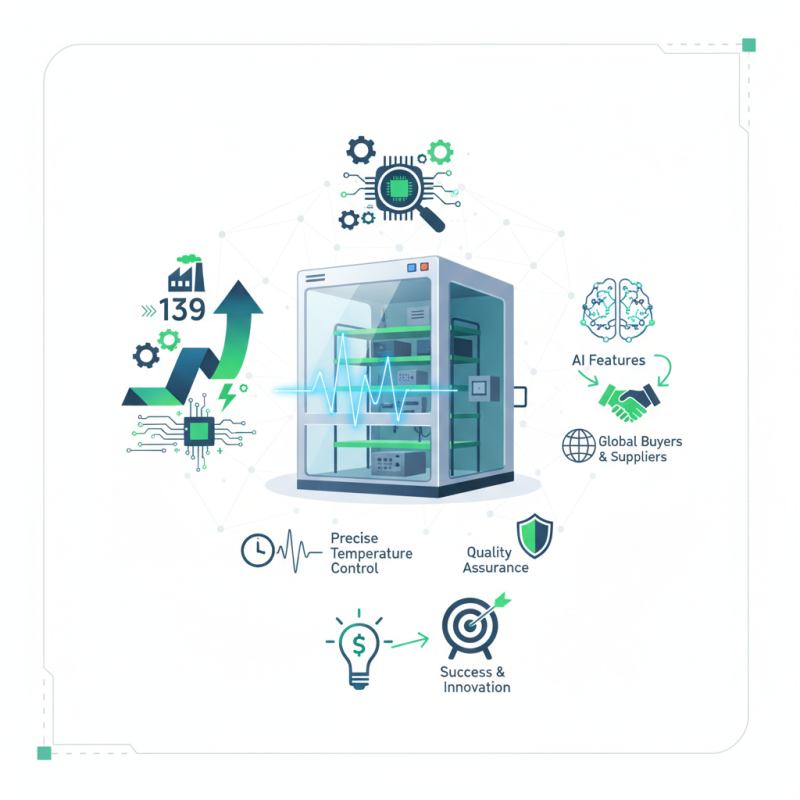
The Walk In Temperature Chamber offers precise temperature control vital for testing various products. This facility allows manufacturers to simulate environmental conditions accurately. It is essential for quality assurance and product development. Having such capabilities demonstrated at the Canton Fair would attract attention from global buyers and suppliers.
Moreover, with the integration of AI features at the Fair, sourcing the right equipment becomes efficient. However, not all exhibitors may realize the full potential of their offerings, leading to missed opportunities. The Walk In Temperature Chamber represents a key technology that could elevate their products. This event is not just about displays—it’s about learning, adapting, and refining strategies for success.
Benefits of Walk In Temperature Chambers for Product Testing
Walk-in temperature chambers provide controlled environments for extensive product testing. They simulate various temperatures and humidity levels, essential for product reliability. These chambers are ideal for evaluating how products react under stress. For instance, electronics can be tested for stability in extreme heat or cold. This real-world simulation helps identify potential failures before products hit the market.
Using a walk-in temperature chamber can accelerate the development process. However, some might overlook preliminary setups. Positioning products carefully is crucial to get accurate results. Improper placement may lead to misleading data. Regular calibration is also necessary to maintain precision, but many forget this step. A lapse in calibration can skew test outcomes.
The key benefits of these chambers include enhanced product performance and reduced time to market. Improved quality assurance reduces the risk of recalls. But potential drawbacks also exist. The initial investment can be significant. Companies must weigh costs against benefits. Scrutiny of results is vital to ensure they reflect real usage scenarios. Without this, decisions may be flawed.
Benefits of Walk In Temperature Chambers for Product Testing
Key Features to Look for in Walk In Temperature Chambers
Choosing the right walk-in temperature chamber involves understanding key features. Temperature uniformity is crucial. Reports indicate that up to 80% of testing inaccuracies stem from uneven temperature distribution. Look for chambers with advanced control systems. These ensure consistent conditions across the entire interior.
Next, consider the construction materials. Chambers made from durable, insulated materials help maintain internal temperatures. Studies show that insulation quality can reduce energy consumption by up to 25%. The door design is also vital. Sealed doors minimize external interference and maintain stable conditions for experiments.
Capacity is another point of reflection. Some facilities underestimate space needs. A chamber that is too small can limit test samples or compromise results. Evaluate actual requirements before deciding. Ultimately, the choice should align with specific testing needs while being mindful of reliability and efficiency.
Comparative Analysis: Walk In vs. Standard Temperature Chambers
When considering temperature chambers, a walk-in model offers unique advantages. These chambers provide ample space for testing large items. They allow for better accessibility and easier monitoring of temperature conditions. Unlike standard temperature chambers, walk-in models can accommodate bulky equipment or multiple samples at once. This flexibility is essential in various industries, from electronics to pharmaceuticals.
However, there are some challenges. Walk-in chambers often require more energy to operate. This larger footprint can lead to higher operational costs. Additionally, controlling the temperature in a spacious environment can be more complex. Precise calibration is critical. Small fluctuations may occur, which could affect test reliability. Proper insulation and design are vital in minimizing these issues.
In contrast, standard temperature chambers are often more straightforward to manage. They are typically more cost-effective and easier to calibrate. Their compact size means they consume less energy. But they may not handle large samples efficiently. This limitation can hinder testing processes. The choice between the two models truly depends on your specific needs and resources.
Industry Applications of Walk In Temperature Chambers at Canton Fair
Walk-in temperature chambers serve various industries, providing controlled environments for testing. These chambers are essential for manufacturers who require precise conditions for product testing. Different sectors, such as electronics and automotive, rely on these chambers for quality assurance. A uniform temperature is crucial for accurate results.
Researchers often use walk-in chambers for material testing. They examine the durability of components under extreme conditions. This helps in predicting real-world performance. However, a challenge lies in simulating conditions accurately. Sometimes, discrepancies between expected and actual outcomes arise.
In the pharmaceutical industry, these chambers play a vital role in stability testing. Medications must withstand specific temperatures throughout their lifespan. Walk-in chambers help determine how products react to extreme heat or cold. Yet, maintaining consistent conditions can be tricky. Users often face issues with calibration. Regular checks are necessary to ensure reliability.
Market Trends and Innovations in Temperature Chamber Technology
As the temperature chamber industry evolves, staying updated with the latest trends is vital. Innovations in temperature chamber technology at events like the Canton Fair are noteworthy. Manufacturers are focusing on enhancing energy efficiency and precision. This shift reflects a growing demand for reliable testing environments.
Tips for attendees: Engage with exhibitors. Ask questions about their latest offerings. Networking can lead to valuable insights and collaborations. Small companies often showcase groundbreaking innovations that larger firms overlook.
Emerging trends point towards automation and smart technology integration. Automated chambers provide more accurate data logging. This helps users make informed decisions. However, some businesses struggle to adapt to these new technologies. Continuous training is essential for maximizing investment in such innovations. Embracing change is challenging but necessary.