
Skip to content
Menu

Why Choose an Electrostatic Collector for Air Filtration?

Why Choose an Electrostatic Collector for Air Filtration?

Fine dust drifts through a workshop, cooking fumes linger above a busy kitchen, and ordinary filters can quickly become loaded. An Electrostatic Collector offers another approach: it uses an electrical charge to attract and capture airborne particles on collection plates. Instead of relying only on a dense filter medium, it can handle particle-laden air with a design suited to repeated cleaning. The result may be lower airflow resistance in some applications, though actual performance depends on the unit and operating conditions.

Aerosol scientist David S. Ensor’s research offers a useful principle, paraphrased here rather than presented as a verbatim quotation: particle capture depends on the aerosol and the conditions in which a collector operates. That distinction matters. Particle size, airflow, humidity, maintenance, and correct installation can all affect results. A collector is not a magic box.

Its appeal is practical. Removable plates can be inspected for visible buildup, and routine cleaning helps keep performance from slipping. Still, a neglected unit may collect residue and deliver disappointing results. Buyers should check documented efficiency, airflow requirements, service intervals, and suitability for the specific contaminants involved. Independent testing and clear maintenance instructions make comparisons more reliable.

This guide explores how electrostatic collection works, where it may fit, and what to check before choosing a system. The trade-offs deserve attention, too. A little skepticism helps.
Why Choose an Electrostatic Collector for Air Filtration?

What Is an Electrostatic Collector?

An electrostatic collector is an air-cleaning device that uses electrical charge to capture airborne particles. Inside the unit, an ionizing section gives particles a charge as air passes through. Collector plates with the opposite charge then attract and hold them. Dust, smoke particles, and some other fine aerosols can collect on these plates instead of continuing through the airflow.

The process is quiet in many systems. You may notice only a soft fan sound and a thin layer of dust on the plates during inspection. Unlike a filter that traps particles in a disposable fiber mat, some electrostatic collectors use washable plates. Cleaning matters: a dirty plate can reduce performance, and damp plates should be fully dry before use. That detail is easy to miss.

An electrostatic collector does not remove every kind of air contaminant. It is designed mainly for particles, not gases or odors, so it may need to work alongside other filtration methods. Results also depend on airflow, room size, particle type, and regular maintenance. The name can sound more certain than the real-world outcome. Check the unit’s specifications, cleaning instructions, and any information about ozone emissions before choosing one.

How Does Electrostatic Air Filtration Work?

An electrostatic air collector uses an electrical charge to separate airborne particles from moving air. In many designs, air passes through an ionizing section, where particles such as dust, pollen, and some smoke particles gain a charge. The charged particles then move toward oppositely charged collection plates and stick to their surfaces. The process is quiet. You may notice a thin gray film on the plates after use; that residue is captured material, not proof that every harmful particle has been removed.

Performance depends on the collector’s design, airflow, particle size, and condition. Dirty plates can reduce collection, so follow the manufacturer’s cleaning schedule and switch off power before handling removable parts. A collector does not necessarily remove gases or odors; those usually need a suitable sorbent, such as activated carbon. Some ionizing systems can also produce ozone, so check independent emissions information rather than assuming all models behave alike. That distinction is easy to overlook. In a real room, placement and ventilation matter too, and a clean-looking plate cannot tell you exactly how much exposure has changed.

Why Choose an Electrostatic Collector for Air Filtration?

How does electrostatic air filtration work? It charges airborne particles and attracts them to oppositely charged collection plates.

Particle-size references: PM2.5 and PM10 are particulate-matter categories defined by aerodynamic diameter cutoffs of 2.5 μm and 10 μm. A human hair is about 70 μm wide. These references illustrate the range of airborne particle sizes; they are not electrostatic collector efficiency ratings.

What Components Make Up an Electrostatic Collector?

Why Choose an Electrostatic Collector for Air Filtration?

What Components Make Up an Electrostatic Collector?

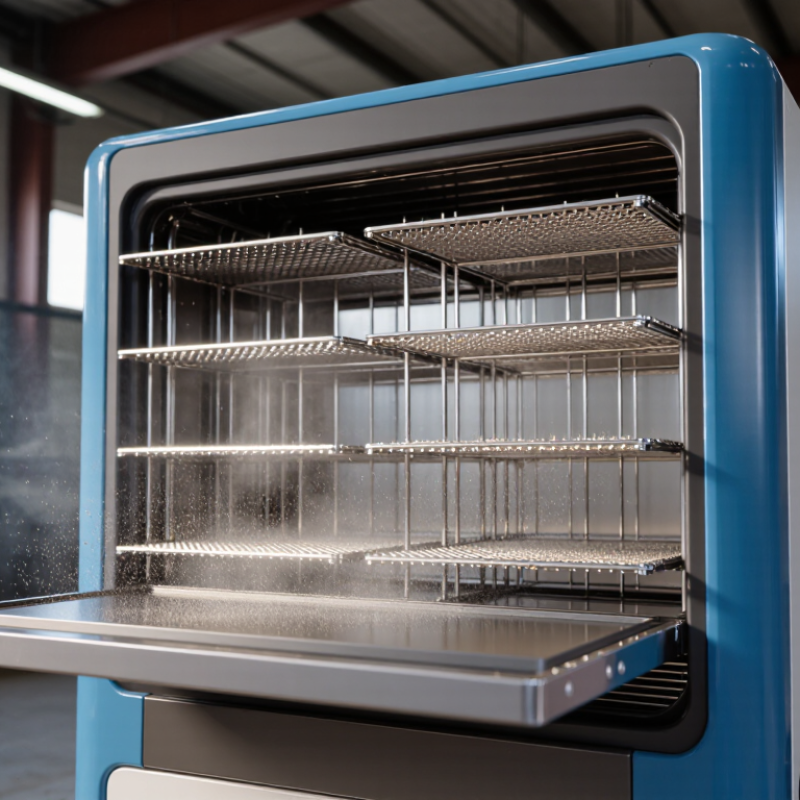
An electrostatic collector typically includes an inlet, a pre-filter, an ionizing section, collection plates, and a high-voltage power supply. The pre-filter catches larger particles, such as lint, before they reach the finer stages. In the ionizing section, charged wires or electrodes give airborne particles an electrical charge. Oppositely charged plates then attract and hold those particles. The cleaned air exits through the outlet, while a control unit monitors operation and may signal a fault. Exact layouts vary by application.

That sounds simple, but small details matter. Plate spacing, airflow, and dust type can all affect collection performance. A collector may handle fine particulate well, yet still need regular cleaning to prevent buildup. It is not a set-and-forget device. Maintenance procedures should follow the equipment instructions, and electrical components should be serviced by qualified personnel.

Tips: Check plates for visible residue and watch for changes in airflow or alerts. Keep a maintenance log. It can reveal patterns that are easy to miss during a quick inspection. Don’t assume every deposit is harmless; unusual buildup may indicate a process or operating issue.

What Benefits Does It Offer for Air Filtration?

An electrostatic collector charges airborne particles, then draws them onto oppositely charged plates. It can capture fine dust without relying solely on a dense disposable filter. In practice, this may mean less frequent filter replacement and lower airflow resistance than some tightly packed media filters. The room feels no different; the benefit is mostly in the air moving through the system.

The U.S. Environmental Protection Agency’s Electrostatic Precipitator fact sheet reports collection efficiencies above 99% for some industrial systems. That figure applies to specific equipment and operating conditions, not every home or commercial unit. Still, it shows the technology’s potential when particle loading, airflow, and maintenance are properly managed. A collector’s plates need regular cleaning; a dusty plate can lose performance. Small detail. Big effect.

For air filtration, reusable collection surfaces can reduce disposable-filter use and help capture smoke, lint, and other particles. Results depend on particle size, airflow, and how consistently the unit is serviced. The EPA’s Guide to Air Cleaners in the Home also cautions that some electronic air cleaners may produce ozone, so buyers should check independent performance information and follow operating instructions. I would not treat “high efficiency” as a guarantee in every room. Real performance deserves a closer look.

Why Choose an Electrostatic Collector for Air Filtration? — What Benefits Does It Offer for Air Filtration?
Evaluation Dimension How an Electrostatic Collector Works Potential Benefit Practical Consideration
Particle removal An electric field charges airborne particles and draws them onto oppositely charged collection plates. Can capture particles such as dust, smoke, and some airborne aerosols when properly designed and maintained. Removal performance depends on the collector design, airflow, particle properties, and maintenance; it is not one fixed efficiency for all units.
Airflow resistance Particles are collected on plates rather than trapped throughout a dense disposable filter medium. Many designs have relatively low pressure drop when clean, which can help reduce the extra effort required to move air. Actual pressure drop varies by equipment and airflow, and deposited dirt can affect performance.
Filter replacement and waste Collection plates in many systems can be removed and cleaned for reuse. Reusable components can reduce the need for routine disposable-filter replacement. Cleaning is still necessary. Follow the equipment instructions and allow washed components to dry fully before reinstalling them.
Energy use The collector uses electrical power to create the charging and collection fields. Low airflow resistance in some applications may help limit fan energy associated with overcoming filter pressure drop. Total energy use depends on the collector, its power supply, the fan, and operating conditions; compare complete system specifications.
Maintenance needs Particles build up on the collection surfaces over time. A cleanable collection section can support repeated use instead of automatic disposal after loading. Regular inspection and cleaning are important; dirty plates or electrical components can reduce collection performance.
Gases and odors Electrostatic collection targets particles, not most gases or vapors. It can be used as part of a broader air-cleaning system for particle control. Use an appropriate gas-phase treatment, such as activated carbon, when gas or odor removal is required.
Ozone and safety Some designs use high voltage and may produce ozone as a by-product. Choosing and operating equipment carefully can help address indoor-air and electrical-safety requirements. Check applicable ozone-emission and electrical-safety certifications, and follow installation and maintenance instructions.

Where Are Electrostatic Collectors Used?

Why Choose an Electrostatic Collector for Air Filtration?
Where Are Electrostatic Collectors Used?

Electrostatic collectors are used wherever airborne particles need to be removed from moving air. In commercial kitchens, they can capture grease-laden smoke before it travels through exhaust systems. Metalworking shops may use them to collect oil mist from machine tools. Printing and manufacturing facilities can also apply them to process exhaust containing fine particles. The exact fit depends on the contaminant, airflow, and operating conditions.

They are not universal filters. An electrostatic unit works by charging particles and collecting them on oppositely charged plates, so performance depends on proper sizing and regular cleaning. A dusty plate can collect less effectively; a neglected unit may become a weak link. That matters. These collectors generally target particles, not gases or every source of odor, so other treatment may be needed. In practice, site measurements and maintenance access deserve attention before installation. I would not assume that a compact unit can handle a large, changing exhaust stream without testing. Good filtration starts with understanding what is in the air.