
Skip to content
Menu

How to Choose the Best Titanium Dinner Plate for Camping

Choosing a Titanium Dinner Plate for camping is not just about finding the lightest item on the shelf. A plate should fit your meals, pack, and routine at camp. Think about its diameter, usable depth, rim shape, and how steadily it sits on a picnic table or uneven ground. A wide, shallow plate can suit sandwiches and trail meals, while a deeper design may help contain rice, sauce, or stew. Small details matter. A narrow rim can make food harder to scoop, especially with a spoon.

Weight and durability deserve a closer look, but product descriptions do not tell the whole story. Check the listed material, dimensions, weight, and care guidance, then compare them with what you actually carry. A very thin plate may save a few grams, yet feel less stable when loaded. That trade-off is easy to overlook. Consider whether the plate nests with your other dishes and whether its surface is simple to clean after a greasy meal. Titanium is valued for being lightweight and corrosion-resistant, but it is not automatically the right choice for every camper. Price, comfort, and practical design still count. No single plate wins every trip. Even a carefully chosen one can feel awkward at first; your usual camp meals may change what “best” means. This guide will help you weigh those factors and choose a plate that suits your real outings, not just its product label.
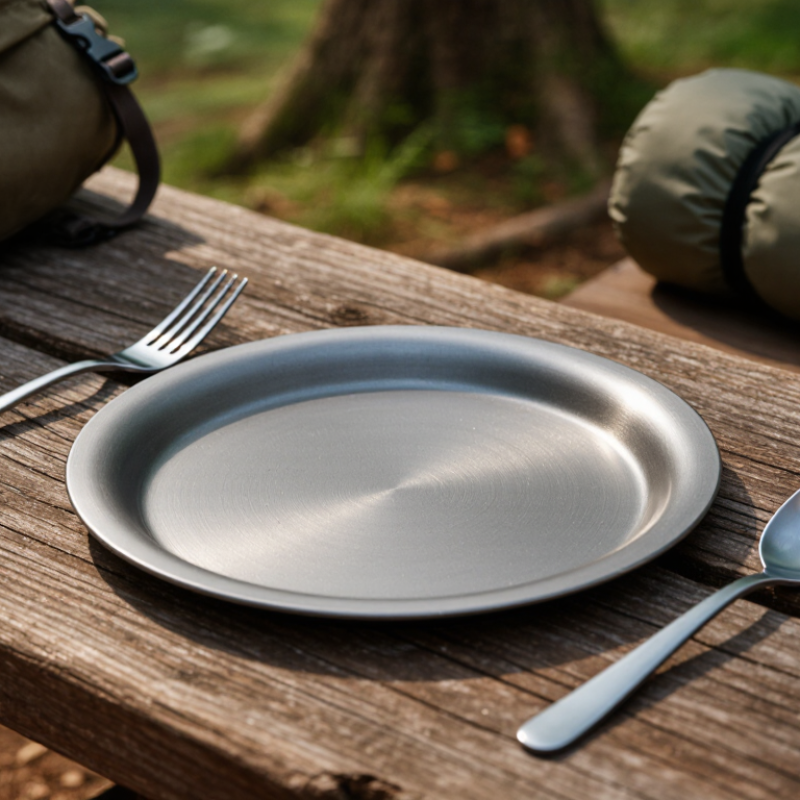
How to Choose the Best Titanium Dinner Plate for Camping

Identify Your Camping Meal Needs and Plate Requirements

Before choosing a titanium dinner plate, list the meals you actually plan to eat. A freeze-dried dinner needs room for food and stirring; tortillas, fruit, or sandwiches need a broad, shallow surface. The 2024 North American Camping Report estimates that 58 million U.S. households camped in 2023, reflecting a wide range of camping styles. That figure is not a plate-size guide, though. Your menu and cooking setup matter more.

For one-pot meals, look for a deeper plate with a stable base and a rim that can catch broth. For shared meals or bulky foods, prioritize width and a usable flat area. Check the plate’s listed capacity, diameter, and weight, then compare them with your cook pot and packed gear. A plate that nests inside a pot can save space, but check that it does not rattle or scratch nearby items. Small details matter. Try a typical meal at home before your trip; portions and stirring space are easy to underestimate. Titanium heats quickly, so a plate filled with hot food may feel uncomfortable to hold. A fork test helps. The lightest option is not always the easiest one to use.

Understand Titanium Plate Materials, Benefits, and Limitations

A titanium dinner plate can be made from commercially pure titanium or a titanium alloy, and the exact material may vary by product. Check the manufacturer’s material details rather than relying on the word “titanium” alone. A thin plate keeps pack weight low. It also resists rust and handles damp camping conditions well. Light, but not magic.

Titanium is generally durable, but a very thin plate can bend or dent under pressure. It is not naturally nonstick, so sticky foods may take extra scrubbing. The metal transfers heat less readily than stainless steel, yet a plate can still become hot when filled with steaming food. A rolled rim can make handling easier, though design and thickness matter. I’d look closely at those details; weight alone is an imperfect guide.

Tips: Compare the plate’s listed weight, dimensions, and material grade. Check whether the rim feels easy to grip with cold fingers. For a more stable meal on uneven ground, choose a wider base. If possible, inspect the plate in person; product descriptions can leave out useful details.

How to Choose the Best Titanium Dinner Plate for Camping — Understand Titanium Plate Materials, Benefits, and Limitations

Factor What to Look For Benefits Limitations and Buying Notes
Material grade Many lightweight plates use commercially pure titanium, commonly Grade 1 or Grade 2. Both grades offer strong corrosion resistance and are suitable for ordinary food contact. Grade 1 is more formable; Grade 2 is stronger. Check that the material is identified clearly. Avoid assuming that every titanium-colored plate is made from titanium.
Weight Compare the listed weight of the complete plate, not just the material description. Titanium has a density of about 4.5 g/cm³, lower than stainless steel at about 7.8 g/cm³. Titanium is denser than aluminum at about 2.7 g/cm³, so it is not automatically the lightest option. Shape, thickness, and diameter affect total weight.
Plate thickness and rigidity Look for a plate that feels sufficiently stiff for the intended meals and packing conditions. A well-designed plate can be light while remaining durable for regular campsite use. Very thin metal can flex, dent, or feel less stable. Greater thickness can improve rigidity but adds weight.
Diameter and depth Choose a diameter that fits your meals and a rim or shallow depth that helps contain food. A broad, shallow plate works well for solid meals and is easy to clean. Plates are less suitable than bowls for soup or liquid-heavy meals. Check packed dimensions if space is limited.
Corrosion resistance Consider whether the plate will be used in wet, humid, or coastal environments. Titanium forms a stable oxide layer that contributes to its strong resistance to corrosion in many everyday conditions. Rinse off food and salt and dry the plate before storage. Corrosion resistance does not mean that all surface damage or contamination is impossible.
Heat and serving comfort Use the plate primarily as dinnerware unless its manufacturer specifically approves another use. Titanium can tolerate high temperatures as a material. A thin metal plate can heat quickly from hot food or a flame and may be uncomfortable to hold. Titanium also conducts heat less effectively than aluminum, so heat can be uneven during cooking.
Food contact and cleaning Choose a smooth, uncoated surface intended for food use, and follow the care instructions. Uncoated titanium is generally easy to wash and does not require a nonstick coating. Food may stick to a bare metal surface, especially if the plate is used for cooking. Abrasive cleaning can scratch the finish.
Shape and edge finish Inspect the rim for a smooth finish and the base for stable contact with a flat surface. A rolled or smoothly finished rim can make a plate more comfortable to handle and less prone to sharp edges. Lightweight plates may slide or tip more easily on uneven ground. A wide base and modest rim can improve everyday usability.
Best fit by camping style For backpacking, prioritize low weight and nesting. For car camping, prioritize size, stiffness, and comfort. Titanium is especially useful when low pack weight and corrosion resistance matter. If low cost or heat spreading is the main priority, compare other materials such as stainless steel or aluminum before deciding.

Quick selection tip: For most backpackers, a food-safe, uncoated Grade 1 or Grade 2 titanium plate with a smooth rim, suitable diameter, and enough rigidity is a practical choice. Treat it as dinnerware rather than cookware unless the manufacturer says otherwise.

Compare Plate Size, Shape, Weight, and Rim Design

When comparing titanium dinner plates, start with the meals you actually pack. A plate around 7 inches across suits compact portions and fits neatly inside many cooking kits. A plate closer to 9 inches gives more room for a full meal, but takes up more space in a crowded pack. Check the usable flat area, not just the outer diameter. A broad rim can make the eating surface smaller than it looks.

Shape affects how the plate sits and packs. Round plates are easy to use on uneven ground, while oval designs can fit beside other gear, though they may feel awkward on a small camp table. Weight matters on long hikes, but a few grams saved may not be worth a plate that feels cramped. I once judged a plate by weight alone; that was not very useful at dinner.

Look closely at the rim. A slightly raised edge helps keep sauce, rice, or loose vegetables from sliding off when the plate tilts. A narrow, smooth rim is easier to wipe clean and may stack better with cookware. Very thin edges can feel sharp or flex when lifted, so check the finish and stiffness in person if possible. Titanium warms quickly from hot food, too. Use care when picking it up.

Check Durability, Cleaning, and Compatibility with Camping Gear

How to Choose the Best Titanium Dinner Plate for Camping
Check Durability, Cleaning, and Compatibility with Camping Gear

A good camping plate should handle repeated packing without becoming awkward to use. Check the rim and base for a solid, even finish, with no sharp edges or wobble on a flat surface. Titanium is lightweight and corrosion-resistant, but thin plates can still bend under pressure. A slightly deeper shape helps keep rice, chopped vegetables, or sauce from sliding off. Scratches are normal; they do not automatically mean the plate is unsafe. Still, inspect it for dents that make cleaning difficult.

Cleaning matters when water is limited. Smooth surfaces are easier to wipe, while deep seams can trap food. Rinse promptly after sticky meals, then wash with mild soap and a soft sponge. Avoid assuming every plate is safe for direct flame or high heat; check its instructions. Before buying, compare its diameter with your pot, storage box, and pack. A plate that nests neatly saves space, but it should not jam inside cookware or rattle loudly while hiking.

Tips: Measure your cooking pot’s inner width, then leave a little clearance. Pack a thin cloth between nested dishes to reduce clatter. Consider your usual meals, too. I might choose the lightest plate, then regret its small size at dinner. A quick fit check at home can prevent that.

Choosing a Camping Dinner Plate: Material Density

Typical room-temperature densities are approximately 4.51 g/cm³ for titanium, 7.9 g/cm³ for stainless steel, and 2.70 g/cm³ for aluminum. Lower density can help reduce material weight, but a finished plate’s weight also depends on its size and thickness. Check that the plate fits your nesting pot and packed gear, and follow its care instructions for cleaning.

Choose a Plate That Fits Your Budget and Trip Style

Set a budget before comparing titanium plates, but consider what you are paying to carry. For backpacking, a simple, lightweight plate may be worth more than a polished finish or extra features. Check its weight, diameter, and rim depth. A shallow plate can let sauce run toward your sleeping pad when you eat on uneven ground. Annoying, and easy to overlook online.

Car campers have different priorities. A slightly larger plate with a rolled edge may feel steadier for meals eaten at a folding table. It can also be easier to handle with gloves. Compare the price with the plate’s construction, not just its weight. Very thin titanium saves grams, but it may flex when loaded with food. That trade-off is real.

Think about your usual trips, too. One-night hikes call for compact gear that nests inside a pot; family camps may reward a broader plate that is easier to share and clean. If possible, handle a similar plate before buying. Notice whether the rim feels comfortable and whether the base rocks on a flat surface. I once chose the lightest option and regretted its small size. A few grams mattered less than having room for dinner.