
What Is 304 Stainless Steel Angle Used For?
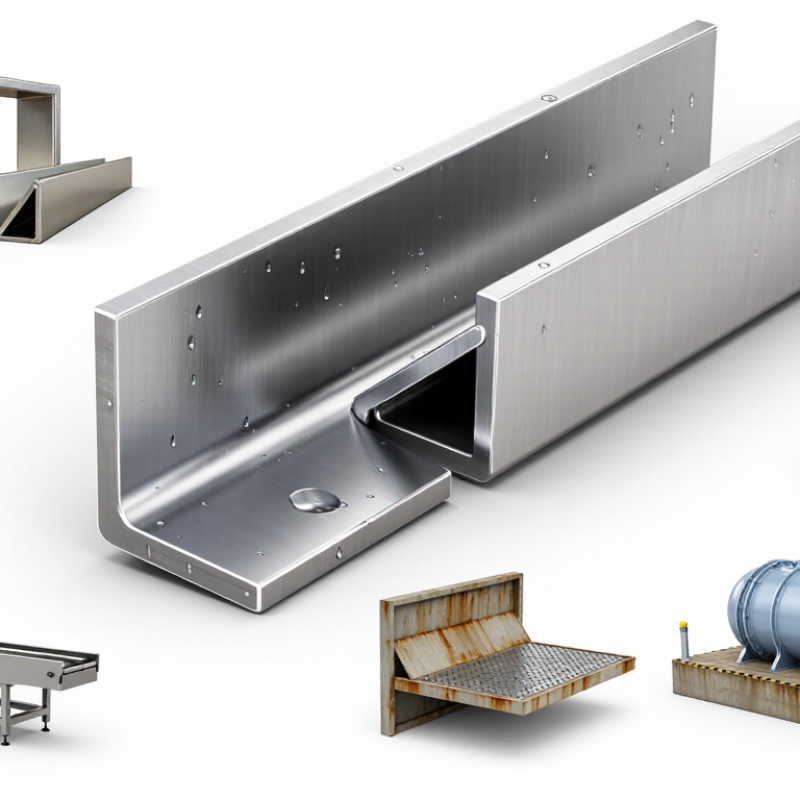
304 Stainless Steel Angle is a practical structural profile with two legs meeting at a precise 90-degree corner. It is commonly used where strength, clean appearance, and corrosion resistance must work together. You may find it around food-processing equipment, architectural frames, marine fittings, platforms, tanks, and protective edges. It is not merely decorative.
Fabricators value 304 Stainless Steel Angle because it handles moisture, mild chemicals, and frequent cleaning better than ordinary carbon steel. Its L-shaped section supports frames, brackets, shelves, machine bases, and reinforcement points. The surface can be mill-finished, brushed, or polished. Each choice changes its appearance and maintenance needs. Small details matter.
Corrosion expert Catherine Houska has emphasized, “Stainless steel is not maintenance-free.” That warning deserves attention. Even 304 stainless can stain near saltwater, chlorides, weld contamination, or trapped debris. Proper drainage, suitable fasteners, clean fabrication tools, and post-weld treatment can improve service life. Poor design still causes problems.
This guide examines what 304 Stainless Steel Angle is used for and why engineers select it for specific environments. It also considers thickness, leg dimensions, load direction, fabrication methods, and finish. A thicker angle is not automatically safer. An attractive finish is not automatically durable. That is where practical judgment becomes important.
Real projects can be imperfect. Drawings may omit drainage details. Installers may mix incompatible metals. Maintenance may be delayed. Therefore, material selection should consider exposure, loading, cleaning chemicals, temperature, and connection design. This overview offers dependable guidance, but demanding structures should receive project-specific review from a qualified engineer or fabricator.
What Is 304 Stainless Steel Angle?
304 stainless steel angle is an L-shaped section made from austenitic stainless steel. Its two legs meet at a right angle, creating a practical edge for support, framing, and protection. The material commonly contains 18–20% chromium and 8–10.5% nickel, according to ASTM A240 chemical requirements. Chromium forms a passive oxide film, while nickel improves toughness and formability.
In practice, 304 angle appears around food-processing equipment, commercial kitchens, architectural trims, tanks, handrails, and light structural frames. Its exposed edges resist ordinary atmospheric moisture better than carbon steel. It also handles frequent washing and moderate heat. ASTM A240 lists minimum tensile strength near 515 MPa and minimum yield strength near 205 MPa for 304 sheet and plate. Actual angle performance depends on thickness, forming method, and surface condition.
The “stainless” label can mislead. Salt spray, chlorides, and stagnant water may still cause pitting. A 2023 worldstainless market report identified construction and infrastructure as major stainless steel demand areas, where corrosion resistance can reduce maintenance needs. However, 304 is not always the best choice near seawater or chemical plants. Engineers should check load calculations, weld details, drainage, and cleaning practices. Even a polished angle can fail early when debris remains trapped inside its corner.
What Properties Make 304 Stainless Steel Angle Useful?
What Is 304 Stainless Steel Angle Used For?
304 stainless steel angle is used for frames, equipment supports, guards, shelving, and architectural edges. Its useful performance comes from balanced chemistry, not appearance alone. ASTM A240/A240M lists approximately 18% chromium and 8% nickel for 304 stainless steel. Chromium forms a passive surface film, while nickel improves toughness and corrosion resistance.
The material also offers practical strength. ASTM A240/A240M specifies a minimum tensile strength of 515 MPa and a minimum yield strength of 205 MPa for 304 products. Those values support light-to-medium structural applications, although an angle’s real capacity depends on thickness, length, holes, and load direction. The International Stainless Steel Forum identifies 304 as a widely used austenitic grade for food, chemical, and architectural environments. It is easy to form and weld, but welding can still create distortion and surface discoloration.
Thermal movement matters in long runs. Technical data from the Nickel Institute places 304’s thermal expansion near 17.2 micrometres per metre per degree Celsius. Designers should allow movement near hot equipment and outdoor joints. The alloy also performs well in humid areas, yet it is not immune to salt spray, stagnant water, or iron contamination. That detail is often underestimated. A polished angle can still stain when cleaning practices are poor. Regular rinsing, correct fasteners, and proper drainage may matter as much as the grade itself.
Where Is 304 Stainless Steel Angle Commonly Used?
304 stainless steel angle is commonly used where structural support and corrosion resistance are both important. Its L-shaped profile reinforces corners, edges, frames, and equipment bases. Fabricators often choose it because it cuts, drills, forms, and welds relatively easily.
In food-processing facilities, 304 stainless steel angle supports worktables, guards, shelving, platforms, and machine enclosures. Its smooth surface helps reduce dirt collection and simplifies routine cleaning. Commercial kitchens also use it for counter frames and protective edges. However, harsh salt exposure can challenge 304 stainless steel. That detail is sometimes overlooked.
Architectural projects use this angle around doors, wall corners, ceiling systems, and decorative trims. It can provide a clean finish without adding excessive weight. Manufacturing plants use it for conveyor supports, inspection stations, cabinets, and light-duty equipment frames. It also appears in water-treatment areas, though chemical compatibility must be checked carefully. Not every environment suits it.
The correct size depends on the load, span, connection method, and available space. Equal-leg angles suit balanced framing, while unequal-leg angles can provide more support on one side. Engineers should verify thickness, tolerances, weld details, and applicable material standards before installation. A practical mistake is selecting the angle by appearance alone. Real service conditions matter more.
How Is 304 Stainless Steel Angle Selected for a Project?
Selecting a 304 stainless steel angle starts with the environment, not the price. In my experience, many projects specify 304 by habit and inspect corrosion risks too late. Indoor frames, machine guards, food-service supports, and architectural trims often suit this grade. It offers good forming, welding, and general atmospheric resistance.
Check the load path next. ASTM A276/A276M lists typical minimum values of 515 MPa tensile strength, 205 MPa yield strength, and 40% elongation for 304 bar products. Angle performance still depends on thickness, leg length, unsupported span, and connection design. A thicker angle is not automatically safer. Confirm the mill certificate, dimensions, and surface condition before fabrication.
Chlorides change the decision. Coastal spray, pool rooms, de-icing salt, and chemical washdown can stain 304 faster than expected. The Nickel Institute’s corrosion guidance recommends considering molybdenum-bearing stainless grades for harsher chloride exposure. The 2023 World Stainless Association report recorded approximately 58.4 million tonnes of global stainless crude-steel production, yet volume does not replace site-specific selection. I would request splash-zone samples and review cleaning chemicals when uncertainty remains. That extra check feels slow, but replacing corroded angles is slower.
What Factors Affect Its Performance and Service Life?
304 stainless steel angle is commonly used for frames, supports, guards, shelving, and architectural trims. Its L-shaped profile offers practical strength with relatively low weight. However, performance depends on the environment and installation quality. Moisture, chloride deposits, acidic cleaners, heat, and trapped dirt can accelerate surface staining or corrosion. Indoor dry air is forgiving.
Material thickness, load direction, and unsupported length also affect service life. A thin angle may bend under repeated vibration, even when its surface looks perfect. Fabrication matters too. Poorly cleaned welds, rough cut edges, and embedded steel particles can create early corrosion points. Field inspections often find water collecting at horizontal joints. That detail is easy to miss. It is tempting to assume that stainless steel needs no maintenance, but that assumption is incomplete.
Tips: Select a thickness suited to the actual load, not only appearance. Provide drainage wherever water may collect. Clean salt and chemical residue with fresh water and a suitable non-abrasive cleaner. Avoid carbon-steel tools that can leave contamination. Inspect welds, fasteners, and cut edges periodically. If the angle faces frequent salt exposure, stronger corrosion resistance may be worth considering. Small design choices often decide whether the component serves for years or needs early replacement.
What Is 304 Stainless Steel Angle Used For? - What Factors Affect Its Performance and Service Life?
| Data Dimension | Typical Value or Use | How It Supports Performance | Factors Affecting Service Life | Practical Consideration |
|---|---|---|---|---|
| Material Grade | Austenitic stainless steel, Type 304 | Provides a combination of corrosion resistance, formability, weldability, and general structural strength. | Exposure to chlorides, acids, stagnant moisture, and elevated temperatures can reduce corrosion resistance. | Suitable for many general-purpose indoor and moderately corrosive environments. |
| Typical Applications | Frames, brackets, supports, guards, rails, racks, platforms, and equipment bases | The equal-leg or unequal-leg profile provides efficient support, edge reinforcement, and connection surfaces. | Actual load, vibration, impact, joint design, and installation quality determine structural durability. | Confirm the required leg size, thickness, span, and connection method through engineering calculations. |
| Food and Commercial Facilities | Kitchen fixtures, shelving, preparation areas, cabinets, and sanitary support frames | The smooth, cleanable surface and relatively low maintenance requirement make 304 suitable for many hygienic environments. | Salt, cleaning chemicals, food residues, crevices, and poor drainage can cause staining or localized corrosion. | Use appropriate cleaning practices and avoid prolonged contact with chlorinated chemicals. |
| Architectural and Interior Uses | Trim, partitions, display structures, handrails, edge protection, and decorative frameworks | 304 stainless steel maintains a clean metallic appearance and can be supplied with polished, brushed, or mill finishes. | Surface scratches, iron contamination, fingerprints, abrasion, and exposure to pollutants affect appearance. | Select the surface finish according to the required appearance and cleaning frequency. |
| Nominal Chemical Composition | Chromium: 18.0–20.0%; Nickel: 8.0–10.5%; Carbon: maximum 0.08% | Chromium supports the passive oxide film, while nickel stabilizes the austenitic structure and improves formability. | Welding, heat exposure, surface contamination, and chemical attack can affect the protective passive film. | Composition limits may vary slightly with the applicable material standard and product form. |
| Minimum Tensile Strength | Approximately 515 MPa for typical annealed sheet or plate specifications | Indicates the approximate stress level associated with ultimate tensile failure in the referenced product standard. | Cold working, forming, welding, temperature, section geometry, and defects influence actual component strength. | Do not use tensile strength alone for design; check yield strength, buckling, and connection capacity. |
| Minimum Yield Strength | Approximately 205 MPa for typical annealed sheet or plate specifications | Provides a reference for estimating the stress level at which permanent deformation may begin. | Angle dimensions, unsupported length, local buckling, residual stress, and loading direction are critical. | Structural calculations should use values required by the applicable design code. |
| Formability and Weldability | Generally good; commonly fabricated by cutting, bending, drilling, and welding | Supports efficient fabrication of brackets, frames, supports, and custom assemblies. | Excessive heat input, distortion, weld contamination, and improper post-weld cleaning may reduce corrosion resistance. | Use clean tools, suitable filler metal, controlled heat input, and thorough removal of heat tint. |
| Corrosion Resistance | Good in fresh water, indoor atmospheres, and many mild industrial environments | The chromium-rich passive film provides protection when the surface is clean and exposed to oxygen. | Chloride ions, coastal salt spray, hydrochloric acid, crevice conditions, and deposits may cause pitting or crevice corrosion. | For severe chloride or marine exposure, a higher-alloy stainless grade may be more appropriate. |
| Temperature Exposure | Performance depends strongly on temperature, atmosphere, load, and exposure duration | 304 can retain useful properties over a broad temperature range, but strength and oxidation behavior change with heat. | High temperature can reduce strength, cause scaling, promote distortion, and increase sensitization risk after welding. | Evaluate both short-term and continuous operating temperatures before selection. |
| Surface Condition | Mill finish, brushed finish, polished finish, or mechanically cleaned surface | A clean, smooth surface generally reduces dirt retention and improves visual uniformity. | Iron particles from carbon-steel tools, rough scratches, weld discoloration, and deposits can initiate surface corrosion. | Use dedicated stainless-steel tools where practical and clean the surface after fabrication. |
| Drainage and Joint Design | Open, accessible joints with minimal water-trapping areas | Good drainage limits the time that moisture, salts, and contaminants remain on the surface. | Crevices, lap joints, blocked channels, tight corners, and stagnant water accelerate localized corrosion. | Design for drainage, inspection, ventilation, and easy cleaning. |
| Maintenance Requirements | Routine cleaning with clean water and a compatible mild detergent | Regular removal of salt, dirt, chemical residue, and embedded particles helps preserve the passive film. | Harsh abrasives, bleach-based cleaners, strong acids, and prolonged contamination can damage the surface. | Rinse thoroughly and dry the angle after cleaning, especially in coastal or humid areas. |
| Service-Life Assessment | No universal service-life value; project-specific evaluation is required | Durability depends on the combined effects of material grade, thickness, loading, environment, fabrication, and maintenance. | Unexpected corrosion, overload, fatigue, impact, poor welds, and inadequate drainage can shorten service life. | Inspect periodically for pitting, deformation, cracking, loose fasteners, and coating or surface damage. |
Note: Mechanical properties and chemical limits shown are typical reference values for annealed Type 304 stainless-steel products. Actual requirements depend on the applicable material standard, product form, dimensions, fabrication condition, design code, and service environment.