What are the Different Types of Artificial Lift Technologies?
In the world of oil and gas production, Artificial Lift Technologies play a vital role. These methods enhance the extraction of hydrocarbons from underground reservoirs. John Smith, an expert in the industry, once said, "The right artificial lift system can dramatically change production rates."
There are several types of Artificial Lift Technologies, each suited for different applications and conditions. Methods like rod pumps and gas lifts are commonly used. They provide solutions for wells that cannot flow naturally, ensuring that the energy resources trapped deep underground are accessed efficiently. Despite advancements, challenges remain in optimizing these systems.
The pursuit of efficient Artificial Lift Technologies is ongoing. Companies continuously seek to innovate and improve their processes. As we delve into the various types, it’s crucial to reflect on their limitations and costs. Not all operations can afford high-end solutions. Balancing efficiency and budget is an intricate task for many operators. The journey towards optimal production is filled with lessons and insights.
Types of Artificial Lift Technologies in Oil and Gas Industry
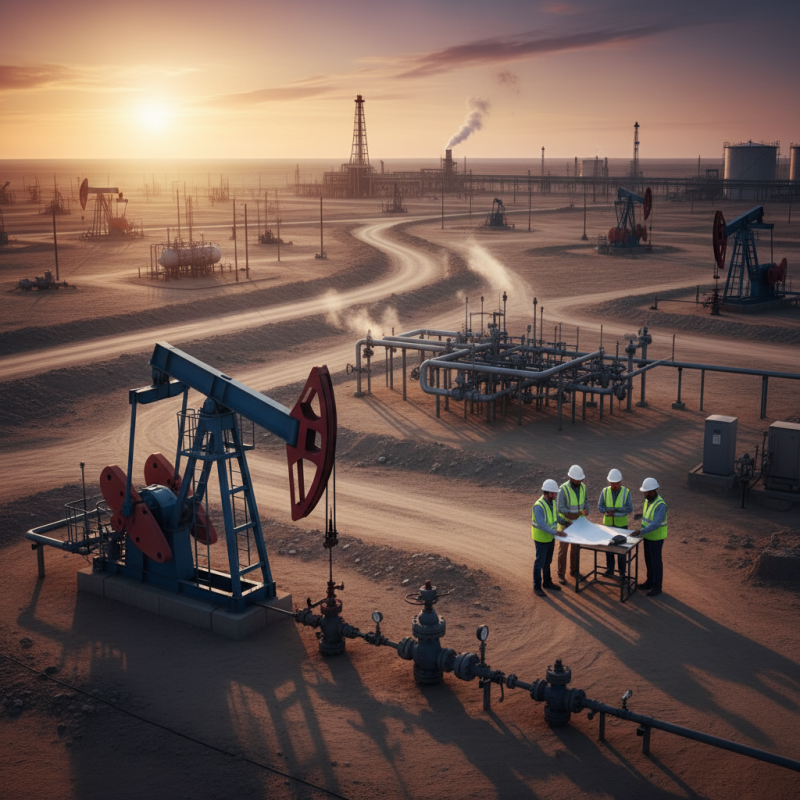
Artificial lift technologies play a crucial role in the oil and gas industry. These systems enhance the extraction of hydrocarbons from reservoirs. They overcome challenges such as low reservoir pressure and declining production rates. Understanding their types helps in choosing the right approach for specific environments.
One common type is the beam pump. It operates on a mechanism that mimics a see-saw. The surface drive unit creates an up-and-down motion. This movement lifts oil to the surface. Another type is the electric submersible pump (ESP). ESPs are efficient and able to operate in deep wells. Their design allows them to handle high flow rates, but they can be costly to install.
Gas lift is another option. It injects gas into the well. This reduces the density of the fluid column. It can be effective but may require complex valve systems. Each type has its strengths and weaknesses. The choice often depends on the well's conditions and production goals. Operators must consider each option carefully. Decisions made without thorough analysis can lead to inefficiencies. There’s always room for improvement in selecting the best artificial lift solution.
Overview of Pumping Systems in Artificial Lift
Pumping systems play a crucial role in artificial lift technologies. They help extract oil and gas from wells when natural pressure is insufficient. Different types of pumps are designed for various conditions. For instance, centrifugal pumps are common in high-flow applications. They provide efficient performance but can struggle with gas production.
In contrast, positive displacement pumps are better suited for low-flow, high-viscosity liquids. They deliver a consistent flow rate, making them ideal for certain reservoirs. However, these pumps can be sensitive to changes in pressure. As a result, operators must constantly monitor their performance.
The choice of pumping system affects overall production efficiency. Selecting the right technology requires careful consideration of specific well conditions. Despite advancements, many operators face challenges. Sometimes, unexpected downtime can occur. This highlights the need for ongoing evaluation and adaptation in pumping strategies. Ensuring optimal performance is not always straightforward.
Mechanisms of Gas Lift and Its Applications
Gas lift is a widely-used artificial lift method in the oil and gas industry. This technique involves injecting gas into the production tubing, reducing the density of the liquid column and enabling it to flow more easily. According to a recent industry study, gas lift systems account for approximately 25% of all artificial lift applications globally. This demonstrates its significance due to reliability and efficiency.
The application of gas lift technology has several advantages. It is particularly effective in wells with low reservoir pressure and high water cut. This method can enhance oil production by 50% in such scenarios. However, there are challenges too. Gas lift requires a continuous supply of gas, which may not always be feasible. Maintenance can become an issue, often leading to efficiency losses.
One report pointed out that operators sometimes overestimate the potential benefits of gas lift. In some cases, the costs associated with gas compression and transportation can outweigh the advantages. Therefore, careful planning and accurate reservoir analysis are crucial. Adjustments based on real-time data can improve overall efficiency and performance. Gas lift remains a vital technology, but its application requires constant evaluation.
Benefits and Limitations of Rod Pumping Systems
Rod pumping systems are a popular type of artificial lift technology. These systems convert rotary motion into linear motion, effectively lifting oil from deep wells. They have been widely used due to their reliability and efficiency. However, they also present certain limitations.
One significant benefit of rod pumping systems is their simplicity. They require less maintenance than many other lifting systems. Industry data shows that rod pumps can operate effectively for years with minimal intervention. Their durability makes them cost-effective in many situations. However, they may struggle with higher viscosity fluids and heavy sand production.
A notable limitation lies in their efficiency at shallow depths. Performance often declines as the depth increases. Operators may face challenges in optimizing production rates. In some cases, these pumps can't provide sufficient lift for high-yield wells. The energy consumption must also be considered; it can add up in large operations.
Tips: Regular performance monitoring can help identify issues early. Operators should consider making adjustments based on fluid characteristics. Understanding the specific limitations of rod pumps is essential for long-term success in oil extraction.
Comparative Analysis of Electrical Submersible Pumps and Other Methods
Electrical submersible pumps (ESPs) are a common form of artificial lift technology. They operate submerged in the fluid. These pumps use a motor-driven shaft that turns an impeller. This design effectively raises production fluid to the surface. One of the advantages of ESPs is their ability to handle large volumes of fluid. However, they can be expensive to install and maintain.
Other artificial lift methods include gas lift and rod pumps. Gas lift utilizes gas injected into the wellbore to reduce fluid density. This method can be less costly. But it may not provide the same efficiency in high-volume wells. Meanwhile, rod pumps are mechanical devices that use rods to lift fluid. They are simpler and often cheaper. Yet, they are limited to lower production rates. Each method offers unique advantages and challenges.
Comparing these methods reveals trade-offs. ESPs are powerful but require more energy. Rod pumps are dependable but might struggle with high viscosity fluids. Gas lift can be flexible but requires consistent gas supply. Operators should assess their specific well conditions. This detailed analysis can help in choosing the best artificial lift technology.
What are the Different Types of Artificial Lift Technologies? - Comparative Analysis of Electrical Submersible Pumps and Other Methods
| Type of Artificial Lift | Efficiency (%) | Cost ($/bbl) | Maintenance Frequency (months) | Ideal Well Conditions |
| Electrical Submersible Pumps (ESP) | 80 | 10-20 | 6 | High flow rate, deep wells |
| Beam Pumps | 70 | 5-15 | 12 | Shallow, low-viscosity |
| Hydraulic Lift | 60 | 15-25 | 8 | Variable flow, high gas production |
| Progressing Cavity Pumps (PCP) | 75 | 8-18 | 9 | Viscous fluids, moderate depths |
| Gas Lift | 65 | 5-12 | 15 | High gas-to-oil ratio |