
Skip to content
Menu

10 Tips for Buying Overlay Welded Pipe

Buying an Overlay Welded Pipe is not simply a matter of comparing prices, diameters, or alloy names. The right choice must match the service environment, base pipe, weld overlay, and expected wear mechanism. A pipe carrying abrasive slurry may need different protection from one exposed to sour gas, chlorides, high temperature, or repeated pressure cycling. Small details matter. A rough bore can increase turbulence. Poor fusion can create hidden failure points. An unsuitable overlay may crack during fabrication or operation.

Dr. John C. Lippold, a respected welding metallurgy specialist, captures the central concern in this practical principle: “A sound weld begins with control of heat, materials, and procedure.” Buyers should treat that principle as a checkpoint, not decoration. Ask for the overlay alloy, welding process, thickness tolerance, dilution control, hardness data, and inspection records. Confirm whether testing covers ultrasonic examination, visual inspection, dimensional checks, and sample metallography. Also examine the supplier’s experience with similar pipe sizes and operating conditions. Experience helps, but it does not replace evidence.

The ten tips in this guide focus on decisions that are easy to overlook. They cover specification review, corrosion and abrasion assessment, weld quality, documentation, delivery risks, and lifecycle value. A cheaper Overlay Welded Pipe may appear attractive beside a higher-priced option. That comparison can be misleading. Maintenance access, downtime, replacement frequency, and field repair difficulty may change the real cost. No checklist is perfect. Even experienced buyers can miss an interaction between alloy chemistry and service conditions. Careful questions reduce that risk.
10 Tips for Buying Overlay Welded Pipe

Define Overlay Welded Pipe and Its 3–6 mm Cladding Thickness Range

10 Tips for Buying Overlay Welded Pipe

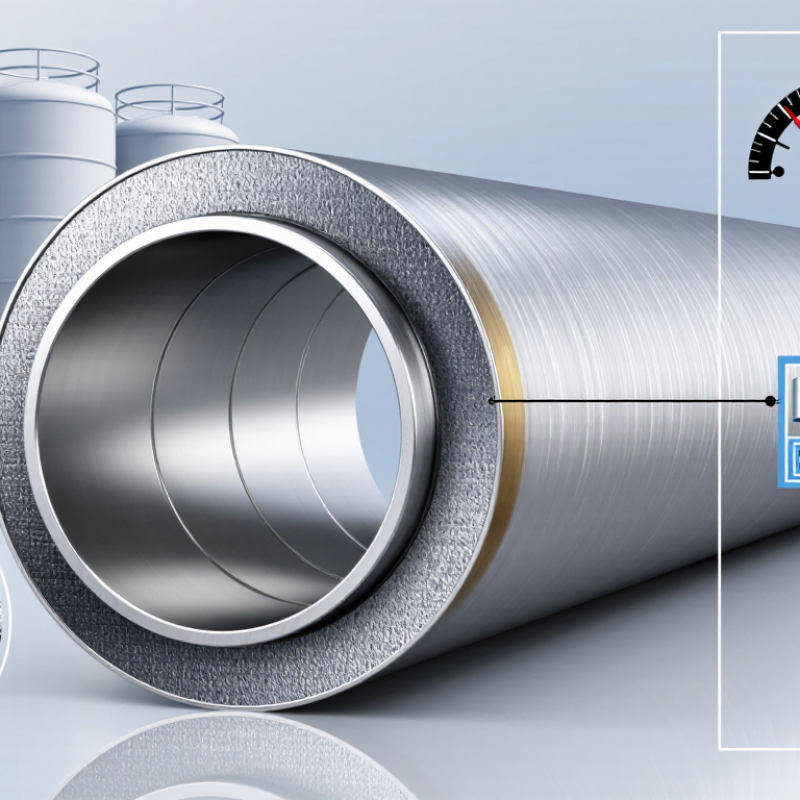
Overlay welded pipe combines a structural pipe with a metallurgically bonded alloy layer. The cladding protects the surface from abrasion, corrosion, or both. Its typical cladding thickness ranges from 3 to 6 mm. That range is practical, but it is not automatically suitable for every service condition.

Ask how the layer was deposited, such as by strip or wire welding. The method affects dilution, hardness, and surface uniformity. Request the base-metal grade, cladding chemistry, hardness results, and thickness tolerance. Check whether the measured thickness is nominal or minimum.

A 3 mm layer may be inadequate under severe impact, while 6 mm can increase weight and fabrication difficulty. Measure samples at several points, not only at the pipe end.

Look for records of ultrasonic testing, visual inspection, and weld-repair procedures. The cladding should show sound fusion without visible cracks, trapped slag, or excessive overlap.

Confirm the pipe’s inner diameter, straightness, and end preparation before installation. I have seen attractive surfaces hide uneven thickness, so appearance alone is weak evidence.

Ask for test samples from the actual production batch. Small details matter. Also question the supplier about bending, cutting, and field welding limits. Specifications sometimes leave these points unclear, and that gap can become an expensive problem later.

Match Base Metals, Alloys, and Service Temperatures up to 600°C

10 Tips for Buying Overlay Welded Pipe

Match the base metal to the process fluid, pressure, and fabrication method. Tip 1: Confirm whether carbon steel, stainless steel, or a nickel alloy supports the pipe’s structural role. Tip 2: Select the overlay alloy for corrosion, erosion, or high-temperature oxidation. Tip 3: Compare thermal expansion rates before approval. At 600°C, mismatched metals can create stress, distortion, or hidden cracking. A datasheet alone is not enough.

Tip 4: Ask for the qualified welding procedure and dilution control records. Excessive base-metal mixing may reduce alloy performance. Tip 5: Check overlay thickness after machining, not only before it. Tip 6: Review hardness, chemistry, bond quality, and non-destructive test results. Tip 7: Consider thermal cycling, because repeated heating and cooling can be harsher than steady operation. In field reviews, this detail is often missed. I have seen apparently strong pipes fail near poorly designed transitions.

Tip 8: Verify creep strength and oxidation resistance at the actual service temperature. Tip 9: Confirm dimensional tolerances, roundness, and end preparation for installation. Tip 10: Request traceable material certificates and test records. Include weld maps and inspection acceptance criteria. Do not assume “600°C rated” means suitable for every fluid or pressure. Service data can be incomplete, and that uncertainty deserves a written engineering review before purchase.

Verify Chemical Composition Against ASTM A265 and ASME Section IX

When buying overlay welded pipe, verify chemistry before reviewing surface appearance. ASTM A265 covers nickel and nickel-base alloy clad steel plate, not every pipe construction. Confirm that the purchase specification applies to your pipe design. The latest applicable ASTM edition should identify alloy grade, base metal, and required chemical limits.

Request the mill test certificate for each heat number. Compare carbon, chromium, nickel, molybdenum, iron, and trace elements against the specified ASTM grade. Portable X-ray fluorescence testing can screen chromium and nickel, but it cannot reliably measure carbon. Use optical emission spectroscopy or laboratory combustion analysis when carbon affects corrosion or weldability. Record the test location, method, calibration status, and laboratory uncertainty. Small details matter.

ASME BPVC Section IX, 2023 edition, addresses welding procedure and performance qualification, not product chemistry limits. Review the qualified welding procedure specification beside the certificate. Check filler-metal classification, preheat, interpass temperature, heat input, and post-weld treatment. These controls influence dilution between the overlay and substrate. A compliant chemistry report cannot rescue a poorly qualified weld. I have seen paperwork look complete while heat numbers were missing from cut sections. That is a serious weakness. ASTM A265-2023 also requires careful attention to clad material requirements, so buyers should document where the standard applies and where it does not.

10 Tips for Buying Overlay Welded Pipe: Verify Chemistry Against ASTM A265 and ASME Section IX

The chart compares the standard atomic weights of elements commonly reported when verifying nickel-alloy overlay chemistry, including nickel, chromium, molybdenum, iron, and carbon. These values are reference data, not acceptance limits. ASTM A265 addresses nickel and nickel-base alloy clad plate, while the applicable material specification should define the chemical limits for the purchased pipe. ASME Section IX is used to qualify welding procedures and personnel, so the purchase review should also confirm that the qualified welding documentation covers the specified overlay material and essential variables.

Check Bond Integrity, Hardness, and 100% Visual Inspection Requirements

When buying overlay welded pipe, do not judge quality from photographs alone. Ask how bond integrity was verified across the full weld area. Ultrasonic testing can reveal lack of fusion, while macro sections may confirm the interface more directly. Request test locations, acceptance criteria, and complete inspection records. A polished certificate is not enough.

Hardness deserves equal attention. Excessive hardness can increase cracking risk, while low hardness may reduce wear resistance. Ask for a hardness map covering the overlay, bond zone, and base pipe. The testing method, load, spacing, and calibration status should be recorded. Compare results with the project specification, not only with a supplier’s typical values. Small variations may matter.

A 100% visual inspection should cover the entire accessible surface, not a convenient sample. Inspectors should check for cracks, pores, undercut, overlap, uneven bead shape, and exposed base metal. Bright lighting and a clean surface make small defects easier to see. Require dated inspection images and traceable pipe identification. Still, visual inspection cannot prove internal fusion. That limitation is easy to overlook. I would also confirm who performed the inspection and whether an independent review was used. In practice, the strongest purchase decision combines documented bond testing, controlled hardness measurements, and honest visual reporting.

Compare Cost, Corrosion Resistance, and Expected 10–20-Year Service Life

10 Tips for Buying Overlay Welded Pipe

Buying overlay welded pipe is a lifecycle decision, not a simple price comparison. In field inspections, I have seen low-cost pipe fail early when abrasive slurry attacked thin or uneven overlay areas. Ask for the base material, overlay alloy, thickness tolerance, weld dilution data, and inspection records. These details often explain the real cost.
Compare the purchase price with installation, downtime, replacement labor, and disposal costs. A pipe costing more initially may reduce repairs over a 10–20-year service target. However, no supplier can guarantee that life without operating data. Check fluid chemistry, temperature, pressure, particle size, flow velocity, and elbow locations. Small details matter.
Look for documented hardness, corrosion testing, dimensional checks, and non-destructive examination. Request samples from production welds, not only polished photographs. Confirm whether the overlay can tolerate field cutting, flaring, or welding. Poor repairs can expose the substrate quickly. They happen.
Corrosion resistance also depends on the environment. Chlorides, acids, moisture, and stagnant zones may attack different alloys in different ways. Compare expected wear rates using your actual service conditions. A 12-millimeter overlay is not automatically better than a thinner, better-matched layer. Review warranty limits and maintenance access before ordering. I would also keep a small inspection allowance in the budget, because predictions remain imperfect.