
Skip to content
Menu

7 Heat Recovery Ventilator Buying Tips for Global Buyers

Global buyers evaluating a Heat Recovery Ventilator face more than a comparison of catalog prices. Climate, building codes, installation practices, and service access can change what “good value” means. A unit suited to a mild coastal home may perform differently in a cold, tightly sealed apartment.

Look beyond headline efficiency. Check airflow at the pressure your duct system will create, heat-recovery performance, fan power, sound levels, filter availability, and controls. Ask suppliers for test conditions and documentation, not just a percentage on a brochure. A quiet unit with an awkward filter door can become frustrating after months of use. Details count.

Compatibility deserves equal attention. Confirm voltage and frequency, duct dimensions, condensate drainage, frost protection, and whether local technicians can source replacement parts. For projects across several markets, request clear installation manuals and consistent model specifications. Freight damage, long lead times, and unclear warranty coverage can erase an apparent saving. That matters.

No checklist removes every uncertainty. Site conditions still matter, and specifications may not predict comfort perfectly. Treat supplier claims as a starting point, then verify them against independent test reports and the actual building design. Sometimes the best choice is not the most efficient model on paper. It is the one that can be installed correctly, maintained locally, and operated without guesswork. This guide shares seven practical buying tips to help global buyers ask sharper questions before placing an order.
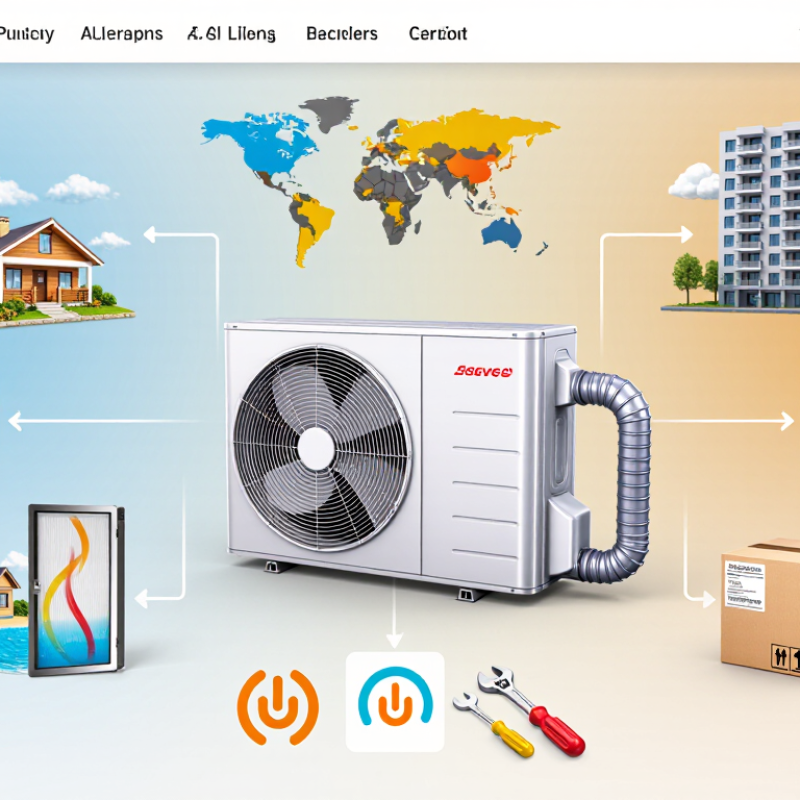
7 Heat Recovery Ventilator Buying Tips for Global Buyers

Understanding How Heat Recovery Ventilators Work

A heat recovery ventilator, or HRV, brings outdoor air inside while exhausting stale indoor air. Two fans move these air streams through separate passages in a heat-exchange core. The streams usually do not mix.

Heat passes through the core wall, warming incoming winter air with energy from the outgoing air. That distinction matters. In humid weather, some systems can also transfer moisture, but this depends on the core design; an HRV generally focuses on heat.

The temperature benefit is most noticeable when outdoor air is cold and indoor air is warm. It does not mean the supply air leaves the unit at room temperature. Actual performance depends on airflow, installation, filters, and operating conditions.

A dirty filter can reduce airflow, while poorly balanced fans may weaken ventilation in certain rooms. Not magic. Some units also need frost protection or a drain for condensate in cold climates.

When comparing equipment, buyers should check rated airflow, heat-recovery performance, filter access, and control options. Ask how the unit handles frost at the expected winter temperature.

One practical detail is easy to overlook: a quiet ventilator still needs accessible space for filter changes and routine inspection.

Matching Capacity and Climate Performance to Your Project

A heat recovery ventilator should be sized for the building’s real ventilation demand, not simply its floor area. Start with occupancy, room use, and the airflow required at each supply and exhaust point. A meeting room with ten people needs a different operating profile from a quiet bedroom. Check the unit’s airflow at the expected duct resistance; its maximum rating may not reflect installed performance. Looks good on paper. Confirm that balancing dampers and accessible test points are included in the design.

Climate changes which performance figures matter. In cold regions, review frost protection and defrost behavior, because protection cycles can temporarily reduce fresh-air delivery. Ask for test data across relevant outdoor temperatures, not just one favorable condition. In warm, humid climates, compare total heat and moisture transfer, and confirm that condensate drainage suits the installation. Dry climates may place more value on sensible heat recovery. No single efficiency number tells the whole story.

Match controls to local conditions and everyday use. A humidity sensor can help manage moisture, but poor placement may produce misleading readings. Check filter access, replacement intervals, sound levels, and available service space before choosing a capacity. These details are easy to overlook. Leave room for commissioning and seasonal adjustment; design assumptions can miss actual occupancy or weather patterns. A slightly conservative estimate is not automatically safer if it leads to persistent under-ventilation. Compare the proposed airflow schedule with the project’s operating hours and measured room conditions.

Comparing Energy Efficiency, Filtration, and Operating Noise

When comparing heat recovery ventilators, check certified performance at the airflow your building actually needs. The U.S. Department of Energy’s Energy Saver guidance says heat-recovery systems can recover roughly 70–80% of heat from outgoing air under suitable conditions. Treat that as a guide, not a promise: climate, duct resistance, frost control, and fan power all affect real savings. Ask for sensible recovery efficiency and power consumption at matching airflow and pressure.

Filtration needs the same practical scrutiny. ASHRAE Standard 52.2 rates filters by particle-size removal; its MERV 13 category requires at least 50% efficiency for particles from 0.3 to 1 micrometer. But a higher-rated filter can restrict airflow if the unit was not designed for it. Check approved filter sizes and replacement costs, then confirm airflow after installation. A rating alone does not describe the whole system.

Noise can make an efficient unit unpleasant in a bedroom or quiet office. Compare sound data only at similar airflow, and ask whether the figure is sound power or sound pressure; distance changes perceived sound pressure. HVI-certified ratings can help when available. Listen at the intended fan speed, not only boost mode. Small detail, big difference. I would still question any “quiet” claim without a stated test condition. A low-speed setting may sound gentle, yet fail to deliver the ventilation rate the room requires.

7 Heat Recovery Ventilator Buying Tips for Global Buyers — Comparing Energy Efficiency, Filtration, and Operating Noise

Buying factor What to compare Practical screening guide Questions to verify with the supplier
1. Heat-recovery efficiency Sensible temperature-recovery efficiency, test conditions, and performance at the intended airflow. Many residential units are specified in roughly the 70–90% sensible-efficiency range. Compare figures tested using the same method and operating conditions. Is the figure a certified test result? At what airflow, temperature, and supply/extract balance was it measured?
2. Design airflow and fan energy Delivered airflow at the system’s external static pressure, plus fan power or specific fan power at that operating point. Small residential systems commonly fall around 100–300 m³/h, but the required flow depends on the building and local ventilation rules. Choose a unit that meets the design flow without excessive fan power. Can you provide a fan curve and power data at the required airflow and pressure? Are the figures for both fans combined?
3. Filter performance Filter classification, particle-size performance, pressure drop, availability, and replacement cost. For fine-particle concerns, compare filters classified under ISO 16890—for example, an ePM1 filter—and check its initial pressure drop. ISO 16890 and MERV ratings are different systems and should not be treated as direct equivalents. What filter class is supplied? What is its pressure drop when clean, and what replacement filters are available locally?
4. Operating noise Sound data at the intended airflow, including both sound power and sound pressure where available. As a comfort-oriented screening goal, look for about 25–35 dB(A) or less at occupied-room terminals at design flow. Results depend on ductwork, installation, room acoustics, and measurement method. Are noise figures measured at the unit or at a terminal? What airflow, distance, and test method apply?
5. Frost protection Minimum operating temperature, frost-control method, and the effect of defrost on supply airflow and heat recovery. Match the unit’s stated operating limits to the local winter design temperature. Preheating, bypass, or defrost control can affect energy use and ventilation balance. At what outdoor temperature does frost protection start? Does the unit maintain balanced airflow during defrost?
6. Controls and balancing Available fan speeds, airflow adjustment, scheduling, sensors, and the ability to commission supply and extract flows. Confirm that the unit can be set to the project’s required airflow and balanced after duct installation. Optional humidity or demand controls should be assessed for compatibility and operating cost. Can an installer measure and adjust both air streams? Which sensors and control functions are included versus optional?
7. Maintenance and installation fit Filter access, condensate drainage, service clearance, duct connections, electrical supply, and spare-part support. Check that filters can be changed without dismantling ductwork and that the installation location allows routine access. Confirm voltage, frequency, dimensions, and drainage requirements for the destination market. What maintenance intervals are recommended? Are filters and service parts stocked locally, and what warranty conditions apply?

Comparison note: These figures are general screening guides, not guarantees or substitutes for project design. Compare products using the same test standards, airflow, external pressure, filter condition, and measurement method, and check applicable local ventilation and electrical requirements.

Checking Certifications, Electrical Standards, and Import Compliance

Before approving a heat recovery ventilator, check whether its safety and performance certifications are accepted in the destination market. A certificate from the factory may not satisfy local import or installation rules. Request the full test report, certificate number, issuing laboratory, and model details. Make sure these match the unit’s nameplate, not just a similar product family. A common sourcing mistake is to check the logo and skip the scope. Small detail, big consequence.

Electrical compatibility needs the same care. Confirm the rated voltage, frequency, phase, plug, and control wiring against the building supply. A unit designed for 60 Hz may not perform as specified on a 50 Hz network. Ask for clear nameplate photos and wiring diagrams before shipment. Also verify electromagnetic compatibility and required local conformity marking. Requirements vary by country, so confirm them with the importer or a qualified compliance adviser. Keep the commercial invoice, packing list, origin documents, manuals, and product classification details consistent. Even a tidy file can have gaps. It is worth checking translations, labels, and customs descriptions early, rather than discovering a mismatch after the ventilator reaches the port.

Evaluating Installation, Maintenance, Supplier Support, and Total Cost

A heat recovery ventilator can look efficient on paper, yet poor placement may weaken real-world performance. Before buying, check duct routes, available service space, and condensate drainage with the installer. Ask how the unit will connect to existing ventilation and whether airflow can be balanced after installation. A tight utility closet may save floor space, but leave too little room for filter changes. Measure it.

Tip: Request an installation plan with duct sizes, access clearances, and commissioning checks. Confirm who handles electrical work and airflow testing. These details help prevent last-minute changes, though site conditions can still surprise even an experienced team.

Maintenance affects both comfort and total cost. Ask how often filters need inspection under your local dust and pollen conditions, and check whether replacements are easy to source. Compare quoted prices for filters, cleaning, and likely service visits over several years—not just the purchase price. Supplier support matters, too. Look for clear manuals, responsive technical help, and a written warranty process. Ask how quickly common parts can be shipped to your location. A low initial quote may exclude commissioning or freight; request an itemized offer. Even a careful estimate has limits, so leave some budget for unexpected work.

7 Heat Recovery Ventilator Buying Tips for Global Buyers

A practical screening rubric for comparing installation, maintenance, supplier support, and total-cost considerations.

Scores are an illustrative decision-making rubric, not survey results or universal product ratings. Rate each criterion from 1 (lower screening priority) to 5 (higher screening priority) based on your project, climate, and local requirements.