How to Choose the Best Solar Home Systems for Your Needs?
Choosing the right Solar Home Systems setup begins with an honest picture of daily life: lights after sunset, phone charging, a fan during humid nights, or a refrigerator running continuously. The World Bank, IEA, and partner agencies reported in Tracking SDG 7: The Energy Progress Report 2024 that 685 million people lacked electricity in 2022. For many households, a well-sized solar system can provide dependable basic power. But “best” depends on actual needs, not the largest panel advertised.
Start by listing each appliance, its wattage, and the hours it runs. A 40-watt fan used for six hours needs about 240 watt-hours before system losses. That small calculation can prevent an undersized battery or unnecessary expense. Compare usable battery capacity, panel output, inverter rating, expected cloudy-day backup, warranties, and local repair support. The World Bank and GOGLA’s Off-Grid Solar Market Trends Report 2024 provides useful sector context on product quality, affordability, and customer access. These factors matter alongside headline price.
Consider the installation site, too. Shade from a nearby tree can sharply reduce panel output, even on a bright day. Check whether the system is standalone or designed to work with the grid, and confirm what happens when demand rises. A reputable supplier should explain limits in plain language and provide written specifications. Still, paper estimates are not perfect; real usage changes with seasons and family routines. A little margin helps. This guide will help you compare system types, size components, assess costs, and choose a practical setup without paying for capacity you may never use.
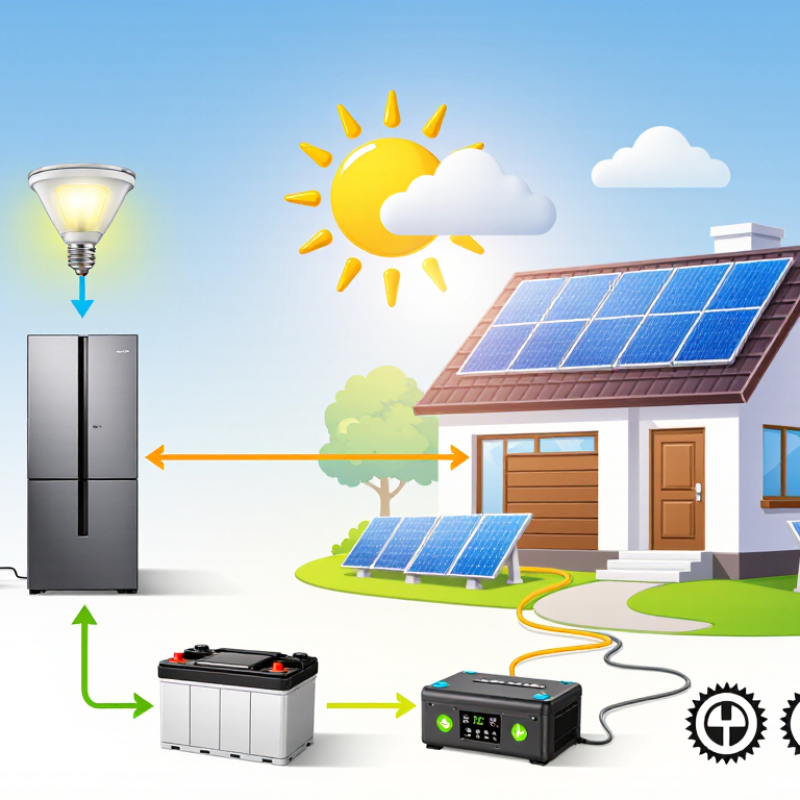
Assess Your Household’s Energy Use and Backup Requirements
Begin with your electricity bills, not a guess. Record daily kilowatt-hour use across several months, since air conditioning, heating, and seasonal routines can change the picture. Then list the appliances you need during an outage: perhaps the refrigerator, a few lights, a router, and a medical device. Be specific. “Some lights” is hard to size; four LED bulbs for six hours is a useful estimate.
Separate essential loads from convenient ones. Add each device’s wattage and expected running time to estimate backup energy. Also check starting power: refrigerators and pumps may briefly draw more electricity when their motors start. A system that covers daily energy use may still struggle with these short peaks. Keep a margin. Your calculations will not perfectly match real life, especially when weather or household habits shift.
Decide how long backup should last without sunlight or grid power. One evening has very different requirements from two cloudy days. If possible, compare your estimates with interval data from a utility meter, and check appliance labels rather than relying on memory. My first household estimate would be incomplete; people often forget small, frequent loads like a modem or phone chargers. Ask a qualified installer to verify load and surge calculations, especially before choosing battery capacity.
How to Choose the Best Solar Home System for Your Needs
Assess your household’s energy use and backup requirements
These illustrative estimates total about 4.8 kWh per day for the listed essential loads. For one day of backup, plan for at least 4.8 kWh of usable battery energy; the required battery capacity may be higher to account for conversion losses and reserve. Actual use varies with appliance efficiency and operating time, so check your own device labels or energy records before sizing a system.
Compare Off-Grid, Grid-Tied, and Hybrid Solar Systems
Choosing the best solar home system starts with how your home uses electricity. An off-grid system works without utility power, so batteries must cover nights and cloudy periods. It can suit remote cabins, but winter demand may require more storage than expected. Grid-tied systems send surplus power to the utility and draw power when panels fall short. They often need less battery storage, though they usually stop supplying power during outages unless designed with backup equipment. A hybrid system combines grid access, solar panels, and batteries. It offers flexibility, but costs and controls can be more involved.
Compare your daily energy use, outage needs, roof shade, and available installation space. A refrigerator, well pump, or electric heating can change the system size considerably. Ask for an estimate based on seasonal use, not just an average bill. Confirm how battery capacity is measured and what loads it can support. Also check utility connection requirements with a qualified installer. A neat spreadsheet can miss real-life habits, like running laundry after sunset.
Tips: List essential appliances and their wattage. Decide how long they must run during an outage. Get more than one site assessment, and ask what happens on cloudy winter days. Bigger is not always better. Don’t skip that question.
Choose the Right Capacity for Panels, Batteries, and Inverters
Choosing the right capacity starts with your household’s real energy use, not the largest system that fits on the roof. Record each appliance’s wattage and daily operating hours. A 60-watt router running all day uses more energy than a 1,000-watt kettle used for five minutes. Small loads add up. Add the daily watt-hours, then convert the total to kilowatt-hours. Allow extra capacity for conversion losses and changing weather; a neat spreadsheet cannot predict every cloudy week.
For panels, estimate how much energy they can produce during your location’s average usable sunlight, and account for shade, roof direction, and seasonal variation. A household using about 4 kWh daily may need more than 4 kWh of panel output because some energy is lost along the way. Treat any estimate as a starting point, not a guarantee. A site assessment can reveal a chimney shadow or afternoon shade that calculations miss.
Battery capacity depends on how long you need power without strong sunlight and how much of the battery’s rated energy is usable. Check the manufacturer’s usable-capacity guidance, then include a sensible reserve for essential loads. That gap matters. Size the inverter for the appliances running at the same time, and check its surge rating for motor-driven equipment such as a refrigerator. Oversizing every component can waste money; undersizing can leave lights on but the pump struggling. Revisit your assumptions if household routines change.
Evaluate Installation Costs, Site Conditions, and Local Rules
A useful comparison starts with the full installed price, not the panel price. Ask each installer to list equipment, labor, roof work, permits, and grid-connection fees separately. Check whether the estimate includes a battery, monitoring, and future service visits. Small details matter. A low quote may omit needed electrical upgrades or replacement parts.
Walk the property at different times of day. A chimney, nearby tree, or neighboring roof can shade only part of an array. Note roof age, direction, pitch, and usable area; a roof needing repairs can change the economics. For a ground-mounted system, consider soil, drainage, access, and room for safe maintenance. Ask what production assumptions the estimate uses and what happens if actual output is lower. Estimates are estimates.
Local rules can affect timing and system size. Confirm permit and inspection steps, utility interconnection requirements, and export limits with local offices and the utility. Ask whether applications need approval before installation begins. Rules vary by location. Keep copies of approvals, drawings, and the final inspection record. Unclear paperwork deserves a question, not a guess.
Compare Warranties, Safety Features, and Maintenance Needs
When comparing solar home systems, look beyond the warranty length. Check what it covers: panels, inverter, battery, labor, and performance may have separate terms. A 25-year panel warranty does not necessarily cover the cost of removing or reinstalling equipment. Read the exclusions, transfer rules, and claim process before deciding. The fine print matters.
Safety features deserve equal attention. Ask whether the system includes appropriate overcurrent protection, grounding, battery temperature controls, and clearly labeled shutoffs. These details are easy to overlook when comparing prices. Have a qualified installer explain where the disconnects are and what warning lights mean. If the explanation feels vague, ask again.
Maintenance needs vary with the equipment and local conditions. Dust, pollen, leaves, and snow can affect panels, while batteries may need clear space and temperature monitoring. Ask for a written maintenance schedule and realistic service costs. Some upkeep is simple. Some is not. It is tempting to assume a “low-maintenance” system needs no attention, but that label can hide important tasks. Review monitoring alerts and arrange periodic checks based on the manufacturer’s guidance.
