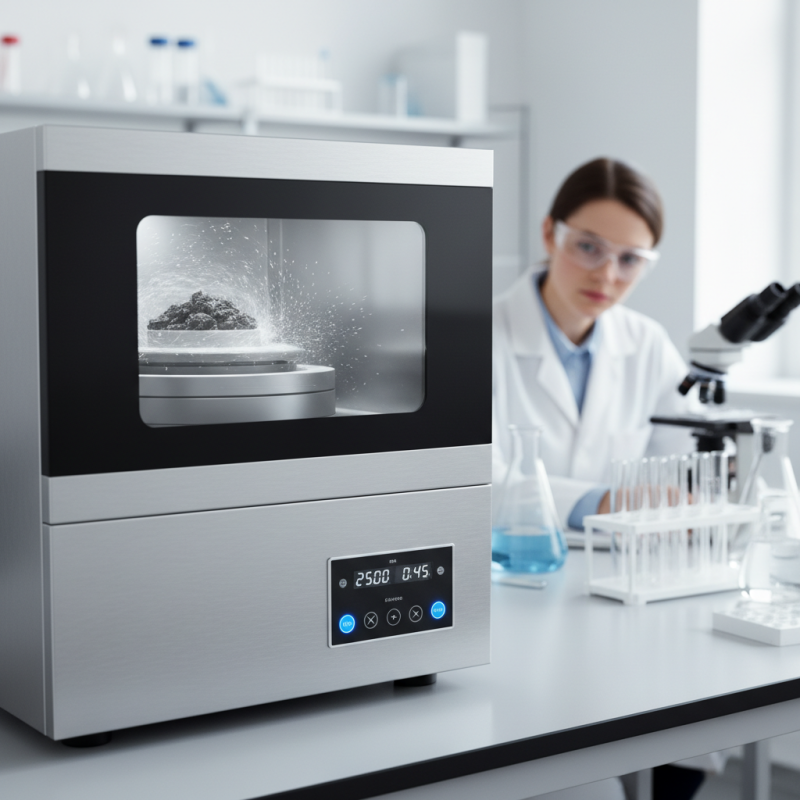
What is a laboratory sample pulverizer and how does it work?
A laboratory sample pulverizer is a crucial tool in many scientific fields. According to Dr. Jane Smith, an expert in materials science, "The right pulverizer can significantly impact sample quality." This equipment is essential for preparing small quantities of material for analysis.
laboratory sample pulverizers work by reducing the size of solid materials. They use mechanical forces to break down samples into finer particles. This process allows for thorough testing and evaluation. Different types of pulverizers exist, each suited for specific materials.
The effectiveness of a laboratory sample pulverizer can vary based on several factors. Not all samples behave the same when pulverized. Some may require more energy or different methods to achieve the desired consistency. There is always room for improvement and innovation in this field. Understanding these nuances is vital for optimal results.
Definition of a Laboratory Sample Pulverizer
A laboratory sample pulverizer is a critical tool in material analysis. It is used to grind samples into fine powders for various testing methods. These devices offer consistent particle sizes, which is essential for accurate results. In many industries, including pharmaceuticals and mining, precise sample preparation is vital.
The pulverization process involves several key components. A sample is placed in the pulverizer’s grinding chamber. The chamber often contains hard materials that efficiently break down samples through mechanical force. According to recent industry reports, sample pulverizers can reduce particle size to as small as 50 microns. This granularity enhances the surface area, making it easier to analyze chemical properties and physical attributes.
Despite their usefulness, some challenges exist. Overheating can occur during the grinding process. This may alter the chemical composition of sensitive samples. Proper maintenance and monitoring are crucial but sometimes overlooked. Users must reflect on their procedures to optimize performance while ensuring sample integrity.
Types of Laboratory Sample Pulverizers and Their Uses
Laboratory sample pulverizers are essential tools for preparing materials. They come in various types, each designed for specific applications. A common type is the high-energy ball mill. This machine crushes samples with steel balls, ensuring a fine grind. It works well for hard materials. Another popular type is the disc mill. Here, materials are ground between two flat discs, offering uniform particle size.
Different pulverizers are used depending on sample characteristics. For instance, some samples require gentle handling, while others need intense grinding. Depending on the material, the selected pulverizer can vary significantly. Some researchers prefer hammer mills for their versatility. These can handle a range of materials but may produce uneven sizes.
Using a suitable pulverizer is not always straightforward. Sometimes, optimizing the settings for specific samples can be tricky. There are instances of over-grinding, which alters sample integrity. This is a critical point to consider for accurate results. The choice of a pulverizer affects the quality of data collected. Understanding these aspects is crucial for effective laboratory work.
Working Principle of a Laboratory Sample Pulverizer
A laboratory sample pulverizer is a vital tool in material testing. It processes materials, reducing them to fine powder. This allows researchers to analyze substances effectively. Understanding how it operates is crucial for accurate results.
The working principle of a laboratory sample pulverizer hinges on mechanical force. Samples enter the pulverizer through a feed opening. Once inside, the samples encounter two surfaces that grind the material. This interaction produces fine particles. The grinding mechanism usually consists of a rotating disk and a fixed plate. The adjustable gap between these parts allows for various particle sizes.
While effective, the design has limitations. Some materials may clog the system or cause uneven grinding. Operators must monitor the process closely. Regular maintenance is essential to ensure optimal performance. Addressing these issues can lead to improved accuracy and reliability in results.
Applications of Pulverized Samples in Various Fields
Pulverized samples play a critical role in various fields, such as geology, mining, and environmental science. Laboratories use pulverizers to create homogeneous samples, which are crucial for accurate analysis. For instance, in mining, pulverized rock samples help determine mineral content. This helps in assessing the viability of mining projects.
In environmental studies, pulverized soil and sediment samples provide insights into contamination levels. These analyses guide remediation efforts effectively. In the agricultural sector, pulverized plant samples can reveal nutrient content, aiding in effective crop management.
Tip: When using a laboratory sample pulverizer, ensure that the materials are appropriately prepped. This improves the uniformity of the final sample.
Pulverizing can introduce errors if not done correctly. Improper settings may lead to inconsistent particle sizes. A small change in the sample can affect results significantly. Reassess your procedure for better outcomes.
Tip: Always calibrate your pulverizer before extensive use. This simple step can save you time and resources in the long run.
Maintenance and Care for Laboratory Sample Pulverizers
Laboratory sample pulverizers are essential tools for material analysis. However, their efficiency depends heavily on proper maintenance. Regular care ensures accurate results and longer equipment lifespan.
Dust and debris accumulate in the machine over time. Cleaning after each use is vital. Pay attention to grinding elements, as they wear out quickly. Ensure that no material gets stuck. This can skew future samples.
Tips: Always inspect parts for wear. Replace them at the first sign of damage. Lubricate moving parts regularly to keep everything running smoothly. Avoid forcing large samples into the pulverizer. This strains the machine and can lead to breakdowns.
Additionally, calibration is key. Regularly check the settings to ensure they are correct. Keep a maintenance log. It aids in tracking issues. Sometimes, no signs present themselves until it's too late. Being proactive helps prevent unexpected failures.
What is a laboratory sample pulverizer and how does it work? - Maintenance and Care for Laboratory Sample Pulverizers
| Feature | Details |
| Function | Grinds samples into fine powders |
| Typical Uses | Geology, metallurgy, material science, and other laboratory applications |
| Types | Ball mills, disc mills, and blade mills |
| Key Components | Grinding chamber, motor, and control system |
| Maintenance Tips | Regular cleaning, checking for wear and tear, and calibrating as needed |
| Safety Precautions | Use protective equipment, ensure proper ventilation, and follow operational guidelines |
| Performance Indicators | Grind size uniformity, throughput rate, and energy consumption |