
Skip to content
Menu

Top DIN Abrasion Resistance Tester Manufacturers?

Choosing among the top DIN Abrasion Resistance Tester manufacturers requires more than comparing prices or polished product photographs. A dependable supplier should demonstrate practical experience with rubber, elastomer, footwear, cable, and polymer testing. The equipment must support repeatable measurements, stable abrasion paths, accurate loading, and clear specimen preparation procedures. Small mechanical details matter. A loose clamping system or uneven abrasive sheet can distort volume-loss results.

This guide examines manufacturers of the DIN Abrasion Resistance Tester through measurable and practical criteria. These include compliance with relevant DIN requirements, calibration support, instrument durability, software clarity, spare-parts availability, and after-sales training. Reliable manufacturers usually provide traceable calibration documents, operating instructions, and verification methods that laboratories can actually follow. A technician should be able to understand the test sequence without guessing.

Real laboratory conditions are rarely perfect. Dust accumulates near the abrasive drum. Operators may prepare specimens differently. Environmental changes can also influence elastomer behavior. Therefore, the strongest manufacturers should explain limitations instead of promising effortless accuracy. That transparency is important.

Not every expensive tester is superior. Not every low-cost model is unsuitable. A thoughtful comparison should consider testing volume, material type, reporting needs, and local technical support. Some suppliers appear authoritative online, yet offer limited evidence about long-term performance. This deserves scrutiny.

The following overview helps laboratory managers, quality engineers, and purchasing teams identify trustworthy DIN Abrasion Resistance Tester manufacturers. It focuses on evidence, usability, and dependable results rather than marketing language alone. The ideal choice may still require independent verification. That is worth remembering.
Top DIN Abrasion Resistance Tester Manufacturers?

What Is a DIN Abrasion Resistance Tester?

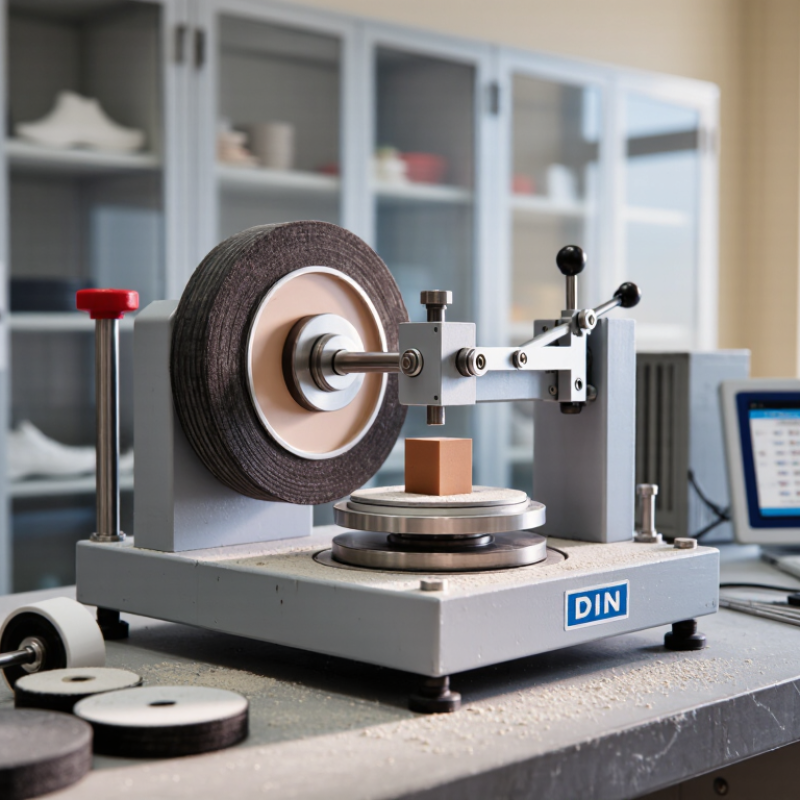
A DIN abrasion resistance tester measures how much rubber or elastomer a material loses under controlled rubbing. The method is commonly associated with DIN 53516 and ISO 4649. A cylindrical specimen, usually 16 millimeters wide and at least 6 millimeters thick, presses against an abrasive drum. The standard load is 10 newtons, with a travel distance of 40 meters at about 0.32 meters per second. After testing, technicians weigh the specimen and calculate volume loss in cubic millimeters. Lower loss usually indicates better abrasion resistance.

This machine is more than a rotating drum. It needs stable speed, calibrated force, a consistent abrasive sheet, and accurate specimen measurement. The tester must also control dust and temperature, because small changes can affect results. Technical data from DIN 53516 and ISO 4649 show why repeatability matters when comparing compounds. Industry durability reports frequently treat abrasion testing as a key quality-control step for footwear soles, seals, conveyor components, and tires. Yet DIN results do not predict every field condition. Wet surfaces, sharp particles, heat, and flexing may produce different wear patterns. That limitation deserves attention. A perfect laboratory score can still disappoint in service. Experienced laboratories therefore test several specimens and report conditioning, density, calibration status, and individual results, not only one average value.

How DIN Abrasion Testing Works

DIN abrasion testing measures how much rubber or elastomer material wears away under controlled friction. A prepared cylindrical specimen presses against abrasive cloth on a rotating drum. The machine usually applies a defined load, often 10 newtons, while the drum moves through a specified distance. A typical test distance is 40 metres.

Before testing, the operator records the specimen’s mass, diameter, and density. After abrasion, the worn material is weighed again. The result is commonly reported as volume loss in cubic millimetres. Lower volume loss generally indicates better abrasion resistance, but the result depends on compound hardness, surface texture, and test conditions.

Reliable manufacturers should provide calibration records, stable speed control, and clear procedures for replacing abrasive sheets.

Tips: Condition specimens before testing. Remove loose particles carefully. Check the abrasive cloth for clogging or uneven wear. Compare results only when load, distance, temperature, and specimen preparation match. Small setup differences can change the result.

A practical detail matters: the specimen must contact the abrasive surface evenly. Tilting can create a narrow wear track and distort the reading.

I have found that careless cleaning often causes more confusion than the machine itself. Even a precise tester cannot rescue poor preparation. Technicians should repeat suspicious results and inspect the wear marks, rather than trusting one number blindly.

Key Criteria for Comparing Manufacturers

Comparing DIN abrasion resistance tester manufacturers requires more than checking price. Look for proven testing experience with rubber, footwear, flooring, or polymer samples. A reliable manufacturer should explain the test method, load control, drum speed, and abrasive sheet requirements clearly. Ask for calibration records and traceable reference standards. Photographs help, but observed build quality matters more. Check whether the specimen holder moves smoothly and returns to zero without hesitation.

Technical expertise appears in repeatability data, not impressive claims. Request measurement uncertainty, validation reports, and sample results from independent laboratories. The manufacturer should provide operating manuals, installation guidance, and practical training. Spare parts availability also matters; a worn shaft can distort volume-loss readings. Evaluate service response times and software support before purchase. Some suppliers promise broad compliance but explain little. That is a warning. No manufacturer is perfect, and buyer reviews may contain gaps, so compare evidence from several sources.

Tips: Create a scoring sheet before contacting suppliers. Score accuracy, calibration support, durability, training, delivery, and after-sales service separately. Ask for a live demonstration with a reference rubber compound. Record drum speed, applied load, abrasion distance, and final mass. Repeat the test on different days. If results vary widely, investigate the method before blaming the instrument. A low price can become expensive when downtime or rejected samples enter production. Choose documentation you can audit later, not promises you cannot verify.

Top DIN Abrasion Resistance Tester Manufacturers

Top DIN Abrasion Resistance Tester Manufacturers

Top DIN abrasion resistance tester manufacturers focus on accuracy, repeatability, and practical laboratory use. Their equipment should support DIN ISO 4649 testing with controlled load, stable drum rotation, and consistent abrasive action. A reliable manufacturer also provides calibration records, traceable reference materials, and clear operating instructions.

Small details matter. The specimen holder should remain firm during testing. The abrasive sheet must sit evenly across the drum. A simple digital display helps, but it cannot correct poor mechanical alignment. Experienced manufacturers inspect drum speed, test load, counter operation, and volumetric loss calculations during production. They also offer technical training and responsive maintenance support.

Real laboratory work is less perfect than product brochures suggest. Rubber samples can contain uneven surfaces, and dust may influence readings. Operators still need careful cleaning and repeated measurements. A strong supplier explains these limitations instead of promising flawless results. The lowest purchase price may hide expensive calibration delays or unavailable spare parts. That is worth questioning. Buyers should review factory inspection procedures, service response times, software stability, and warranty terms before choosing a supplier. A useful test report should show sample identification, test conditions, wear value, and calculation details. Manufacturers with documented quality systems usually provide greater confidence during audits and production disputes. Still, even a well-built tester needs skilled handling.

The chart presents common reference conditions associated with DIN ISO 4649 rubber abrasion testing. Typical parameters include a 16 mm specimen diameter, a minimum specimen thickness of 6 mm, a 10 N test load, a 40 m abrasion distance, and a 40 rpm drum speed. Actual requirements may vary according to the selected test procedure and material standard.

How to Select the Right Manufacturer for Your Needs

Top DIN Abrasion Resistance Tester Manufacturers?

How to Select the Right Manufacturer for Your Needs

Selecting a DIN abrasion resistance tester requires more than comparing prices. Check the manufacturer’s testing experience, technical records, and understanding of rubber, footwear, flooring, or polymer applications. A reliable supplier should explain the test method clearly, including abrasive paper grade, applied load, drum speed, and specimen dimensions. Ask for calibration documents and traceable measurement records. These details affect repeatability.

Look closely at the machine itself. The drum should rotate smoothly, while the loading system must remain stable during testing. Inspect the control panel, emergency stop, specimen holder, and dust collection design. Request a demonstration using a material similar to yours. Real samples reveal more than polished brochures. Small details matter.

Service quality often decides whether equipment remains useful after installation. Confirm training, spare-part availability, software support, and response times before ordering. The manufacturer should help with installation and verification, not simply deliver a crate. Independent calibration support is valuable for laboratories facing audits or customer complaints. Ask how they handle abnormal results.

No supplier is flawless. I would question anyone promising perfect repeatability without discussing operator technique, sample conditioning, and environmental changes. A thoughtful manufacturer admits limitations and recommends controls. Compare documented performance, service capability, and total ownership cost rather than choosing the lowest quotation. Sometimes a cheaper instrument creates expensive retesting.

Top DIN Abrasion Resistance Tester Manufacturers? - How to Select the Right Manufacturer for Your Needs

Evaluation Dimension Relevant Requirement or Technical Reference Recommended Target Suggested Weight Evidence to Request from a Manufacturer
Applicable test standard DIN 53516 and ISO 4649 are widely used methods for determining the abrasive wear resistance of vulcanized or thermoplastic rubber. Explicit compliance with the required method 20% Clause-by-clause compliance statement, operating procedure, and standard-related technical documentation.
Test specimen compatibility A common ISO 4649 specimen is cylindrical, approximately 16 mm in diameter and 6 mm high; exact dimensions and tolerances depend on the selected procedure. Supplied holder and cutting tools match the chosen standard 10% Dimensional drawings, holder specifications, specimen-cutting instructions, and available accessories.
Abrasive drum configuration The test uses an abrasive cloth-covered rotating drum. Standardized drum dimensions, abrasive grade, mounting, and renewal procedures are important for repeatability. Documented drum geometry and controlled abrasive-cloth installation 15% Drum drawing, abrasive specification, replacement procedure, and traceable consumable documentation.
Load and travel control Abrasion results depend on the applied load, sliding distance, drum speed, and contact conditions defined by the selected test method. Adjustable, stable, and verifiable test parameters 15% Load calibration method, speed or travel-distance specification, control accuracy, and test-cycle records.
Measurement system DIN 53516-style evaluation commonly uses mass loss and converts it to relative volume loss using the density of the test material and a reference compound. Repeatable balance-based mass measurement with clear calculation workflow 10% Balance resolution and calibration certificate, calculation template, density-input procedure, and reporting format.
Calibration and traceability Critical parameters such as load, rotational speed, travel distance, specimen dimensions, and weighing equipment should be verified with traceable instruments. Calibration certificates traceable to recognized national or international standards 10% Sample calibration certificates, calibration interval, uncertainty information, and preventive-maintenance checklist.
Repeatability and reproducibility support Results can be affected by specimen preparation, conditioning, abrasive-cloth condition, rubber temperature, and operator technique. Documented controls for preparation, conditioning, operation, and result review 10% Repeatability data, application notes, operator training materials, and sample test reports.
Safety and laboratory usability The rotating drum and abrasive debris require suitable guarding, emergency stopping, access control, and debris-management provisions. Guarded design with accessible cleaning and safe specimen handling 5% Risk assessment, safety features, electrical documentation, operating manual, and spare-parts list.
Service and lifecycle support Long-term consistency depends on replacement abrasive cloth, drum maintenance, calibration, software support where applicable, and technician availability. Documented support coverage and readily available consumables 5% Warranty terms, response time, service network, consumables lead time, and expected spare-parts availability.
Selection rule: Choose the manufacturer with the highest verified score against your required standard, specimen type, calibration policy, service expectations, and total cost of ownership—not solely the lowest purchase price.