Top PE Gloves Manufacturers for Global Buyers
Pe Gloves remain a practical choice for short-duration tasks where quick changes, low weight, and economical supply matter. Buyers encounter them at food-preparation counters, cleaning stations, and busy retail service desks. They are not a universal substitute for thicker gloves. Fit, film strength, and the task itself still matter.
Market demand offers useful context. Grand View Research’s Disposable Gloves Market report identifies healthcare, food service, and hygiene needs as important demand drivers. Its coverage is broader than polyethylene gloves alone, so buyers should not treat the market figures as PE-specific. Still, the report points to a clear sourcing reality: dependable supply and consistent product quality matter across glove categories. Small details matter.
When comparing top PE gloves manufacturers for global buyers, assess more than quoted price. Review sample thickness, seam quality, sizing consistency, carton protection, and the supplier’s ability to maintain repeat orders. Ask for current product specifications and relevant quality documentation. Check whether the manufacturer explains intended use clearly, rather than making sweeping protection claims. A sample can look fine on a desk and behave differently during a full shift. That gap is worth testing.
This guide focuses on manufacturers that can support practical procurement decisions, including production capability, communication, and export experience. No supplier is best for every buyer. Requirements vary by application, order volume, and destination market. Even a polished catalog deserves a closer look. The comparisons ahead are a starting point, not a substitute for checking samples and verifying claims with the manufacturer.
Understanding PE Gloves and Their Role in Global Markets
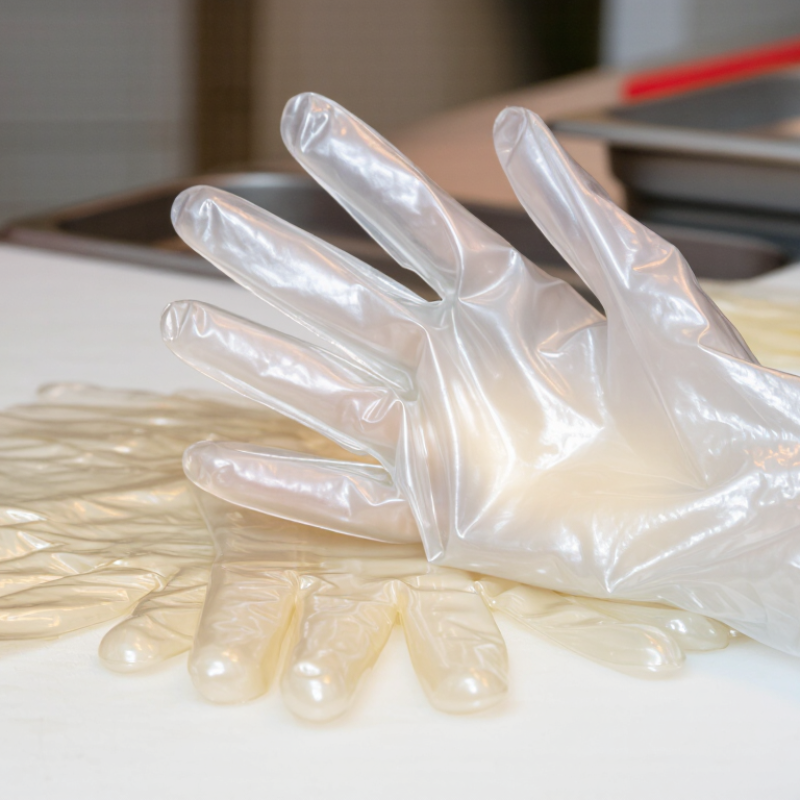
Polyethylene (PE) gloves are lightweight, loose-fitting, and economical. Buyers commonly use them for brief, low-contact tasks, such as handling ready-to-eat food or changing light-duty supplies. They are not designed for precise work or extended wear. Thin film can tear, and a loose cuff may let liquids enter. That distinction matters.
PE gloves sit within a much larger disposable-glove market. Grand View Research valued that global market at USD 12.6 billion in 2023 and forecast an 8.2% compound annual growth rate from 2024 to 2030. The estimate covers multiple materials, not PE alone, so it should not be read as a measure of PE demand. Still, it shows why material choice matters across high-volume purchasing.
For global buyers, compare thickness, fit, tensile strength, packaging, and consistency between production batches. A glove that splits while pulling it over damp fingers wastes time and stock. Ask for specification sheets and test records, then check samples under the actual task conditions. PE can suit short, simple handling jobs, but it is a poor substitute where close fit or sustained protection is needed. Unit price can dominate comparisons; sometimes that is the wrong measure. A higher tear rate may quietly erase the savings.
How PE Gloves Are Made and Quality-Checked
PE gloves are typically made by melting polyethylene resin and extruding it into a thin film. The film passes through cooled rollers, then dies cut and seal it into glove shapes. Small defects matter. Uneven sealing can split at the fingers, while rough edges can snag during use. Workers should check that gloves fit their intended task; a lightweight PE glove is not suitable for every hazard.
Quality checks should cover thickness, tensile strength, seal integrity, appearance, and sizing. ASTM D6988 describes measuring the thickness of plastic film, while ASTM D882 provides a method for testing tensile properties. These standards explain how to measure performance; they do not set one universal pass limit for every glove. Buyers can request batch-specific test records and compare results against clear purchase specifications. A report without sampling details is less useful than it looks.
Tips: Ask for the resin and lot traceability, inspect sealed edges, and review defects found during sampling. Keep records. Water-leak checks can reveal pinholes, but they do not replace material tests. Even with documented checks, occasional defects remain possible, so incoming inspection is worth keeping in the process.
What Global Buyers Should Evaluate in a Manufacturer
Global buyers should evaluate a polyethylene glove manufacturer through repeatable production, not polished product photos. It is easy to overrate a polished brochure. Ask how resin grades are controlled and how film thickness is checked across a production run. Small variations can affect feel, fit, and resistance to tearing. Request recent test records for tensile strength, puncture performance, and size tolerances, then compare samples from different batches. Ask for evidence. Test samples with tasks similar to those expected in kitchens, cleaning stations, or food-service counters. One sample may not be enough.
Reliable manufacturers can explain lot coding, retained samples, complaint handling, and corrective actions in plain language. Check whether stated capacity reflects available equipment and staffing, especially before seasonal orders. Lead times should include inspection, packing, and transit, not just factory production. Confirm packaging details, carton counts, and storage conditions; damp cartons or crushed edges can complicate receiving. Verify that documentation matches the intended market and the exact glove specification. A certificate’s familiar title does not prove it covers the product being purchased. Video audits can help, but they may not replace a factory visit when order size justifies one. Even careful checks leave uncertainty. Record open questions and agree on measurable acceptance criteria before placing an order.
Notable PE Glove Manufacturers Serving International Markets
Notable PE Glove Manufacturers Serving International Markets
PE glove manufacturers serving international buyers need more than high-volume production. Buyers should compare thickness, fit, seam consistency, and packaging before discussing price. A glove that feels too loose during a packing-line trial may slow routine work. Ask suppliers for product specifications and representative samples, then check them under actual handling conditions. Details matter.
Export-ready manufacturers often support different carton quantities, labeling preferences, and shipment schedules. Clear communication about production capacity and lead times can help prevent costly surprises. Still, a polished product sheet does not prove consistent quality. Request recent inspection records or agreed quality checks, and clarify how damaged cartons or specification changes are handled. One weakness: sample quality may not reflect every production batch, so define expectations in writing.
Tips: Compare landed cost, not just unit price; freight and packaging affect the final figure. Ask for evidence. Confirm glove dimensions, quantity per carton, and sample approval before placing a larger order. Keep a simple record of delivery condition and fit feedback. A small trial order can reveal issues, though it may not capture seasonal delays or later production variation.
PE Glove Manufacturing: Typical Polyethylene Resin Density Ranges
A material reference for international buyers comparing polyethylene grades commonly used in flexible film products.
Typical resin density ranges: LDPE, 0.910–0.940 g/cm³; LLDPE, 0.915–0.925 g/cm³; HDPE, 0.941–0.965 g/cm³. Values vary by resin grade and are material properties, not finished-glove specifications.
How to Choose a Supplier for Long-Term Procurement
For long-term procurement, evaluate consistency before chasing the lowest unit price. Request a written specification for glove length, width, thickness, packaging, and acceptable defect levels. Ask for samples from multiple production batches, not just a handpicked sample. Check whether dimensions and appearance remain consistent. Small differences matter when workers reach repeatedly into a dispenser.
The World Bank’s 2023 Logistics Performance Index compares 139 economies across six areas, including shipment tracking and delivery timeliness. Use these factors to assess a supplier’s shipping plan: confirm production lead times, reorder windows, and how delays are communicated. Ask for a documented lot number on each carton and a process for handling complaints. A polished audit is useful, but it does not replace batch-level evidence.
Material stewardship also deserves attention. The OECD’s Global Plastics Outlook estimates that global plastic use reached 460 million tonnes in 2019, while only 9% of plastic waste was recycled. This is not a PE-glove-specific figure. Still, it makes packaging weight, material traceability, and waste reduction fair procurement questions. Request data, not broad promises.
Compare landed cost, defect rates, and delivery reliability over several orders; a low quote can still be a false economy. Supplier performance may vary by season, and no checklist removes that uncertainty.
