Skip to content
Menu

Why Are Non Woven Fabric Rolls in High Demand?

Non Woven Fabric Rolls are in high demand because they combine adaptable performance with efficient production. Manufacturers can select fiber blends, web structures, and bonding methods to suit different products. A roll may become a medical gown, a filtration layer, a crop cover, or an automotive liner. That range matters. So does consistent supply.

Dr. Seshadri Ramkumar, a nonwovens researcher at Texas Tech University, has studied the materials and applications behind this industry. A concise paraphrase of his perspective—not a verbatim quotation—is: “The right nonwoven structure must match the product’s function and manufacturing process.” That distinction helps explain demand. Buyers often need specific weight, strength, absorbency, or air permeability, not simply fabric by the roll. Converters also value material that unwinds smoothly and cuts cleanly on production lines.

Demand is not automatic, however. A roll that performs well in one application may fail another’s requirements. Fiber choice, bonding, thickness, and quality control all matter. A small variation can affect handling or finished-product consistency. That part is easy to overlook. Buyers should compare samples under real production conditions and confirm that specifications fit their intended use. This outline explores the practical reasons Non Woven Fabric Rolls remain sought after, the industries driving adoption, and the trade-offs that purchasers should examine before choosing a supplier.
Why Are Non Woven Fabric Rolls in High Demand?

What Are Non-Woven Fabric Rolls?

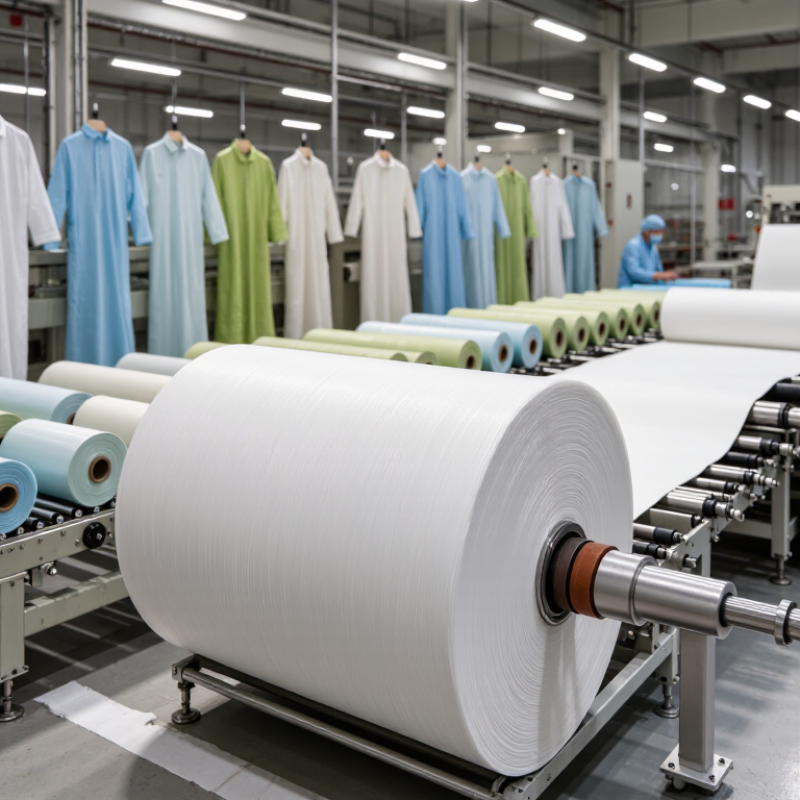
Non-woven fabric rolls are continuous sheets of material wound around a cardboard or plastic core. Unlike woven cloth, they are not made by crossing yarns over and under each other. Instead, loose fibers are arranged into a web and bonded through heat, pressure, or mechanical processes. Some materials also use binders. Not woven. Not knitted.

The fibers may be polypropylene, polyester, or natural materials, depending on the product’s intended use. A roll can vary in width, thickness, weight, softness, and pore size. These details affect how it performs: a lightweight sheet may suit disposable covers, while a denser one may provide more cushioning or filtration. In production, workers often check the roll’s edges, surface, and tension. Uneven winding can cause trouble when the material feeds through cutting or sewing equipment.

Roll formats are practical because manufacturers can unroll, cut, laminate, or shape the fabric to match different products. This helps explain demand across packaging, agriculture, hygiene, furniture, and medical applications. But “non-woven” does not describe one consistent performance level. Two rolls can look similar and behave quite differently when stretched, wet, or exposed to heat. I would not judge a material by appearance alone; its fiber composition, bonding method, and test data matter.

How Are Non-Woven Fabric Rolls Made?

Why Are Non-Woven Fabric Rolls in High Demand?

Non-woven fabric rolls begin as polymer pellets or short staple fibers. The chosen material and process shape the fabric’s strength, softness, and pore structure. Small changes matter.

In spunbond production, molten polymer passes through spinnerets, forming continuous filaments. A moving belt collects them into a loose web. Meltblown lines use hot air to draw finer fibers, while carding spreads short fibers into an even layer. The web is then bonded with heat, pressure, or mechanical needling. Some lines use chemical binders. Each route creates different performance, so “non-woven” describes a family of materials, not one recipe.

After bonding, the sheet may be treated for water repellency, absorbency, or antistatic performance. Rollers wind it into large rolls, while sensors check weight, thickness, and visible defects. Still, a roll is not perfectly uniform from edge to edge. That deserves attention during converting. EDANA’s 2023 European statistics reported nonwoven production of about 2.87 million tonnes, down 5.5% from 2022. The figure shows the scale of established manufacturing, but it does not describe every process or region. Reliable roll quality depends on matching the web structure and bonding method to its intended use.

Why Are Non-Woven Fabric Rolls in High Demand?

Non-wovens can be produced efficiently in continuous rolls and tailored for uses such as filtration, hygiene, medical products, and packaging. Fiber diameter is one factor that shapes fabric performance: finer fibers can help create dense structures, while coarser fibers are common in durable webs.

Typical Fiber Diameter Ranges by Manufacturing Process

Ranges are typical industry examples in micrometers (µm), not fixed specifications. Actual fiber diameter varies with polymer, equipment, and production settings. Spunbond and meltblown webs are formed directly from polymer; carded webs are made by opening and aligning staple fibers.

What Properties Make Them Suitable for Diverse Uses?

Why Are Non Woven Fabric Rolls in High Demand?

What Properties Make Them Suitable for Diverse Uses?

Nonwoven rolls bond fibers through heat, pressure, or mechanical action rather than weaving. This allows manufacturers to adjust softness, porosity, absorbency, and strength. A breathable crop cover needs airflow, while a protective medical drape may require liquid resistance. Light, yet useful. Roll formats also suit high-speed cutting and converting. Fortune Business Insights estimated the global nonwoven fabric market at USD 48.32 billion in 2023, with a projection of USD 73.59 billion by 2032. That forecast signals broad demand, but market growth alone does not prove every grade is durable or environmentally preferable.

Tips: Match fiber type and bonding method to the intended use. Check basis weight, tensile strength, air permeability, and liquid resistance against the application’s requirements. ISO 9073 includes test methods for key nonwoven properties. Request relevant test results, then try a sample on the actual production line. A roll can feel sturdy by hand yet tear during slitting. That detail is easy to overlook. Also consider storage: moisture and compression can affect handling, especially for absorbent grades.

Which Industries Rely on Non-Woven Fabric Rolls?

Non-woven fabric rolls are essential in healthcare, hygiene, automotive, construction, and agriculture. Hospitals convert lightweight rolls into gowns, masks, and sterile drapes; consistent webs help maintain coverage during high-volume production. Hygiene manufacturers use them in diapers, wipes, and absorbent products. These lines run fast, so small changes in softness or strength can matter.

Demand spans more than disposable products. Automotive suppliers use non-wovens in cabin filters, acoustic insulation, and trunk liners, where low weight and sound control are useful. Builders apply them in roofing layers and weather barriers, while growers use them as crop covers. Grand View Research valued the global nonwoven fabrics market at USD 53.9 billion in 2022 and forecast 5.4% annual growth from 2023 to 2030. The estimate reflects broad applications, not roll sales alone.

Material choice depends on the job. Spunbond webs can suit durable covers; meltblown layers provide fine filtration, often as part of a composite. There is a catch. A fabric that works well in a filter may feel too stiff for a wipe. The EDANA and INDA Global Nonwovens Market Report tracks production and end-use markets, but local specifications still matter. Buyers should check basis weight, tensile strength, porosity, and converting performance against actual line conditions. One detail is easy to miss: a roll can look uniform yet behave differently at production speed.

What Factors Are Driving Their Rising Demand?

Demand for non woven fabric rolls is rising because they suit many products without requiring weaving. Their lightweight structure can reduce material use in items such as shopping bags, wipes, crop covers, and protective packaging. Roll format also supports continuous production, helping converters cut fabric into different widths and shapes with less handling.

Customization is another driver. Manufacturers can select fiber blends, thickness, surface texture, and bonding methods to match a product’s needs. Some fabrics allow air or moisture to pass through; others offer more resistance. These differences matter in applications ranging from filtration to furniture lining. Demand is not automatic, though. Performance, price, and reliable supply all affect whether a roll works for a specific production line. A material that looks suitable may behave differently under heat or tension.

Tips: Check weight, width, tensile strength, and roll diameter before ordering. Request a sample and test it on the intended equipment. Small trial runs help reveal issues with stretching, dust, or uneven edges. Don’t assume every non woven fabric is interchangeable.