What is a Photoelectric Sensor and How Does It Work?
Photoelectric Sensors are critical components in many modern systems. They detect objects without physical contact. This technology uses light beams to monitor various conditions. When the beam is interrupted, the sensor activates. This process is essential in automation and safety applications.
Understanding how photoelectric sensors work involves exploring their components. These sensors typically include a light source, a receiver, and circuitry. They can be categorized into three types: reflective, through-beam, and proximity. Each type has unique functions for specific applications. Yet, choosing the right type can be challenging. Users must consider factors like range and environmental influences.
The practical applications of photoelectric sensors are vast. They are found in various industries, from manufacturing to security systems. However, the technology is not without limitations. Factors like dust, dirt, or fog can affect their performance. Thus, regular maintenance and recalibration are necessary for optimal function. Understanding these intricacies can help users make informed decisions about photoelectric sensors.
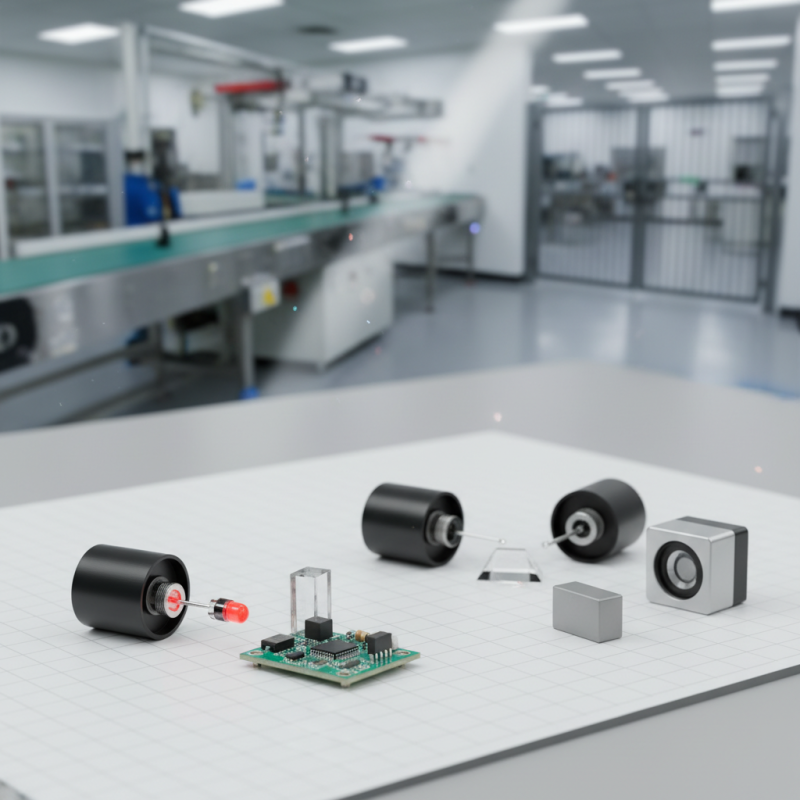
What is a Photoelectric Sensor?
A photoelectric sensor is a device that detects objects, changes, or events through light. It utilizes light beams to sense the presence or absence of an object. These sensors are crucial in various industries, including manufacturing, automation, and security.
Typically, a photoelectric sensor consists of a light source and a receiver. The light source emits a beam, and when an object interrupts that beam, the receiver detects it. This simple mechanism can trigger alarms, count items, or automate systems. However, there can be challenges. For example, dust or dirt on the sensor may lead to erroneous readings.
Photoelectric sensors come in different types, including through-beam, retro-reflective, and diffuse types. Each has its advantages and drawbacks. Choosing the right type depends on specific needs and environments. It's essential to consider factors like distance, surface reflectivity, and ambient light. Misjudgments in these areas could lead to inefficiencies in operations. This technology showcases how light can influence automation, but it’s not without its complexities.
Principle of Operation of Photoelectric Sensors
Photoelectric sensors are fascinating devices used in various applications. They detect objects, measure distances, and sense changes in the environment. These sensors work on the principle of light modulation. When light from a source hits an object, the sensor receives the reflected light. This reflection is crucial for its function.
The operation begins with an emitter. It produces a beam of light, usually infrared. When an object interrupts this beam, the light hitting the sensor changes. This change is what triggers a response. The sensor can be set to detect either the presence or absence of an object. However, its effectiveness can be affected by surface conditions. Dust, dirt, or uneven surfaces may lead to errors in detection.
In addition, the distance and angle at which the sensor is placed matter greatly. A slight misalignment can affect its performance. Sometimes, external light sources can create interference. It's essential to consider these factors during installation. The simplicity of photoelectric sensors hides these complexities. Understanding these details can significantly improve their application effectiveness.
Types of Photoelectric Sensors and Their Applications
Photoelectric sensors are vital in many industries. They utilize light to detect objects and measure distance. There are several types of photoelectric sensors, each suited for unique applications.
One common type is the through-beam sensor. This sensor has two parts: a transmitter and a receiver. When an object interrupts the light beam between them, it triggers an action. This type is effective for detecting transparent objects and can be used in packaging lines.
Another type is the retro-reflective sensor. It has a transmitter and receiver in one unit. It reflects light off a reflector, making it ideal for applications where space is limited. It is commonly used in conveyor systems for automatic sortation.
Tips: When selecting a photoelectric sensor, consider factors like the sensing distance and environment. Reflective surfaces can affect performance. Test sensors in their intended environment when possible.
Lastly, the diffuse reflective sensor is versatile. It can detect objects without a separate reflector. However, the detection range can vary based on the object's color and surface. Choose wisely for your application to avoid surprises.
Advantages of Using Photoelectric Sensors
Photoelectric sensors offer numerous advantages in various applications. They are highly sensitive and reliable. These sensors detect light changes to identify the presence or absence of an object. Their ability to work over a distance adds to their versatility. For instance, they can be used in automated production lines. This enables smooth operations without physical contact.
One major advantage is their rapid response time. Photoelectric sensors act quickly, processing signals nearly instantaneously. This speed is essential in industries requiring precision. However, they can be susceptible to environmental factors. Dust or dirt on the sensor can cause misreadings. Regular maintenance is necessary to keep them functioning optimally.
Another benefit is their versatility in different environments. They can work in harsh conditions, from extreme temperatures to humid settings. This adaptability makes them ideal for various industries, like packaging and automotive. While they excel in many areas, users must consider installation angles and distances. Proper positioning is critical for effective operation.
Photoelectric Sensor Usage and Efficiency
Common Issues and Troubleshooting Techniques for Photoelectric Sensors
Photoelectric sensors are widely used in automation. However, they can encounter common issues impacting their performance. Misalignment of the sensor can often lead to poor detection. The sensor might fail to trigger when needed. Dust and dirt buildup can also obstruct the sensor’s beam, making it less effective. According to industry reports, about 30% of sensor failures are due to environmental factors. Regular cleaning can mitigate this issue.
Wiring problems can cause intermittent failures. Loose connections can result in unstable output signals. It's crucial to check the wiring regularly. Electrical interference from nearby devices can also compromise system performance. A study showed that nearly 25% of sensor malfunctions stem from electrical noise. Proper shielding and grounding techniques should be implemented to reduce this interference.
Calibration is another essential aspect. Sensors need to be calibrated based on their specific environment. Inaccurate calibration can lead to false readings. Some users may neglect this step, assuming factory settings are sufficient. Failure to recalibrate after significant environmental changes can be risky. Understanding these issues allows for better troubleshooting and improved sensor reliability.
What is a Photoelectric Sensor and How Does It Work? - Common Issues and Troubleshooting Techniques for Photoelectric Sensors
| Dimension | Details |
| Type | Photoelectric Sensor |
| Operating Principle | Uses light to detect objects or changes in the environment |
| Detection Range | Varies from a few centimeters to several meters depending on the model |
| Common Applications | Industrial automation, packaging, security systems, and robotics |
| Common Issues | False triggers, failure to detect, sensitivity issues |
| Troubleshooting Techniques | Check for obstructions, adjust sensitivity settings, ensure proper alignment |
| Maintenance Tips | Regular cleaning, periodic calibration, ensure ambient conditions are suitable |