What is a Plasma Machine and How Does It Work?
Plasma machines have revolutionized various industries, redefining capabilities in cutting, welding, and surface treatment. According to a recent market report by Grand View Research, the plasma machine market is projected to reach $2.5 billion by 2025, driven by innovations and increased demand in manufacturing.
Dr. John Miller, an expert in plasma technologies, noted, “The efficiency of a plasma machine allows for precision that was once unimaginable.” This efficiency is evident in the growing preference for plasma cutting in automotive and aerospace sectors, where accuracy is crucial. However, the technology does come with challenges.
The initial costs can be high. Furthermore, operators must be trained properly. Misunderstanding the settings can lead to ineffective outcomes. As plasma technology advances, industry players must continuously adapt. Balancing efficiency with operator training remains a critical focus. The future holds promise, yet it emphasizes the need for reflection on best practices in plasma machine usage.
What is Plasma Technology?
Plasma technology is a fascinating field that harnesses ionized gas, or plasma, to achieve various applications. Plasma consists of charged particles that can efficiently transfer energy. This technology plays a crucial role in different industries, from electronics to medical devices.
One of the most common uses of plasma technology is in surface treatment. This process modifies materials at a microscopic level, improving adhesion and wettability. For example, when plastic surfaces are treated with plasma, they become more receptive to inks and adhesives. The results can be impressive, but achieving uniform treatment can be tricky. Variables like gas composition and pressure can impact outcomes dramatically.
In the world of electronics, plasma technology aids in creating components with better performance and durability. It can be used for etching circuits and depositing thin films. While the benefits are clear, challenges persist. Operators must carefully monitor plasma parameters to avoid defects. Even small variances can lead to significant issues in device functionality. The balance between efficiency and quality should always be a consideration in plasma applications.
Basic Principles of Plasma Generation
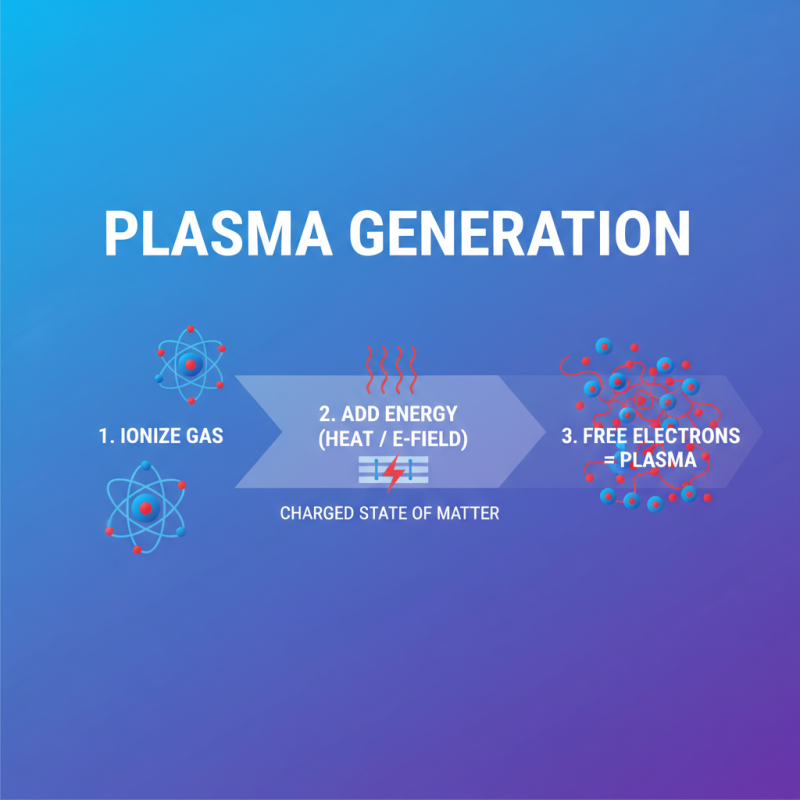
Plasma generation relies on ionizing gas. It transforms this gas into plasma by increasing energy levels. High temperatures or electric fields can achieve this. In simple terms, plasma is where electrons are freed from atoms. This process creates a charged state of matter. It’s fascinating yet complex.
Several methods exist for generating plasma. One common method uses electrical discharges. When voltage is applied, it excites gas molecules. This leads to ionization. Instantaneously, a glowing gas forms. Sometimes, the transition can be erratic or uneven. That can lead to less efficient results.
Another method involves microwave energy. This technique heats the gas, creating a plasma state. It generally proves more controlled. Still, it can require careful monitoring. Ensuring consistency is crucial. Those exploring plasma technology have vast challenges and opportunities. It’s clear that the basic principles of plasma generation spark a lot of curiosity.
Components of a Plasma Machine
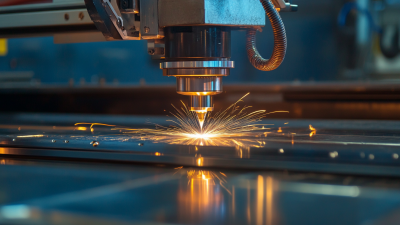
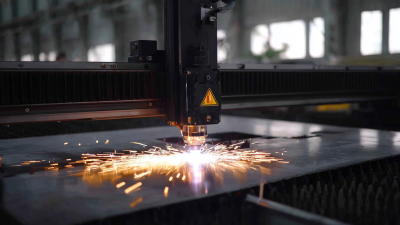
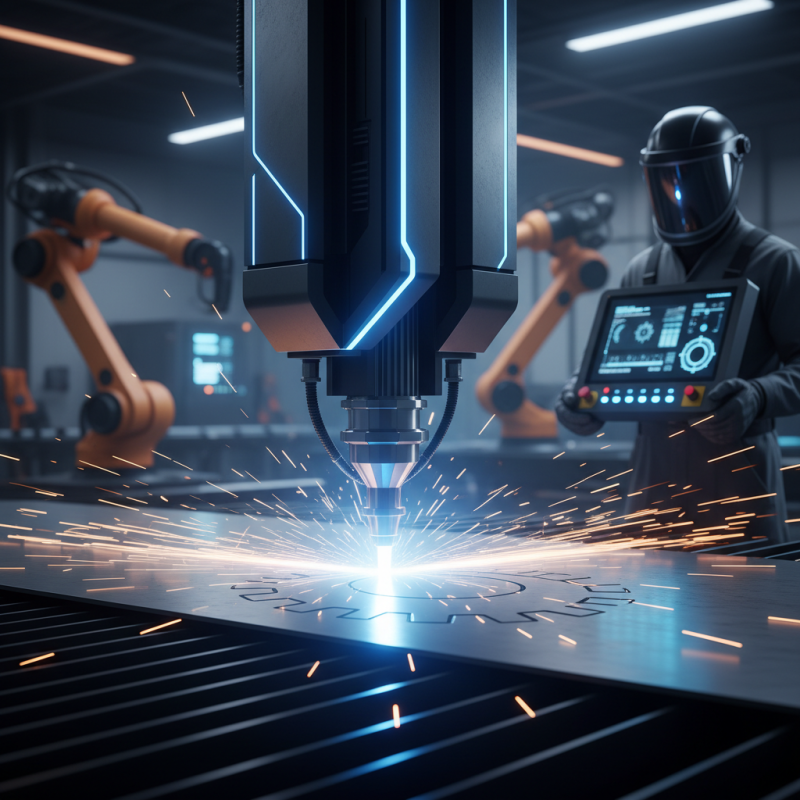
A plasma machine is a fascinating tool that utilizes ionized gas to cut and weld materials. Understanding its components offers insight into how it operates. The main part is the plasma torch. This device generates an electrical arc, turning gas into plasma. It is attached to a power supply, which provides the necessary energy.
Another key component is the gas supply system. This system supplies inert gas, often argon or nitrogen. The choice of gas affects the quality of the plasma. The gas flows through a nozzle and interacts with the arc, creating intense heat. This heat allows for efficient cutting and welding. The design and material of the nozzle play a critical role in performance.
Cooling systems are also essential. They prevent the torch from overheating during prolonged use. Often, water or specialized coolants circulate around the components. This cooling system needs regular checks to ensure optimal functionality. Neglecting it can lead to equipment failure. Each component must work in harmony for effective operation. Failure to consider any part can result in imperfect results, reminding operators of the importance of precision and maintenance.
How Plasma Machines Operate
Plasma machines are fascinating tools that utilize the properties of plasma. They operate by creating a high-temperature gas, where electrons are stripped from atoms. This process generates a cloud of ions and free electrons. The result is a state of matter that can conduct electricity. But how exactly does this happen?
The machine starts by heating a gas until it becomes ionized. This gas can be air or other substances. An electrical current is then passed through the ionized gas, which creates a glowing arc. This arc is incredibly hot and can melt or cut through materials. It's precise and can be adjusted for different tasks. However, working with plasma requires careful handling. There's a risk of creating unexpected outcomes if not managed well.
Controlling the plasma isn't always easy. Settings may need frequent adjustments. Different materials react uniquely to plasma, leading to trial and error. Understanding the full capabilities can take time. Often, errors reveal gaps in knowledge, highlighting the need for ongoing learning and improvement. These machines show great promise, but their operation involves complex nuances.
Applications and Benefits of Plasma Technology
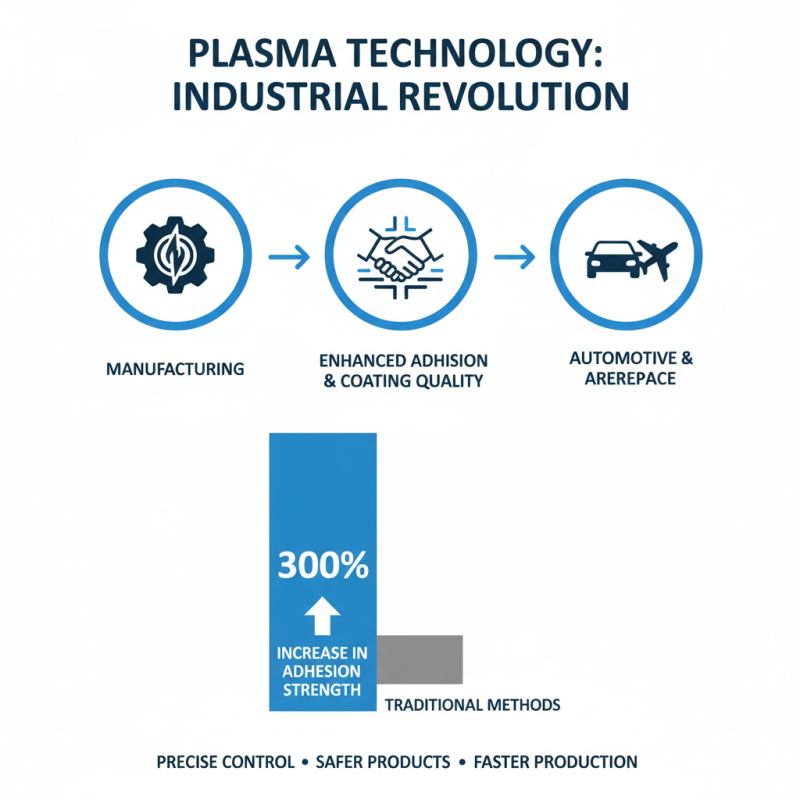
Plasma technology is revolutionizing various industries. It offers precise control over surface properties and chemical reactions. In manufacturing, plasma treatment enhances adhesion and improves coating quality. According to a recent industry report, plasma technology can boost adhesion strength by up to 300%. This is crucial for automotive and aerospace applications where safety is paramount.
In electronic components, plasma machines play a vital role. They are used for etching and cleaning circuit boards. The ability to remove impurities at a microscopic level increases efficiency. Reports show that using plasma can decrease defect rates by 20%. Reducing defects directly translates to lower costs and higher production yields.
Yet, challenges remain with plasma technology. One significant issue is the power consumption of plasma systems. High energy use can offset some of the benefits. Additionally, not all materials react well to plasma treatment. There is still ongoing research to expand the range of applications. The balance between eco-friendliness and efficiency is crucial. As industries adopt plasma solutions, continuous improvement is essential to ensure sustainability.