
What Is Solar Water Purification and How Does It Work?
Solar Water Purification uses sunlight to help make contaminated water safer, but the term covers several processes. A solar still warms water inside a covered basin. Vapor rises, condenses on a cooler surface, then drips into a clean container. Many dissolved salts and minerals stay behind, so distillation can reduce salinity. Some volatile chemicals may travel with the vapor. Distillation is not a universal fix.
Another method is solar disinfection, often called SODIS. Users fill clear plastic bottles with relatively clear water and place them in strong sunlight. Ultraviolet radiation and heat can reduce disease-causing microbes. Simple, yes. But SODIS does not remove chemical pollution. Cloudy water or weak sunlight can also make treatment unreliable. These differences matter at home, in field stations, and during emergencies.
Reliable results depend on the source water, equipment, sunlight, and careful handling afterward. A practical setup needs clean collection vessels and protection from recontamination. The appealing simplicity can hide a difficult question: how will users verify safety each day? That deserves thought. Solar methods can help where electricity is scarce, but they are not suitable for every contaminant. Testing water and following public-health guidance remain essential. This guide explains how major methods work, what they can remove, and where their limits begin.
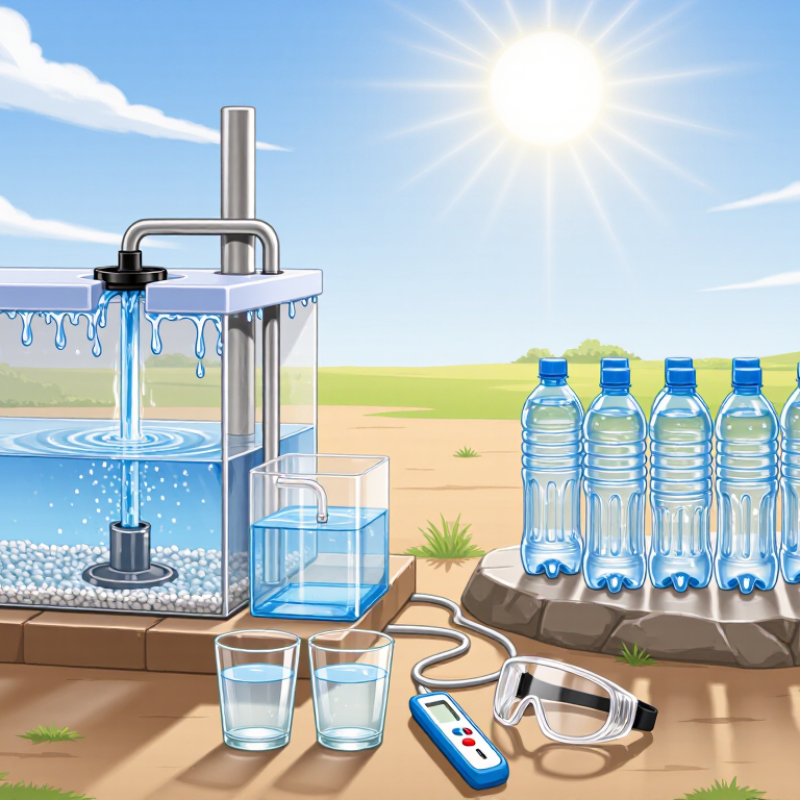
Definition and Purpose of Solar Water Purification
Solar water purification is the use of sunlight or solar-powered heat to make water safer for a specific use. The term covers different methods, not one universal device. In solar disinfection, clear water sits in transparent bottles under strong sunlight. Ultraviolet light and warmth can reduce many disease-causing microbes. Solar distillation works differently: heat turns water into vapor, which condenses on a clean surface and is collected. This can separate many salts and microbes from the original water.
The purpose is to provide a practical treatment option where fuel, electricity, or treatment supplies are limited. It can be useful during travel, in remote households, or when normal services are interrupted. Small details matter. Cloud cover, bottle clarity, water depth, and exposure time affect results. Cloudy water should be settled or filtered first, because particles can shield microbes from sunlight. Solar disinfection does not reliably remove chemicals, heavy metals, or salt. Distillation may also leave some volatile chemicals in the collected water. So, “purified” needs care. The term is a little broad, and I would not treat sunlight alone as proof that water is safe. Use a method suited to the suspected contamination, and follow local public-health guidance when available.
How Sunlight Removes or Inactivates Contaminants
Sunlight can make water safer through disinfection or distillation. For solar disinfection, clear water is placed in clean, transparent bottles and left in strong sunlight for several hours. UV-A radiation damages the genetic material of many disease-causing microbes, while heat can add another stress. The microbes are not filtered out. They are inactivated.
Effectiveness depends on sunlight, exposure time, water clarity, and bottle condition. Clouds and murky water reduce UV penetration; particles can shield microbes. Letting muddy water settle and passing it through clean cloth may help, but neither step makes the water safe by itself. It is easy to overstate what sunlight can do.
Solar distillation works differently. Sunlight heats water in a covered basin; vapor rises, condenses on a cooler surface, and drips into a separate clean container. Many microbes, salts, and metals remain in the basin. However, some volatile chemicals may travel with the vapor, and dirty collection surfaces can recontaminate the water. The process can also be slow. Testing is needed to confirm chemical safety.
What Is Solar Water Purification and How Does It Work? - How Sunlight Removes or Inactivates Contaminants
| Solar method | How sunlight works | Contaminants it can address | Important conditions | Key limitations |
|---|---|---|---|---|
| Solar disinfection (SODIS) | Sunlight, especially UV-A radiation, damages or inactivates many disease-causing microorganisms. Warming can improve disinfection when water becomes sufficiently hot. | Many bacteria, viruses, and protozoa in relatively clear water. | Common guidance is to expose clear water in suitable transparent bottles to strong sunlight for about 6 hours, or for 2 consecutive days when skies are heavily overcast. Follow local public-health guidance. | Does not remove dissolved chemicals, salts, or particles. Cloudiness and suspended material can shield microbes; it is not a reliable treatment for chemically contaminated water. |
| Solar pasteurization | A solar collector or cooker heats water until it reaches a time-and-temperature combination sufficient to inactivate disease-causing organisms. Pasteurization relies on heat, not on sunlight acting directly as a disinfectant. | Many bacteria, viruses, and protozoa when the required temperature and holding time are reached. | Use a thermometer or an appropriate temperature indicator and follow validated local guidance for the water and equipment. | Does not remove dissolved salts, metals, or most chemical pollutants. Heating alone does not guarantee removal of contaminants. |
| Solar distillation | Sunlight evaporates water; the vapor condenses on a cooler surface and is collected separately from the source water. | Can reduce dissolved salts, many non-volatile minerals and metals, and many microorganisms. | Performance depends on sunlight, temperature, collector design, and preventing untreated water from mixing with the collected condensate. | Some volatile chemicals may evaporate with the water and contaminate the condensate. Distillation is relatively slow and requires equipment and maintenance. |
| Solar photocatalysis | Sunlight activates a photocatalyst, commonly a titanium-dioxide-based material, producing reactive species that can break down some organic pollutants and damage microorganisms. | Selected organic compounds and microorganisms, depending on the catalyst and system design. | Effectiveness depends on light intensity, water clarity, catalyst properties, contact time, and system testing. | Not a universal treatment. Some pollutants may only be partly transformed, and treated water needs appropriate validation before drinking. |
| Solar-powered filtration or disinfection | Photovoltaic panels provide electricity to operate pumps, ultraviolet disinfection units, or other treatment equipment; sunlight supplies the energy rather than treating water directly. | Depends on the treatment equipment: filtration may reduce particles, while validated UV systems can inactivate many microorganisms. | Requires correctly sized equipment, adequate power, maintenance, and operation within the system’s specified flow and water-quality limits. | Solar power does not itself remove contaminants. A treatment system may not address dissolved chemicals unless it includes a suitable treatment stage. |
Note: Solar treatment is not interchangeable across methods. The appropriate approach depends on the suspected contaminants and local water-quality guidance. If chemical contamination is possible, use a source confirmed to be safe or a treatment method specifically designed for those chemicals.
Key Components of a Solar Water Purification System
A solar water purification system is more than a panel in sunlight. In a small solar still, a dark basin holds raw water beneath a sloped, transparent cover. Sunlight warms the basin, and water evaporates. Dissolved salts and many microbes remain behind. The vapor condenses on the cooler cover and runs into a separate collection channel. That channel matters: a loose seam can let untreated water mix with the clean output. Simple, but not effortless.
A practical system may also include a feed tank, a screen for leaves and grit, and a clean-water storage container. In panel-powered designs, photovoltaic panels supply electricity to a pump, filter, or ultraviolet treatment unit; these parts work differently from a still’s evaporation chamber. A controller can help regulate flow, while a basic meter can track output or water quality. Keep it covered. Store treated water in a clean, closed container, and inspect seals and collection surfaces regularly. Distillation does not reliably remove every volatile contaminant, and performance changes with sunlight, temperature, and maintenance. Testing the finished water is prudent, especially when the source is uncertain.
What Is Solar Water Purification and How Does It Work?
Key Components: Solar Disinfection (SODIS) Exposure Guidelines
SODIS uses a transparent bottle and sunlight to help inactivate disease-causing microorganisms. Guidance recommends at least 6 hours of sunlight in sunny conditions, or two consecutive cloudy days (shown here as an approximate 48-hour window). Use clear water; settling or filtration can help remove visible particles. Solar disinfection does not remove dissolved chemicals or salts.
Step-by-Step Operation of the Purification Process
Solar water purification often uses a solar still to separate clean water from dissolved salts and many other impurities. The process begins with a shallow basin filled with untreated water. Dark basin surfaces absorb sunlight and warm the water. Keep the water level low; deeper water usually takes longer to heat.
As the water warms, some of it evaporates and rises inside the covered still. Most salts and nonvolatile particles stay in the basin. The water vapor touches the cooler underside of the transparent cover, condenses into droplets, and runs down a sloped surface. A small channel collects the droplets in a clean container. That is the purified output. It can be slow, and results vary with sunlight, temperature, and construction. Solar distillation also may not remove volatile chemicals, so the source water matters.
Tips: Place the still in direct sun, away from shade, and check that the cover slopes toward the collection channel. Clean the basin and container regularly; dirt can contaminate collected water. Do not assume clear water is safe. For drinking, use a suitable test or treatment method when the source may contain chemical contaminants. A cloudy day can make production disappointingly low.
Common Methods, Uses, and Practical Limitations
Solar water purification uses sunlight to reduce certain risks in water, but different methods do different jobs. A solar still warms salty or dirty water, then collects condensed vapor on a cooler surface. Dissolved salts and many microbes stay behind, though some volatile chemicals may travel with the vapor. It can help where fuel is scarce, but produces water slowly. A clear-bottle solar disinfection method exposes relatively clear water to sunlight, using ultraviolet light and heat to reduce many disease-causing microbes. Cloudy water needs filtering first. It is slow.
Solar treatment can suit small household needs, emergency kits, or remote areas with strong sunlight and clean containers. A practical detail matters: keep treated water covered, since handling can contaminate it again. Clouds matter. Long periods of weak sun make treatment less dependable, while turbidity and bottle scratches can reduce light exposure. Solar methods do not reliably remove every chemical pollutant, and they cannot make seawater drinkable unless a distillation process removes the salt. The limits are easy to overlook. In real use, output and treatment quality vary with weather, water clarity, and equipment; a method that worked yesterday may not work as well today.