What is Stainless Steel Wire Mesh and Its Applications?
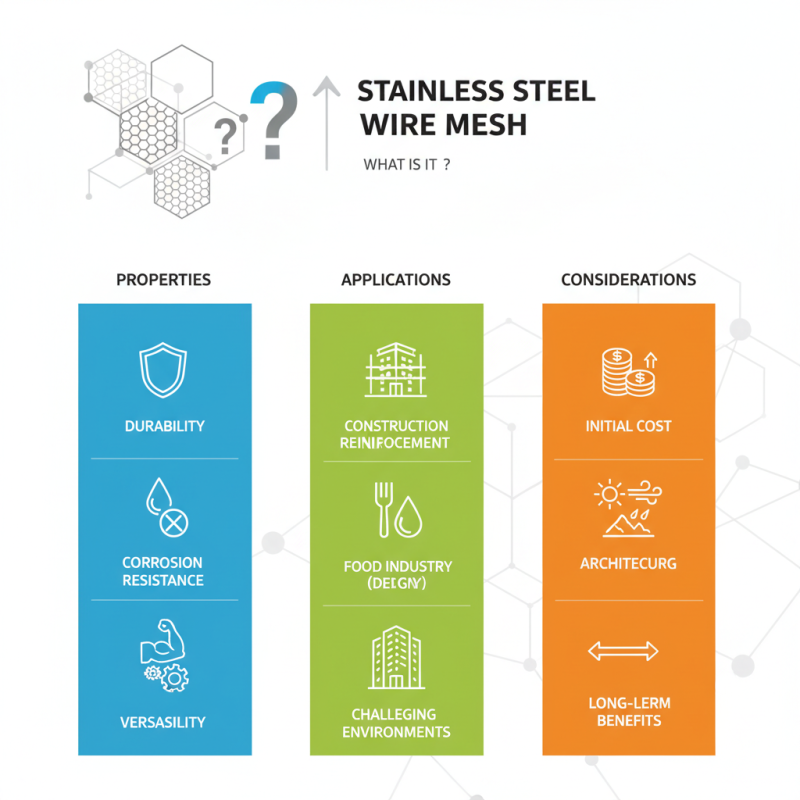
stainless steel wire mesh is a versatile material, widely used in various industries. It consists of tightly woven strands of stainless steel, offering durability and resistance to corrosion. This unique combination makes stainless steel wire mesh suitable for both indoor and outdoor applications.
In construction, stainless steel wire mesh is often used as reinforcement in concrete structures. It provides added strength and stability, enhancing the overall longevity of buildings. In the food industry, its sanitary properties ensure safety while processing and storing food products. Additionally, its aesthetic appeal makes it popular in architectural designs.
Moreover, many environments pose challenges to materials. Stainless steel wire mesh, however, stands resilient against these conditions. Its resistance to rust and wear makes it a reliable choice. Yet, users should be aware of its cost. While it may seem high initially, the long-term benefits often outweigh the expense. Understanding these factors can lead to more informed choices.
What is Stainless Steel Wire Mesh?
Stainless steel wire mesh is a versatile material. It consists of woven stainless steel wires, which provide strength and flexibility. This mesh is corrosion-resistant, making it ideal for various environments. Commonly, it features a fine or medium weave, allowing it to filter fine particles.
In construction, stainless steel wire mesh is often used for safety barriers. It can support heavy loads and withstand harsh conditions. In the food industry, this mesh helps in processes like drying and sifting. Its non-reactive surface ensures no contamination. Many manufacturers prefer it for durability and ease of maintenance.
Tip: Always check the mesh size before purchasing. The right size will enhance its effectiveness in your task.
In artistic applications, stainless steel wire mesh is used for sculptures. Artists create intricate designs that showcase the metal's reflective nature. However, creating with this material can be challenging. It requires skill to cut and shape without losing its properties.
Tip: Practice on smaller pieces first. Familiarizing yourself with the material can lead to better results.
Composition and Properties of Stainless Steel Wire Mesh
Stainless steel wire mesh is a versatile material. It consists mainly of high-quality stainless steel. The typical alloy composition includes chromium and nickel. These elements provide corrosion resistance and improve durability. The precise mixture affects the mesh's strength and stability.
The properties of stainless steel wire mesh are quite remarkable. It is strong yet lightweight, making it easy to handle. The mesh has excellent tensile strength. This makes it suitable for various applications, from industrial settings to home use. Its ability to withstand harsh conditions is notable. However, improper installation can lead to issues. The mesh should be chosen based on specific requirements.
Applications vary widely. In construction, it reinforces concrete. In agriculture, it serves as fencing. The food industry uses it for safe storage. Stainless steel wire mesh can also filter liquids and gases. Yet, one must ensure it meets the necessary standards for each use. It is crucial to reflect on these choices and their implications.
Common Manufacturing Processes for Stainless Steel Wire Mesh
Stainless steel wire mesh is versatile. Its applications range from filtration to architecture. Manufacturing processes for this mesh vary, depending on the desired specifications. Often, the selection of raw materials impacts the final product quality.
Welding is a common technique. It creates strong bonds between wires. However, ensuring uniform heat distribution can be challenging. Inconsistent heating may lead to weak spots. These imperfections can cause failures in applications. Thus, careful monitoring during production is crucial.
Another method is weaving. The process interlaces wires to form a grid. It allows for various mesh patterns and sizes. However, achieving precise dimensions can be difficult. Tolerances might vary, leading to discrepancies in the final mesh. Attention to detail in the weaving process is essential to avoid such issues.
Key Applications of Stainless Steel Wire Mesh in Various Industries
Stainless steel wire mesh is widely used across many industries. Its durability and resistance to corrosion make it ideal for various applications. In the food industry, it ensures hygiene and safety. This mesh is often found in industrial filters, helping to maintain clean production processes. It effectively filters out contaminants, often with fine openings. However, selecting the correct specification can be challenging. Not every mesh size fits all needs.
In construction, stainless steel wire mesh provides structural support. It is used in concrete reinforcement, ensuring stability in buildings and bridges. Using the wrong type can lead to structural failures. The versatility of this material also extends to the automotive sector. Mesh filters in vehicles help improve engine performance. Yet, the installation can be tricky and requires skilled labor to avoid mistakes.
In the medical field, stainless steel wire mesh is crucial for various devices. Surgical instruments often use this material for its strength. While it guarantees safety, the manufacturing process must be precise. Any miscalculation can lead to product defects. Overall, stainless steel wire mesh plays a vital role in many areas, but careful consideration and expertise are essential for its effective use.
Applications of Stainless Steel Wire Mesh in Various Industries
Advantages of Using Stainless Steel Wire Mesh Over Other Materials
Stainless steel wire mesh is increasingly popular in various industries. Its unique properties make it stand out among other materials. One significant advantage is its corrosion resistance. This means it can withstand harsh environments better than aluminum or plastic meshes. In outdoor applications, such as fencing or garden use, it maintains durability over time.
Another advantage of stainless steel wire mesh is its strength. It does not easily bend or break under pressure. This robustness is crucial for structural applications, where safety is a concern. However, its rigidity can be a double-edged sword. In some contexts, flexibility might be needed, which stainless steel does not provide.
Moreover, the aesthetic appeal of stainless steel is notable. Its shiny finish adds a modern touch to architectural designs. However, the reflective surface can pose visibility issues in some settings. This might lead to unforeseen challenges when integrating it into certain projects. Overall, while stainless steel wire mesh has numerous benefits, it's essential to consider its limitations and specific applications carefully.