10 Tips for Buying Flat Bar Grating
Buying Flat Bar Grating is not just a matter of choosing a panel that looks sturdy. The right specification depends on how the grating will be used, what it must support, and where it will be installed. A walkway above a dry workshop floor has different demands from a platform exposed to rain, grit, or frequent cart traffic. Small details matter.
Before comparing prices, identify the required load, span, panel size, and bearing-bar direction. Check the supplier’s load tables against your actual support spacing; a thicker bar alone does not guarantee a suitable floor. Also compare bar depth, spacing, surface finish, and edge treatment. These choices affect stiffness, drainage, slip resistance, and how easily the panel can be fitted around openings. If the application has unusual loads or safety requirements, ask a qualified engineer to review the specification.
Material and finish deserve equal attention. Galvanized steel may suit many outdoor settings, while other environments can call for a different material or coating. Ask what the product is made from and how its finish is applied, rather than relying on a product photo. Confirm tolerances, fastening options, delivery dimensions, and available documentation before ordering. A missed measurement can turn a good panel into an awkward site problem. And price is only part of the decision. These ten tips will help you compare options carefully, ask suppliers clearer questions, and choose Flat Bar Grating that fits the job—not just the quote.
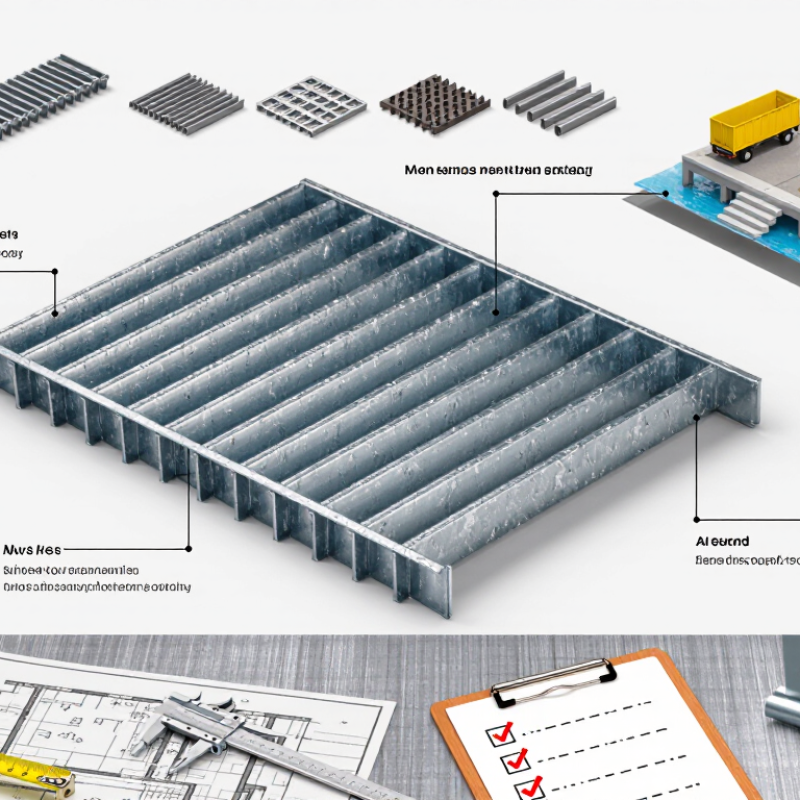
Identify the Application and Expected Load
Before choosing flat bar grating, define where it will sit and what it must carry. A pedestrian walkway has different demands from a maintenance platform supporting a wheeled cart. Record the clear span between supports, likely foot traffic, equipment weight, and whether loads concentrate on small contact points. A 500-kilogram machine on four feet is not equivalent to a uniformly distributed 500-kilogram load. Details matter.
Use the actual span and loading pattern when checking manufacturer-neutral engineering tables. The ANSI/NAAMM MBG 531-17 Metal Bar Grating Manual provides load tables for evaluating grating capacity and deflection. OSHA’s walking-working-surface rule, 29 CFR 1910.22(b)(1), requires surfaces to support their maximum intended load. That is a useful baseline, not a substitute for project-specific engineering. Consider impact from rolling wheels, vibration, wet conditions, and future equipment changes. A small oversight can turn into a noticeable bounce. I have seen teams assume a walkway is “just for people,” then add tool carts later. That assumption deserves a second look. Share the intended use, support spacing, and load details with a qualified engineer before ordering.
Choose a Material for the Operating Environment
Flat bar grating should be selected for the conditions it will actually face, not just its purchase price. For dry indoor areas, carbon steel may provide a practical balance of strength and cost. Where rain, washdown, or persistent humidity is expected, galvanized steel can help resist corrosion. Stainless steel may suit some corrosive or frequently cleaned environments, but confirm its grade against the specific chemicals involved. “Stainless” is not a universal guarantee.
Also consider weight, load, and temperature. Aluminum is lighter and can be useful where handling weight matters, though its capacity may differ from steel. Salt spray, chemical fumes, and standing water can change the choice. Check drainage and nearby metals, too; dissimilar metals in a wet setting can accelerate corrosion. It’s easy to overlook that detail. A coating can wear at cut edges, so ask how fabrication and touch-up will be handled.
Tips: List the actual exposures, including occasional spills and seasonal weather. Match the material and finish to the load requirements, then verify both with project specifications. When conditions are uncertain, request compatibility guidance from a qualified supplier or engineer. I’d avoid guessing. A small sample exposed to the cleaning routine may reveal issues, though it cannot replace proper review.
10 Tips for Buying Flat Bar Grating: Choose a Material for the Operating Environment
How to use this comparison: Density affects grating weight, but it does not determine corrosion resistance or load capacity. Carbon steel is often used in dry or protected settings; hot-dip galvanized steel adds a zinc coating for outdoor exposure; stainless steel is used where corrosion resistance is needed; and aluminum can reduce weight. For chloride-rich environments, such as coastal sites, check whether a suitable alloy such as 316 stainless steel is required. Confirm the exposure conditions, load requirements, and coating or alloy specifications with the supplier.
Approximate material densities; actual values vary by alloy and product specification.
Compare Bearing Bar Sizes and Spacing
When buying flat bar grating, compare bearing bar depth, thickness, and spacing against the clear span and expected load. Bearing bars carry the primary load, so a deeper bar may improve capacity, but the right choice depends on the grating design and support conditions. Check the supplier’s load table for the exact configuration. Do not compare depth alone.
Spacing changes both strength and the size of openings. Closer spacing can create a firmer walking surface and smaller gaps, while wider spacing may suit some drainage or ventilation needs. Picture the actual setting: a boot heel, rolling cart, or dropped tool can behave differently on open grating. A tidy-looking pattern is not automatically the safest fit. I would double-check the use case; it is easy to overlook.
Tip: Compare bar dimensions and center-to-center spacing on the same drawing or specification sheet. Confirm the stated load, span, and support arrangement match your project. Small details matter. If the application has unusual loads or public access, ask a qualified engineer to review the selection rather than guessing from appearance.
Review Surface Treatments and Safety Standards
A surface treatment should match the grating’s environment, not just its appearance. Hot-dip galvanizing can help protect carbon steel from rain and outdoor moisture. In a damp plant room, inspect the coating for bare patches around welds and cut edges. Paint may suit a dry interior, but chipped areas need prompt attention. Stainless steel can resist corrosion, though the correct grade depends on exposure. Looks tidy. That is not enough.
Safety checks start with the intended load, support spacing, and panel span. Confirm that the supplier’s load data matches the actual installation, including moving loads where relevant. Check the applicable building and workplace standards for your location; requirements can vary by use and jurisdiction. A grating’s surface should also provide suitable traction for expected footwear and conditions. Oil, rain, and fine dust can change how secure a walkway feels.
Before installation, look for bent bars, loose welds, sharp edges, and uneven bearing points. These details are easy to miss when panels arrive stacked together. I might once have focused too much on the coating, but a sound finish cannot compensate for an undersized panel or weak support. Keep inspection records, and recheck high-traffic areas after installation. It is worth asking for clarification when load tables or treatment specifications are unclear.
Verify Supplier Quality, Lead Times, and Total Cost
A flat bar grating quote is only useful when its assumptions are clear. The World Bank’s 2023 Logistics Performance Index assessed 139 economies across six dimensions, including shipment timeliness. It offers useful context about shipping routes, but cannot promise a supplier’s delivery date. ISM’s Manufacturing Report on Business uses a 50-point Supplier Deliveries Index threshold: readings above 50 indicate slower deliveries. Ask for a dated production schedule, shipping window, and written notice process for delays. Small details matter.
Check quality before comparing prices. Request material certificates linked to the production lot, a sample panel, and load tables for your actual span and use. Confirm bearing-bar depth, spacing, weld quality, edge bands, and coating requirements. Not just steel. A low quote may exclude cutouts, stair nosings, or hot-dip galvanizing. Get those exclusions in writing, and verify what inspection records come with the order.
Compare total installed cost, not price per panel. Include freight, unloading equipment, supports, field cutting, installation hours, and future coating maintenance. Ask whether the supplier can pack panels by installation area; fewer sorting delays can save crew time. One easy mistake is trusting an attractive unit price before checking freight and waste. I would still verify the takeoff against site drawings. Measure twice. Make suppliers quote the same specifications, quantities, delivery location, and packaging assumptions, then compare the landed cost line by line.