7 Tips to Choose a Portable Multi Gas Detector?
Choosing a Portable Multi Gas Detector is not simply a matter of counting sensors or comparing prices. In a confined space, a clear alarm can matter more than a polished product brochure. Hydrogen sulfide may rise near a wastewater pit, while oxygen deficiency remains invisible and silent. The right instrument must match the gases, worksite, climate, and response plan.
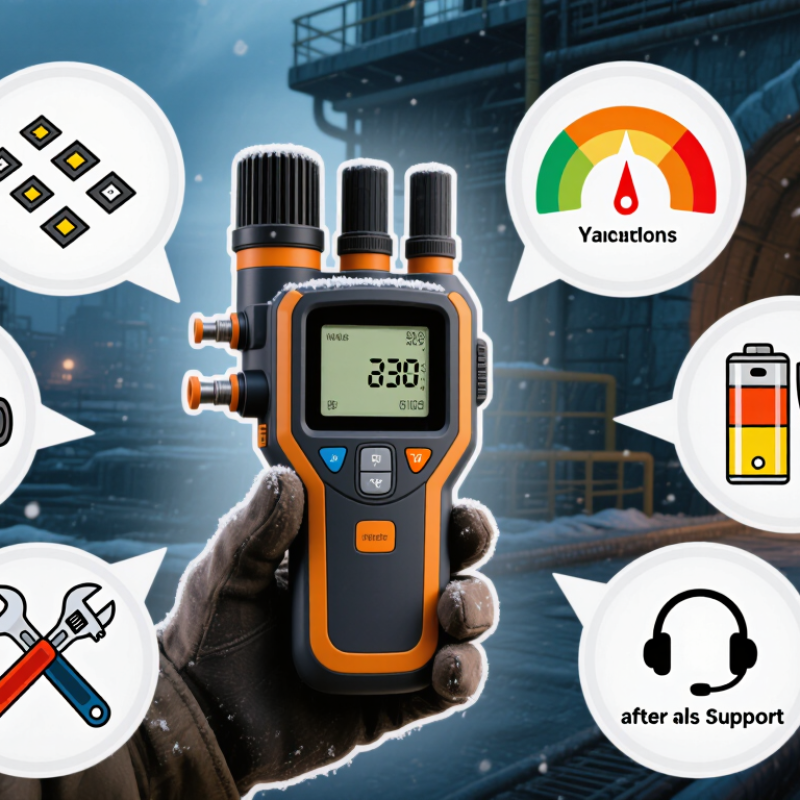
James Reason, a leading safety-science expert, wrote, “We cannot change the human condition, but we can change the conditions under which humans work.” That principle fits gas detection closely. A reliable detector should support fast decisions, even when workers wear gloves, face noise, poor lighting, or freezing weather. This guide explores seven practical tips, including sensor selection, measurement range, alarm visibility, battery endurance, ruggedness, calibration, and after-sales support.
Small details matter. Check whether the unit supports oxygen, toxic gases, and combustible gas monitoring together. Examine its IP rating, pump option, charging method, and data-recording function. A loud alarm is useful, but vibration and bright lights may be essential in a refinery or tunnel. Do not overlook bump testing and calibration intervals. A detector can appear accurate while its sensor has degraded.
There is no perfect model.
Site conditions often expose weak assumptions. A low-cost device may reduce the purchase budget but increase maintenance problems later. Even experienced teams can choose poorly when they rely on specifications alone. Review actual entry procedures, worker training, service access, and emergency practices before selecting your Portable Multi Gas Detector. Safety depends on the complete system, not the instrument alone.
Identify the Gases and Hazards You Need to Monitor
7 Tips to Choose a Portable Multi Gas Detector
Identify the gases before choosing the detector. Oxygen deficiency, toxic exposure, and combustible leaks require different sensors. OSHA defines oxygen-deficient air as below 19.5% by volume. Methane reaches its lower explosive limit near 5% in air, according to the NIOSH Pocket Guide. These numbers change the instrument you need.
Check the actual work area. A sewer entry may involve hydrogen sulfide, methane, and low oxygen. A battery room may require hydrogen monitoring instead. NIOSH lists 100 ppm hydrogen sulfide as immediately dangerous to life or health. It lists 1,200 ppm for carbon monoxide. Do not treat “multi gas” as automatically suitable. Sensor range, alarm settings, response time, and cross-sensitivity all matter. Ask whether vapors, dust, humidity, or temperature can affect readings.
Use data from permits, safety data sheets, incident records, and previous sampling. Portable detectors should support bump testing and documented calibration. OSHA guidance emphasizes testing instruments before use in hazardous atmospheres. Small details matter, such as audible alarms remaining clear near pumps. A flashing alarm may be missed underground. I have seen selection decisions focus on sensor quantity, not exposure pathways. That is an easy mistake. Recheck the list with an industrial hygienist, especially when the process changes.
Compare Detection Technologies and Measurement Ranges
7 Tips to Choose a Portable Multi Gas Detector
Choosing a portable multi gas detector starts with the gases you may encounter. Electrochemical sensors suit oxygen and many toxic gases, such as carbon monoxide or hydrogen sulfide. Catalytic bead sensors detect combustible gases, but they need oxygen to operate correctly. Infrared sensors can measure combustible gases or carbon dioxide without consuming oxygen. Photoionization sensors help detect volatile organic compounds. Each technology has limitations. No sensor is perfect.
Tip 1: Match the sensor technology to the working environment. Check cross-sensitivity, humidity tolerance, response time, and calibration needs. A detector used near solvents may require PID technology, while a confined space may need oxygen, toxic gas, and combustible gas channels. Read the technical sheet carefully. Small details matter.
Tip 2: Compare measurement ranges, not only detection channels. A wide range may prevent overload, but it does not always provide the best low-level resolution. Confirm the lower limit, resolution, alarm points, and maximum reading. For example, a gas reading that changes by 1 ppm may be unsuitable for strict exposure control. I once focused too much on channel count and overlooked resolution. That was a useful mistake.
Tip 3: Check real operating conditions. Cold mornings, wet equipment, dust, and sudden gas changes can affect readings. Choose a model with suitable ingress protection and clear alarms. Test bump response before field use, then calibrate according to documented procedures. Portable devices need disciplined handling. Convenience can hide risk.
| Tip | Gas or Measurement | Common Detection Technology | Typical Measurement Range | What the Technology Does Well | Important Limitations | Selection Check |
|---|---|---|---|---|---|---|
| 1 | Identify the gases that create the actual hazard | Electrochemical sensor for toxic gases and oxygen | O₂: 0–30% vol CO: 0–500 ppm H₂S: 0–100 ppm | Provides selective measurement of oxygen deficiency or enrichment and common toxic gases at relatively low concentrations. | Sensor ranges vary by model. Electrochemical sensors can be affected by temperature, humidity, cross-sensitivity, and sensor aging. | Match every sensor to the gases identified in the site risk assessment. Do not assume that a four-gas configuration covers every workplace hazard. |
| 2 | Choose the correct combustible-gas technology | Catalytic bead or infrared (IR) sensor | Combustible gas: 0–100% LEL | Catalytic bead sensors are widely used for flammable-gas warning. IR sensors can measure many hydrocarbons without consuming gas during detection. | Catalytic bead sensors require oxygen to operate and may be damaged or inhibited by silicones, lead compounds, sulfur compounds, or other contaminants. IR sensors are not suitable for every gas and do not measure oxygen. | Select the sensor according to the target gas, oxygen conditions, contaminants, and the applicable LEL value. Confirm that the detector supports the required gas-correction factor. |
| 3 | Consider whether volatile organic compounds (VOCs) must be measured | Photoionization detector (PID) | Common ranges: 0–10,000 ppm Some instruments use ppb-level resolution | Detects many ionizable VOCs, including solvents and fuel vapors, with fast response and useful low-level sensitivity. | A PID does not identify every compound separately. Response depends on the gas ionization potential and the instrument's correction factor. High humidity and lamp contamination can affect readings. | Add a PID when the risk assessment includes VOC exposure, solvent vapor, or unknown organic contamination. Verify the target compound's correction factor. |
| 4 | Compare the measurement range with the expected exposure level | Application-dependent sensor combination | Oxygen: % vol Toxic gases: ppm Combustibles: % LEL VOCs: ppm or ppb | A detector is more useful when its resolution, alarm points, and upper range suit the expected concentration and workplace limits. | A wider range does not automatically mean better performance. Excessively high ranges may provide less useful resolution near the alarm threshold. | Check the low end, resolution, full-scale range, alarm settings, and short-term and time-weighted exposure limits before purchase. |
| 5 | Evaluate response time and sampling method | Diffusion or pumped sampling | Response time is application-specific; many sensors are specified by T90 response time | Diffusion instruments are compact and energy-efficient. Pumped instruments can draw samples from confined spaces, ducts, or remote locations before entry. | Diffusion detection may be slower in stagnant air. Pumped systems can have leaks, blocked filters, tubing losses, and higher battery consumption. | Choose a pump when pre-entry testing or remote sampling is required. Confirm tubing length, pump flow, leak testing, and alarm behavior. |
| 6 | Check environmental and safety suitability | Ruggedized portable instrument with certified enclosure | Verify operating temperature, humidity, ingress protection, and hazardous-area rating | A suitable enclosure and certification support use in dust, rain, impact-prone areas, and potentially explosive atmospheres. | Certification markings are not interchangeable. Extreme temperature, condensation, dust, shock, and electromagnetic interference can influence performance. | Confirm the required hazardous-location certification, IP rating, operating temperature, humidity limits, drop resistance, and charging restrictions. |
| 7 | Plan calibration, bump testing, and maintenance | Certified test gas with calibration software or docking station | Use gas concentrations appropriate to the sensor and the manufacturer's calibration procedure | Bump tests verify that sensors, alarms, display, and sampling components respond before use. Calibration adjusts the instrument against a known reference gas. | A bump test is not the same as a full calibration. Incorrect gas, expired cylinders, blocked filters, or overdue calibration can produce unreliable results. | Confirm gas-cylinder availability, calibration intervals, sensor replacement policy, battery life, event logging, training, and the required documentation. |
Check Sensor Performance, Accuracy, and Response Time
A Portable Multi-Gas Detector is only useful when its sensors react quickly and measure reliably.
Check the sensor range, target gases, resolution, calibration stability, cross-sensitivity, alarm accuracy, and response time.
These seven points reveal more than a bright display.
Ask for test results based on IEC 60079-29-1 or EN 45544 requirements. The T90 response time shows how long a sensor needs to reach 90% of a known gas concentration. A detector reading slowly can delay evacuation, even when its final reading looks correct. NIOSH’s Pocket Guide lists exposure limits for many workplace gases, but those limits are meaningful only when measurements are accurate. A practical check should compare the detector with certified test gas before use. Never rely only on the last calibration date.
Battery condition also affects sensor performance. Low power may weaken pumps, alarms, or sampling flow. Inspect tubing for cracks and watch for blocked filters. In field inspections, a detector can pass its startup test yet respond poorly because of moisture or contamination. That detail is easy to miss. The International Labour Organization reported 2.93 million work-related deaths annually, based on its 2023 estimates. Gas detection cannot prevent every incident, but dependable response can support faster decisions. Still, response-time claims deserve skepticism. Test them under realistic temperature, humidity, and airflow conditions.
Evaluate Battery Life, Portability, and Operating Conditions
7 Tips to Choose a Portable Multi Gas Detector
Battery life affects every inspection, shutdown, and emergency response. Select a detector that can cover a full shift with reserve power. The U.S. Bureau of Labor Statistics recorded 5,283 fatal work injuries in 2023, although its data does not isolate gas exposure. This limitation matters. A longer runtime supports safer decisions, but it cannot replace bump tests or calibration.
Tip 1: Match runtime to reality. Compare the published battery duration with alarms, wireless features, cold weather, and frequent sampling. A claimed 18-hour runtime may shrink during heavy use. Keep spare batteries or a charging plan nearby. Test them in the field.
Portability should reduce distraction, not encourage careless carrying. Choose a compact unit with a readable display, tactile controls, strong clips, and gloves-friendly buttons. Check its weight with the sampling hose attached. A detector that swings from a belt can damage sensors or snag equipment.
The NIOSH Pocket Guide stresses that oxygen-deficient atmospheres may produce rapid incapacitation without reliable warning symptoms.
Tip 2: Evaluate operating conditions. Verify the temperature range, humidity tolerance, dust protection, sensor response time, and ingress rating. Confirm performance in confined spaces, outdoor work, and high-vibration areas.
Tip 3: Review maintenance data. Track calibration intervals, alarm history, battery aging, and sensor replacement costs.
I would also trial two models during a full shift. Specifications look convincing. Real workplaces are less forgiving.
Review Safety Features, Certifications, and Maintenance Needs
A portable multi gas detector should be judged by its safety behavior, not its screen alone. The International Labour Organization reported 2.93 million work-related deaths in 2019. Better detection cannot prevent every incident, but it can reduce exposure time. Choose audible, visual, and vibrating alarms. They must remain noticeable near compressors, traffic, or heavy rain. A clear event log also helps investigators identify missed alarms and delayed responses.
Check certification details carefully. Look for conformity with relevant standards, such as IEC 60079-29-1 for flammable gas detection and IEC 60079 requirements for explosive atmospheres. Intrinsic safety approval matters where sparks could ignite gas. The enclosure rating should suit dust and water exposure. An IP rating is useful, but it does not replace proper cleaning. Certification is not a magic shield. It confirms tested conditions, not careless operation.
Maintenance determines whether the detector tells the truth. OSHA recommends testing portable gas monitors before each day’s use, while manufacturer procedures may require calibration at defined intervals. Perform a bump test with known gas, inspect filters, and confirm alarm levels. Replace sensors and batteries according to service data, not guesswork. In field checks, blocked inlets often appear before electronic failures. Keep records with dates, gas concentrations, results, and technician names. A detector may pass yesterday and fail today. That uncomfortable possibility deserves routine testing, especially after impact, water exposure, or a sudden reading change.
7 Tips to Choose a Portable Multi-Gas Detector
Compare the core selection criteria before purchase: gas coverage, alarm functions, environmental protection, certification evidence, battery performance, calibration support, and maintenance requirements. Verify that the detector is suitable for the gases, hazardous area classification, and workplace regulations where it will be used.