Skip to content
Menu

Top 10 Power Tool Accessories Global Buyers Need?

Power Tool Accessories influence cutting accuracy, drilling speed, surface finish, and jobsite safety. Global buyers need more than a long product list. They need accessories matched to voltage, chuck type, material, and working conditions. A masonry bit that performs well on dry concrete may struggle in damp brick. A thin cutting disc can save time, yet it may wear quickly on stainless steel. These details separate dependable sourcing from costly trial and error.

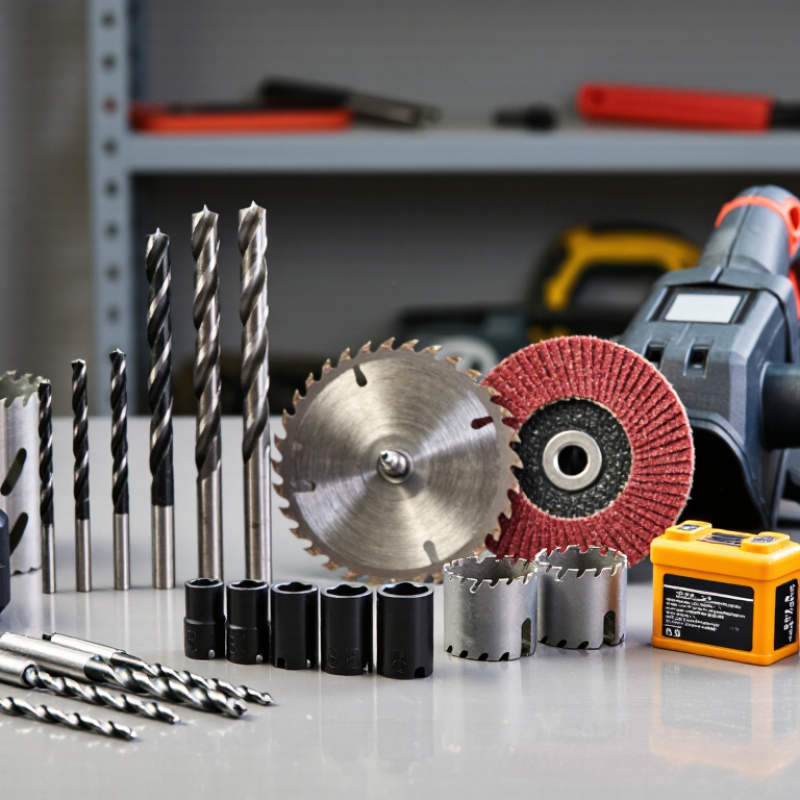
This guide examines ten essential Power Tool Accessories for distributors, contractors, workshops, and serious retailers. It considers drill bits, saw blades, grinding wheels, sanding discs, router bits, hole saws, impact sockets, batteries, chargers, and dust-collection attachments. Each category will be viewed through practical buying questions: Is the accessory compatible? How consistent is its material quality? Can the supplier provide test reports, clear packaging, stable lead times, and responsive support? Experience on real jobsites suggests that small design choices matter, such as a laser-etched size mark or a reinforced blade shoulder. Still, no accessory fits every market. That assumption deserves scrutiny. Buyers should compare samples, verify performance claims, and review feedback from actual users before placing large orders. Safety instructions, recognized quality systems, and responsible manufacturing practices also deserve attention. Cheap products can become expensive when they cause rework, downtime, or damaged tools. The strongest purchasing decision balances price, service life, safety, and supply reliability.
Top 10 Power Tool Accessories Global Buyers Need?

What Power Tool Accessories Are and Why Global Buyers Need Them

Power tool accessories are replaceable working parts attached to drills, grinders, saws, sanders, and routers. They include drill bits, screwdriver bits, saw blades, cutting discs, sanding pads, hole saws, router bits, polishing pads, and dust extraction adapters. The tool supplies motion, but the accessory performs the actual cutting, drilling, shaping, or finishing.

Their importance becomes clear on a real jobsite. A masonry bit needs a different tip structure from a wood bit. A thin cutting disc may suit sheet metal, while a thicker disc handles heavier material. Tooth count affects saw speed and edge quality. Grit size changes sanding results. Small details matter. Compatibility also includes shaft size, thread type, diameter, rated speed, and tool connection. Ignoring one specification can cause poor performance, premature wear, or unsafe operation.

Global buyers need accessories that match local materials, voltage systems, packaging rules, and workplace requirements. Reliable suppliers should provide material data, dimensions, speed ratings, batch information, and clear testing records. Sample testing is practical before large orders. Check fit, vibration, heat, cutting time, and service life. No buying list is perfect. I have seen low-cost accessories look attractive until their edges wore after a few minutes. That experience can be uncomfortable, but it prevents repeated purchasing mistakes. A stable accessory range helps distributors serve construction, furniture, maintenance, and manufacturing customers with fewer delays.

How to Evaluate Accessory Quality, Compatibility, and Safety

Global buyers often start with ten accessory groups: drill bits, driver bits, masonry bits, hole saws, saw blades, router bits, socket sets, grinding discs, sanding discs, and batteries. Grand View Research estimated the global power tools market at about USD 45.7 billion in 2023, with continued growth expected through 2030. That growth increases the need for reliable accessory selection, not just wider catalogs.

Check the shank, diameter, thread, voltage, and tool interface before ordering. A perfect-looking blade can still wobble if its arbor size differs. For drilling, inspect carbide tips, flute symmetry, and heat marks. For abrasive discs, verify diameter, maximum RPM, material rating, and expiry information. IEC 62841 provides safety requirements for many portable motor-operated tools, while ISO 11148 covers several hand-held non-electric tools. These standards support evaluation, but they do not replace practical inspection.

Compatibility is only half the test. During trial use, watch for vibration, uneven cuts, excessive dust, and rapid edge wear. Stop immediately when a disc sounds different. OSHA’s machine-guarding guidance stresses protection from rotating parts and flying fragments, making guards and eye protection essential. Battery accessories also need matching voltage and approved charging systems. Some suppliers provide test certificates; others provide attractive packaging and little evidence. I have seen both. Buyers should request batch data, clear instructions, and traceable quality records. A lower price may reflect efficient production, or simply thinner materials. That uncertainty deserves a second question.

The Essential Cutting, Drilling, and Grinding Accessories

Top 10 Power Tool Accessories Global Buyers Need?

Cutting, drilling, and grinding accessories determine how safely a power tool performs. Grand View Research estimates that the global power tools market reached approximately USD 36.5 billion in 2023. It also forecasts a 5.2% compound annual growth rate through 2030. This growth increases demand for dependable blades, drill bits, abrasive discs, sanding pads, and hole saws.

Cutting accessories need the correct tooth pattern and material rating. Thin metal-cutting discs can reduce heat, while diamond blades suit masonry and concrete. Drill bits should match the surface: carbide for tile, cobalt for harder metals, and standard high-speed steel for general work. Grinding wheels require careful checks for cracks, speed limits, and secure mounting. Fit matters. An accessory that vibrates can damage both the tool and the operator’s control. MarketsandMarkets identifies durability, cordless tool adoption, and jobsite efficiency as major forces shaping the power tools sector.

Tips: Match the accessory diameter and maximum RPM before installation. Keep spare bits dry and organized. Dust changes everything, especially during masonry drilling. Inspect cutting edges after every demanding job. I still see buyers choosing the cheapest disc first, then replacing it after one difficult cut. That is not always wasteful, but it deserves reflection. Performance depends on material, pressure, cooling, and user technique, not only the accessory label.

Top 10 Power Tool Accessories Global Buyers Need

Common nominal size ranges for essential cutting, drilling, and grinding accessories used across international tool standards.

The chart compares representative minimum and maximum sizes commonly stocked by professional and industrial buyers. Actual specifications vary by tool type, material, safety standard, and application.

The Most Useful Sanding, Fastening, and Material-Shaping Accessories

Top 10 Power Tool Accessories Global Buyers Need

The most useful accessory kits support sanding, fastening, and material shaping. A balanced ten-piece selection includes sanding discs, sanding sheets, flap discs, abrasive drums, driver bits, nut setters, socket adapters, grinding wheels, carbide burrs, and jigsaw blades. Each item solves a different workshop problem. Sanding discs remove rough marks quickly, while sanding sheets help finish corners and narrow edges. Flap discs level welds and prepare metal surfaces with controlled abrasion.

Fastening accessories need more than attractive packaging. Buyers should check bit hardness, socket fit, shank size, and compatibility with common tool interfaces. Metric and imperial sizes may both matter in international projects. Driver bits with clear size markings reduce selection errors on busy workbenches. Nut setters are useful for repetitive assembly, but poor fit can damage fasteners. That small detail is often overlooked.

Material-shaping accessories must match the workpiece. Grinding wheels suit surface removal, while carbide burrs handle detailed shaping on metal. Jigsaw blades should be selected by tooth pattern and material thickness. Supplier documents should state grit, dimensions, operating limits, and batch information. Sample testing remains valuable, even when specifications appear complete. A tool may feel efficient for ten minutes, then create excess heat or uneven wear. Buyers should record that result instead of trusting the first successful trial. Mistakes happen. Careful records make the next purchase more reliable.

Top 10 Power Tool Accessories Global Buyers Need? - The Most Useful Sanding, Fastening, and Material-Shaping Accessories
No. Accessory Main Category Compatible Power Tools Common Specifications Typical Applications Why Buyers Need It
1 Abrasive Cutting Discs Cutting
Metalworking
Angle grinders and cut-off tools Typical diameter: 100–125 mm
Common thickness: 1.0–2.5 mm
Reinforced bonded abrasive construction
Cutting carbon steel, stainless steel, sheet metal, rebar, bolts, and metal tubing Fast material separation with broad use in fabrication, maintenance, and construction
2 Flap Discs Sanding
Grinding
Angle grinders Typical diameter: 100–125 mm
Common grits: 40, 60, 80, and 120
Aluminium oxide or zirconia abrasive
Weld blending, edge preparation, rust removal, and surface finishing Combines stock removal and finishing in one accessory, reducing tool changes
3 Random Orbital Sanding Discs Sanding
Surface Finishing
Random orbital sanders Common diameter: 125 or 150 mm
Hook-and-loop backing
Common grits: 40–400
Preparing wood, painted surfaces, plastics, composites, and automotive panels Offers controlled scratch patterns and efficient dust extraction when perforated
4 Reciprocating Saw Blades Cutting
Demolition
Reciprocating saws Typical lengths: 150–300 mm
Tooth ranges commonly include 6–24 TPI
Bi-metal and carbide-grit options
Cutting wood, nail-embedded timber, plastic pipe, sheet metal, and structural materials Useful for flush cutting, renovation, emergency access, and difficult-to-reach areas
5 Multi-Tool Blades Material Shaping
Detail Cutting
Oscillating multi-tools Typical widths: 20–65 mm
Bi-metal, high-carbon steel, and carbide-grit versions
Plunge cutting, grout removal, undercutting door jambs, trimming wood, and cutting plastic Supports precise work in corners and confined spaces where larger tools cannot operate
6 Masonry and Concrete Drill Bits Drilling
Construction
Hammer drills and rotary hammers Common diameters: 4–20 mm for general anchoring
Carbide-tipped cutting point
SDS-plus options for rotary hammers
Drilling brick, block, concrete, stone, and mortar for anchors and fasteners Essential for installation, electrical work, plumbing, and general building maintenance
7 Twist Drill Bit Sets Drilling
General Purpose
Cordless drills, drill drivers, and drill presses Common diameter range: 1–13 mm
High-speed steel construction
Jobber-length designs are widely used
Drilling mild steel, aluminium, wood, plastic, and composite materials A versatile core set for workshops, maintenance teams, installers, and assembly operations
8 Impact Driver Bit Sets Fastening
Assembly
Impact drivers and cordless screwdrivers Common shank: 6.35 mm hex
Phillips, Pozidriv, Torx, slotted, and hex profiles
Impact-rated alloy steel
Driving wood screws, machine screws, structural screws, and self-tapping screws Supports high-torque fastening while reducing bit breakage in impact applications
9 Hole Saws Material Shaping
Core Cutting
Drills and magnetic drill systems with suitable arbors Common diameter range: 19–152 mm
Bi-metal, carbide-grit, and diamond-grit types
Creating openings in wood, metal, plastic, plasterboard, tile, and masonry Produces clean circular openings for pipes, cables, switches, vents, and fittings
10 Router Bits Material Shaping
Woodworking
Handheld routers and router tables Common shanks: 6, 6.35, and 12 mm
Straight, flush-trim, round-over, and chamfer profiles
Edge profiling, rabbeting, grooving, trimming laminates, and joinery preparation Enables repeatable edge shaping and accurate woodworking production

How Global Buyers Can Compare Suppliers, Costs, and Supply Reliability

Global buyers often start with the accessory list, but supplier comparison should begin with application data. The ten common categories include drill bits, driver bits, saw blades, grinding wheels, sanding discs, router bits, hole saws, oscillating blades, impact sockets, and magnetic holders. Each requires a different specification sheet. I check material grade, working size, tolerance, coating, package count, and tested service life. Photos are useful, but samples reveal more.

A low unit price can hide expensive failures. Compare landed cost, not quotation price. Add tooling, inspection, packaging, freight, duties, and replacement rates. Ask suppliers for minimum order quantities, payment terms, production capacity, and written lead-time ranges. I prefer three sample batches from separate production dates. That test is slower. It is also more honest. One supplier once delivered attractive samples, but later batches cut less smoothly. Approval samples do not prove stable production.

Supply reliability needs evidence. Request recent on-time delivery data, corrective-action records, and batch traceability. Verify quality controls through independent inspection when order value justifies it. Check whether suppliers can maintain consistent abrasive grain, steel hardness, and tooth geometry. Confirm packaging and documentation meet destination-market requirements. Keep a backup source for critical accessories. However, splitting volume too early may weaken pricing and attention. I have made that mistake. A balanced scorecard helps, but installer feedback often exposes problems spreadsheets miss.