What Are the Top LPG Generator Types?
Choosing among the top Lpg Generator types requires more than comparing advertised kilowatt ratings. Fuel availability, load profile, runtime, emissions, noise, and maintenance access all matter. A small inverter LPG Generator may suit a mobile workshop, producing stable power for sensitive electronics. A standby unit can protect a home or clinic during grid failures. Larger industrial models support continuous or prime-power duties, often with three-phase output and automatic transfer systems.
Industry data supports this wider view. The World LPG Association’s Statistical Review 2024 estimated global LPG demand at roughly 331 million tonnes in 2023. Demand remains strong because LPG stores easily and serves areas with weak grid infrastructure. The International Energy Agency also emphasizes fuel resilience and flexible generation in its electricity market analysis. These findings do not make LPG the best choice everywhere. They show why application-based selection matters.
James Rockall, former chief executive of the World LPG Association, has described LPG as “clean, versatile, portable and affordable.” That description is useful, but incomplete. Modern dual-fuel generators can switch between LPG and natural gas, while inverter systems reduce voltage fluctuations and operating noise. Yet performance depends on vaporization, regulator sizing, ambient temperature, and cylinder capacity. A generator that looks powerful on paper may struggle beside a cold warehouse or an undersized gas line. The practical answer is rarely the biggest engine. It is the type that matches real demand, fuel logistics, safety controls, and service support. Mistakes happen. Careful load testing prevents expensive surprises.
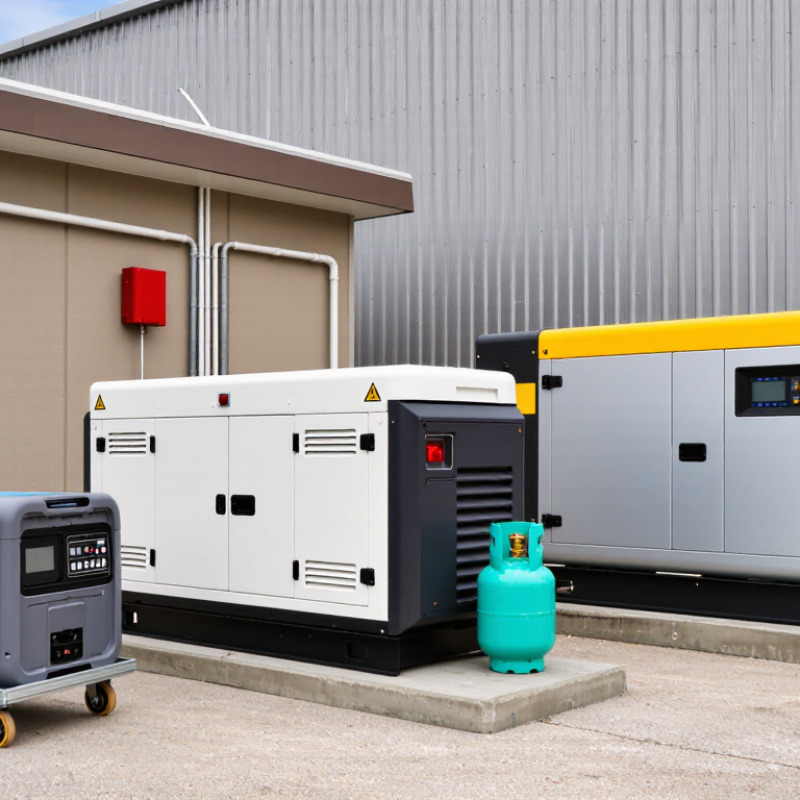
LPG Generator Types by Portability and Installation
What Are the Top LPG Generator Types?
LPG Generator Types by Portability and Installation
Portable LPG generators suit short-term power needs at homes, workshops, and outdoor sites. They usually include wheels, lifting handles, and manual or electric starting systems. A compact model can run lights, a refrigerator, and selected tools, but not every appliance together. Check the rated and starting wattage carefully. It depends.
Inverter LPG generators provide cleaner electrical output for sensitive devices and often operate more quietly. Open-frame portable models usually offer stronger airflow and simpler servicing, although they can be noticeably louder. In practical use, portability does not mean effortless operation. The unit still needs outdoor placement, stable ground, sufficient clearance, and protection from rain. LPG cylinders must remain upright and connected according to local safety requirements.
Fixed standby LPG generators belong to a different installation category. They stay outside on a prepared base and connect to the building through a transfer system. When the utility supply fails, an automatic controller can start the generator and restore selected circuits. Professional installation should include load calculations, exhaust planning, fuel-line inspection, and weather protection. Larger systems may support more appliances, but they demand more space and regular maintenance. Cold weather and low fuel pressure can also reduce performance. That detail is easy to overlook. Local codes and the equipment manual should guide every installation decision, not convenience alone.
Standby, Portable, and Prime-Power LPG Generators
What Are the Top LPG Generator Types?
Standby, Portable, and Prime-Power LPG Generators
Standby LPG generators are fixed near homes, clinics, farms, and commercial buildings. They start automatically when the grid fails. An automatic transfer switch moves selected circuits to generator power within seconds. The U.S. Department of Energy reports that weather-related outages have increased significantly over recent decades. That makes dependable backup capacity more valuable. Yet standby systems need correct sizing, ventilation, battery testing, and regular load checks. A large unit is not automatically better.
Portable LPG generators suit tools, small workshops, food trucks, and temporary field work. They use smaller cylinders or a compact bulk tank. Operators must inspect hoses, regulators, and connections before each use. The U.S. Environmental Protection Agency’s AP-42 data lists LPG combustion factors, helping engineers estimate fuel-related emissions. Portable models are convenient, but fuel changes quickly under heavy loads. That detail is easy to overlook.
Prime-power LPG generators operate for long periods where utility service is weak or unavailable. They support remote construction, agricultural pumping, and temporary facilities. The World LPG Association’s 2024 statistical review places global LPG demand at roughly 360 million tonnes annually, showing the fuel’s broad supply infrastructure. Still, prime-power planning requires tank capacity, vaporization performance, maintenance intervals, and delivery access. Cold weather can expose weak assumptions.
What Are the Top LPG Generator Types?
LPG generators are commonly classified as portable, standby, or prime-power units. Their typical output ranges reflect common industry applications rather than a specific brand or model.
Portable LPG generators generally support small tools, appliances, and temporary power needs. Standby generators are designed to supply backup electricity during grid outages, while prime-power generators can operate for extended periods in locations without reliable grid access.
Inverter and Conventional LPG Generator Systems
What Are the Top LPG Generator Types? Inverter and Conventional LPG Generator Systems
LPG generators generally use either inverter or conventional alternator systems. Conventional models produce electricity at a fixed engine speed, commonly 3,600 revolutions per minute for 60 Hz output. They suit pumps, tools, and emergency circuits that tolerate minor voltage variation. Their design is straightforward, easier to service, and often more affordable. However, the engine may run loudly even when demand is low. That wastes fuel in lightly loaded conditions.
Inverter LPG generators create electricity in three stages: generation, conversion, and electronic inversion. The result is cleaner, more stable power for laptops, medical electronics, and communication equipment. Their engines can slow down when loads fall, reducing noise and fuel use. Actual savings depend on load patterns, maintenance, and ambient temperature. Marketing claims can sound too perfect.
The International Energy Agency reported that about 750 million people lacked electricity access in 2022, supporting continued demand for dependable small-scale power systems. For emissions context, the IPCC 2006 Guidelines assign LPG a default factor of approximately 63.1 kilograms of carbon dioxide per gigajoule. This figure reflects fuel combustion, not total lifecycle emissions. Field selection should include starting watts, continuous watts, runtime, altitude, ventilation, and transfer-switch requirements. Inverter systems usually cost more, but their quieter operation can matter beside a bedroom or workspace. Conventional systems remain practical for rugged, high-load applications. Neither type is automatically better.
Industrial, Commercial, and Residential LPG Generators
Industrial LPG generators are built for demanding, continuous workloads. They support factories, warehouses, farms, and remote work areas. Their engines often deliver high output with durable cooling systems. LPG burns cleanly and leaves fewer deposits than many conventional fuels. However, fuel storage and ventilation require careful engineering. A 500-kilowatt unit cannot be selected from load figures alone. Motor starting currents, welding equipment, and peak production hours also matter. I have seen undersized systems trip when several machines started together. That failure is avoidable.
Commercial LPG generators suit offices, shops, hotels, clinics, and construction sites. They can maintain lighting, refrigeration, elevators, security systems, and essential computer equipment during outages. Automatic transfer equipment can restore power within seconds when properly installed. Noise levels, exhaust direction, service access, and tank placement deserve equal attention. A compact enclosure may look convenient, but restricted airflow can overheat the engine. It happens more often than expected.
Residential LPG generators usually range from portable units to permanently installed standby systems. They can power refrigerators, pumps, heating controls, internet equipment, and selected household circuits. Professional load assessment prevents unnecessary fuel consumption and disappointing runtime. Installation should include safe clearance, weather protection, grounding, and routine inspection. Cold weather can affect starting performance, especially when fuel pressure drops. Not every home needs whole-house capacity. A smaller, well-planned generator may perform better than an oversized unit operating lightly. That choice still deserves review after the household’s needs change.