Why Choose Stainless Steel Plates for Global Projects?
Global infrastructure faces demanding conditions, from humid ports to chemical processing areas. Coastal desalination plants, food factories, and energy terminals often expose materials to salt, moisture, heat, and repeated cleaning. In these settings, Stainless Steel Plates provide a practical balance of corrosion resistance, strength, hygiene, and service life. Their chromium-rich surface forms a protective oxide layer that can repair itself after minor damage. Nickel, molybdenum, and other alloying elements may improve performance in specific environments. The correct grade still matters. Grade 304 may suit many indoor applications, while Grade 316 often offers stronger resistance to chlorides. The choice should follow actual exposure, not habit.
That assumption can fail.
Reliable procurement requires more than a polished supplier website. Experienced project teams review mill test certificates, heat numbers, thickness tolerances, surface finishes, and welding requirements. They also compare ASTM, EN, or project-specific specifications before approving production. A plate may look flawless under warehouse lighting, yet poor traceability can create problems during installation or inspection. Site experience also shows that storage matters. Standing water, carbon-steel contamination, and careless handling can damage stainless surfaces before service begins. Lifecycle cost deserves attention too. Higher initial pricing may reduce repainting, replacement, shutdowns, and maintenance labor. Still, stainless steel is not a universal answer. Severe acids, high temperatures, or poorly controlled fabrication may require another alloy or additional protection. A sound decision combines engineering data, supplier verification, and honest review of project risks. This approach helps global teams select Stainless Steel Plates with greater confidence, consistency, and accountability.
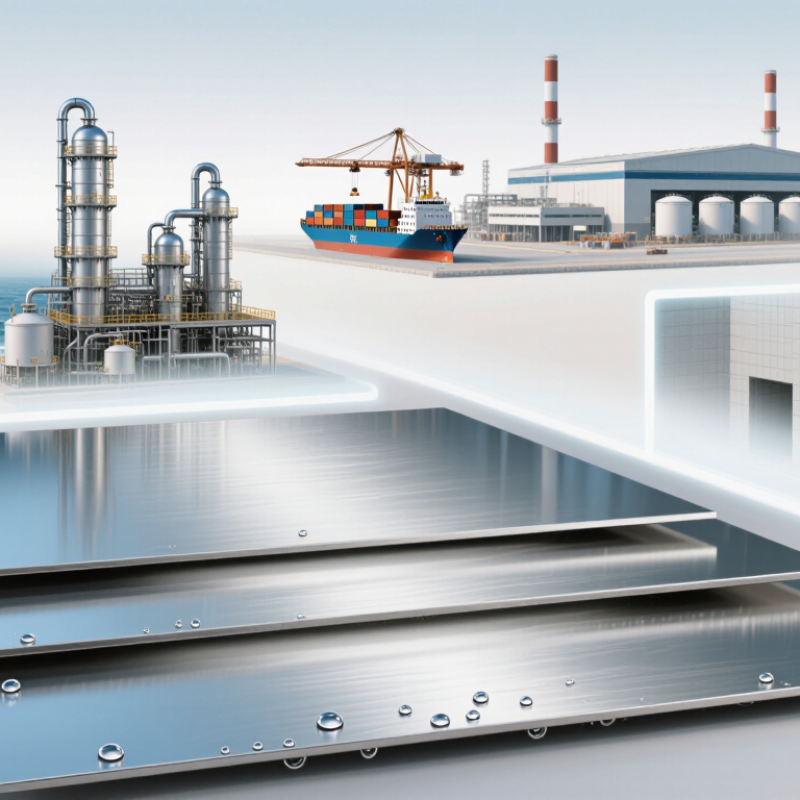
Stainless Steel’s 10.5% Chromium Threshold and Global Corrosion Resistance
Stainless steel earns its name from a chromium-rich passive film, not from absolute immunity. EN 10088-1 defines stainless steel with at least 10.5% chromium. Above this threshold, oxygen helps form a thin, self-repairing layer of chromium oxide. It is invisible, yet powerful. Scratched handrails can repassivate when clean air and moisture are available.
The NACE IMPACT study estimated global corrosion costs at about US$2.5 trillion annually, equal to 3.4% of global GDP. This figure explains why corrosion resistance matters in bridges, coastal equipment, food facilities, and water infrastructure. However, chromium content alone does not guarantee equal performance. ISO 9223 classifies atmospheric corrosivity through humidity, pollutants, and airborne salt. Marine exposure can challenge ordinary grades quickly. Chloride is persistent.
Grade selection needs field experience. A low-chromium stainless plate may perform well indoors but stain near a shoreline. Molybdenum-bearing grades generally offer stronger resistance to pitting in chloride environments, as described in technical guidance from the European Committee for Standardization and industry corrosion manuals. Fabrication also matters. Embedded iron, rough welds, and trapped moisture can undermine a sound alloy. This is where specifications sometimes become too optimistic. Inspectors should verify chemistry, surface condition, drainage, and cleaning access before approving plates for global projects.
304 vs 316 Plates: 18% Chromium and 2–3% Molybdenum Explained
For global projects, stainless steel plate selection often begins with chemistry, not appearance. In practice, 304 plate usually contains about 18% chromium and 8% nickel. Chromium creates a passive film that reforms when exposed to oxygen. It is not invincible. Chlorides, crevices, and poor drainage can still cause pitting.
304 plate Usually contains about 18% chromium and 8% nickel.
316 plate Adds approximately 2–3% molybdenum, with commonly higher nickel content.
This addition improves resistance to localized corrosion in salty or chemically exposed environments. ASTM A240 specifies chromium ranges of roughly 18–20% for 304 and 16–18% for 316. Its molybdenum range for 316 is typically 2–3%.
The NACE IMPACT study estimated global corrosion costs at about 2.5 trillion dollars annually, equal to nearly 3.4% of global GDP. That figure supports lifecycle thinking, not automatic overspending. The International Stainless Steel Forum reported global stainless crude steel production near 58.4 million tonnes in 2023, showing the material’s extensive industrial use.
On a coastal pump skid, I would review chloride levels, temperature, weld quality, and cleaning access before selecting plate. 316 is safer, not always correct. For dry interiors, 304 may offer sound value and easier procurement. For seawater splash, 316 can still require drainage and careful fabrication. One assumption remains risky: alloy chemistry cannot repair poor design. Experience suggests that small details, such as trapped water beneath a support, can outweigh a specification sheet.
ASTM A240 Standards for Strength, Thickness, and International Procurement
Why Choose Stainless Steel Plates for Global Projects?
ASTM A240 Standards for Strength, Thickness, and International Procurement
Global projects need plates that remain reliable during transport, fabrication, and changing site conditions. ASTM A240 provides a practical reference for stainless steel plate, sheet, and strip. It addresses chemical composition, mechanical properties, heat treatment, and dimensional requirements. That matters when a drawing crosses borders. A plate can look perfect yet fail documentation checks. Details matter.
For strength, procurement teams should verify the specified grade and test values, rather than trust the word stainless. Tensile strength, yield strength, and elongation help engineers assess forming and service demands. Thickness deserves equal attention. Nominal thickness, permitted tolerance, flatness, and cut dimensions can affect fit-up by several millimeters. Small errors become expensive during welding. Request the material test report, heat number, dimensions, and inspection records. Match every item against the purchase specification and ASTM A240 edition.
International buying also requires clear communication. State units, surface finish, edge condition, packing method, and destination requirements before production. Confirm whether additional project standards or third-party inspection apply. One overlooked unit conversion can delay a container. Check twice. Drawings and certificates sometimes disagree, especially after revisions. That is a warning, not a minor inconvenience. The standard guides decisions, but engineering judgment still matters.
50-Year Service Life: Lower Maintenance Costs in Harsh Environments
Why Choose Stainless Steel Plates for Global Projects?
A 50-year service life can change how project owners calculate value. Stainless steel plates resist corrosion in coastal terminals, chemical facilities, wastewater plants, and cold-region infrastructure. Their chromium-rich surface repairs itself when oxygen is available. This reduces dependence on repeated paint systems and protective coatings.
Maintenance savings appear in practical ways. Crews may avoid frequent recoating, abrasive cleaning, and temporary shutdowns. Fewer interventions also reduce access equipment, labor hours, and disruption near operating equipment. In salt-laden air, a well-specified plate can remain functional while painted carbon steel develops rust beneath damaged coatings. The difference becomes visible around bolt holes, drainage channels, and exposed welds.
However, fifty years is not automatic. Material grade, surface finish, fabrication quality, and drainage design matter greatly. Chloride deposits can collect in narrow crevices. Poorly cleaned welds may become early corrosion points. Engineers should review local temperature, chemical exposure, loading, and cleaning practices before selection. Correct welding procedures and post-fabrication treatment are equally important. A cheaper grade may perform adequately in one region but fail sooner in another. That possibility deserves honest attention. Life-cycle estimates should include inspection, cleaning, replacement access, and realistic labor costs. This approach helps global projects pursue durable performance without treating service-life claims as guarantees.
Why Choose Stainless Steel Plates for Global Projects?
50-Year Service Life: Lower Maintenance Costs in Harsh Environments
This planning scenario compares estimated major maintenance interventions over a 50-year project life. Stainless steel plates generally require fewer recoating or replacement cycles than painted carbon steel in marine, industrial, and high-humidity environments. Actual results depend on grade selection, exposure conditions, fabrication quality, cleaning, and design details.
Planning assumptions: stainless steel represents corrosion-resistant plate design with routine inspection and cleaning; painted carbon steel includes periodic coating renewal and localized repairs. Values are comparative engineering estimates, not a warranty or universal service-life guarantee.
