Skip to content
Menu

2026 Best CNC Cutter for Global Buyers?

Choosing the right Cnc Cutter in 2026 requires more than comparing prices and motor power. Global buyers face different materials, workshop conditions, electrical standards, and service expectations. A machine that performs well in a large factory may struggle in a small studio. It is not a magic box.

This guide examines practical factors, including cutting accuracy, spindle performance, working size, software compatibility, dust collection, and operator safety. It also considers shipping reliability, installation support, spare parts, and warranty response across regions. For example, a buyer cutting 18-millimeter plywood needs different performance from someone processing acrylic sheets or aluminum panels. Test samples matter. Product videos alone can mislead.

A professional purchasing decision should combine manufacturer documentation with real operating evidence. Look for clear tolerances, material recommendations, maintenance schedules, and certification details appropriate to your market. Ask suppliers how they handle damaged components and remote troubleshooting. These questions often reveal more than polished brochures. Still, no comparison is perfect. Factory conditions vary, and advertised accuracy may change after long production hours. Buyers should verify results independently before placing a large order. This overview helps narrow the field while keeping cost, reliability, safety, and long-term usability in focus. The best Cnc Cutter is not always the fastest or cheapest. It is the model that fits your materials, workload, skills, and local support network. Expect trade-offs. Plan carefully.
2026 Best CNC Cutter for Global Buyers?

What Is a CNC Cutter and How Does It Work?

2026 Best CNC Cutter for Global Buyers?

What Is a CNC Cutter and How Does It Work?

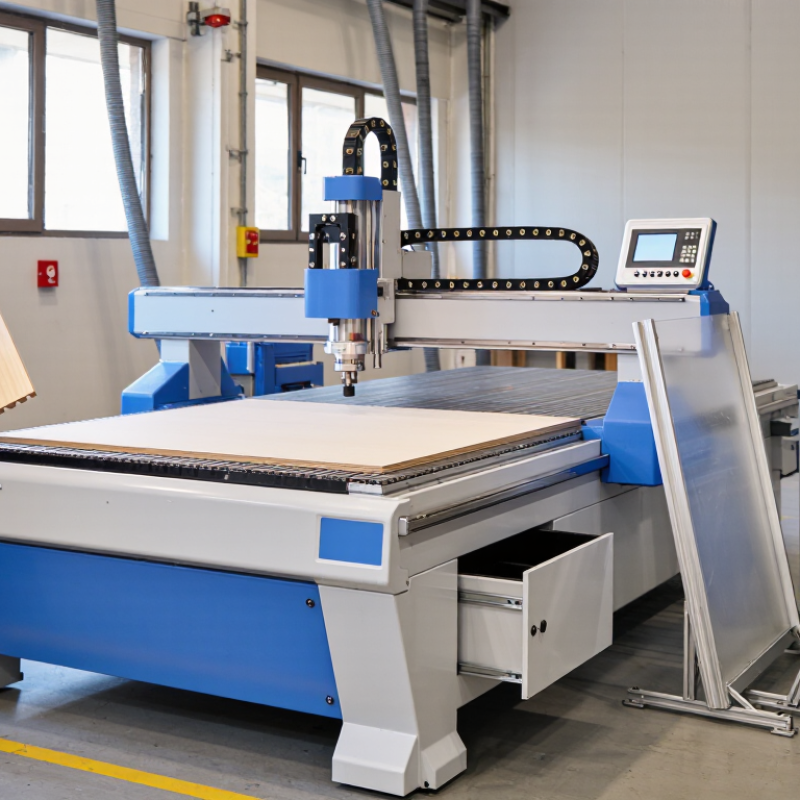
A CNC cutter is a computer-controlled machine that removes material with a rotating tool. It can shape wood, plastic, foam, aluminum, and other approved materials. The process starts with a digital drawing. CAM software converts that drawing into toolpaths and cutting instructions. A controller then sends commands to the machine’s motors.

The spindle rotates the cutter at a selected speed. Linear motors move it along the X, Y, and Z axes. The tool follows programmed coordinates, cutting layer by layer. A firm workholding system prevents movement during operation. Even a small shift can ruin a detailed panel or create rough edges. Dust extraction, correct feeds, and suitable tooling also affect the final surface.

Tips: Check the working area, spindle range, control software, safety features, and local service options. Ask for clear documentation and realistic cutting samples. Do not select a machine by speed alone. A faster cutter may produce more heat, noise, and waste. In practice, the “best” choice depends on material, tolerance, workload, and operator skill. I would also leave room for mistakes; early projects rarely run perfectly. A test cut saves expensive material and reveals problems before production.

2026 Best CNC Cutter for Global Buyers? What Is a CNC Cutter and How Does It Work?

A CNC cutter is a computer-controlled cutting tool that removes material according to programmed toolpaths. The chart shows representative spindle-speed starting ranges for a 6 mm carbide end mill across common materials. Actual settings depend on tool geometry, machine rigidity, depth of cut, coolant, and workpiece condition.

Higher spindle speeds are commonly used for softer materials such as wood and aluminum, while stainless steel and mild steel generally require lower speeds to control heat and tool wear.

Which CNC Cutter Types Suit Different Materials and Tasks?

Choosing the best CNC cutter in 2026 depends less on price than on material, thickness, and required accuracy. A CNC router suits wood, plastics, foam, and aluminum sheets. It leaves a visible edge, but it handles large panels efficiently. For thin steel and stainless steel, fiber laser cutting offers narrow kerfs and clean profiles. Its heat-affected zone still needs inspection.

Plasma cutters are practical for thick carbon steel and structural parts. They cut quickly, although their edges may require grinding.

Waterjet systems handle stone, glass, composites, and heat-sensitive alloys without thermal distortion. They consume more abrasive and water, which can change operating costs.

Milling cutters remain valuable for deep pockets, drilled holes, and tight three-dimensional tolerances. They are slower for simple sheet outlines.

Industry data supports this broader equipment mix. MarketsandMarkets’ Cutting Tools Market report projected growth from about 24.5 billion dollars in 2023 to 31.3 billion dollars by 2028. Grand View Research also reported strong expansion in CNC machine demand, driven by automation and tighter production requirements. These figures describe markets, not guaranteed savings. Report estimates vary, and that matters.

A useful test is simple: cut a sample from the real material. Check burrs, warping, corner quality, and cycle time. I have seen buyers choose a faster cutter, then lose hours in finishing work. That mistake is easy to repeat. /

What Features Matter When Choosing a CNC Cutter in 2026?

2026 Best CNC Cutter for Global Buyers?

What Features Matter When Choosing a CNC Cutter in 2026?

Choosing a CNC cutter requires more than checking spindle speed or advertised accuracy. A rigid frame, stable gantry, and precise linear rails strongly affect cutting quality. Speed alone misleads. Ask for repeatability data, cutting samples, and clear tolerance information. The working area should match your common materials, not only your largest project. A smaller machine may deliver better control and lower operating costs.

The control system also matters. Look for simple file transfer, reliable software compatibility, and recovery after power interruptions. Operators should adjust feed rates without confusion. Good dust extraction protects moving parts and improves workshop air quality. Emergency stops, machine guarding, and clear operating instructions deserve equal attention. They are practical features, not decoration. Global buyers should also verify voltage options, technical manuals, spare-part availability, and remote service response times.

Test the machine with your actual materials whenever possible. Wood, plastics, composites, and nonferrous materials can produce different loads and surface results. Request a sample cut before placing a large order. No specification sheet reveals everything. A cutter may look excellent in a demonstration but struggle during long production runs. Maintenance access is another easily missed detail. If cleaning rails feels difficult, routine care may be neglected. A selection checklist can still miss real workshop habits, so leave room for honest testing and adjustment.

2026 Best CNC Cutter for Global Buyers? - What Features Matter When Choosing a CNC Cutter in 2026?

Comparative selection guide based on typical machine capabilities, operating requirements, and application suitability.

CNC Cutter Category Typical Working Area Suitable Materials Typical Cutting Thickness Positioning Accuracy Spindle or Laser Power Recommended Production Volume Key Features to Check
Desktop CNC Router 300 × 300 to 900 × 600 mm Wood, plastics, foam, acrylic, soft aluminum Up to approximately 25 mm per pass, depending on material and tool Approximately ±0.05 to ±0.15 mm 0.5 to 2.2 kW spindle Prototyping, education, light-duty work Rigid frame, dust collection, emergency stop, compatible software, easy tool changing
Benchtop CNC Mill 300 × 200 to 800 × 400 mm Aluminum, brass, copper, plastics, mild steel in light cuts Typically 3 to 20 mm per operation Approximately ±0.02 to ±0.08 mm 0.8 to 3.0 kW spindle Small-batch machining and maintenance work Ball screws, coolant management, low backlash, rigid column, tool-length measurement
Industrial 3-Axis CNC Router 1,300 × 2,500 to 2,000 × 4,000 mm Wood, MDF, plywood, plastics, composites, aluminum Up to approximately 50 to 100 mm, depending on tooling and material Approximately ±0.05 to ±0.20 mm 3 to 15 kW spindle Medium to high-volume sheet processing Vacuum table, automatic tool changer, lead screws or racks, nesting software, dust extraction
CNC Fiber Laser Cutter 1,500 × 3,000 to 2,000 × 6,000 mm Carbon steel, stainless steel, aluminum, brass, copper Approximately 1 to 25 mm for common metals; capacity depends on power and material Approximately ±0.03 to ±0.10 mm 1 to 20 kW laser source High-volume sheet-metal production Fiber source efficiency, autofocus, assist-gas control, fume extraction, slat-table design, safety enclosure
CNC Plasma Cutter 1,500 × 3,000 to 2,500 × 8,000 mm Mild steel, stainless steel, aluminum Approximately 1 to 50 mm, depending on plasma system and cut quality Approximately ±0.10 to ±0.50 mm 45 to 300 A plasma power Medium-volume structural and fabrication work Torch-height control, water table or downdraft extraction, consumable availability, edge-quality control
CNC Waterjet Cutter 1,500 × 3,000 to 2,000 × 6,000 mm Stone, glass, ceramics, metals, composites, rubber Approximately 5 to 150 mm, depending on pump pressure and material Approximately ±0.05 to ±0.20 mm Approximately 30,000 to 60,000 psi water pressure Specialized medium-volume production Abrasive delivery, pump serviceability, sludge removal, cutting-head alignment, taper compensation
5-Axis CNC Machining Center Work envelope commonly 500 to 2,000 mm per axis Aluminum, steel, titanium, plastics, composites Material- and tool-dependent; optimized for complex 3D components Approximately ±0.005 to ±0.05 mm 5 to 40 kW spindle High-value, complex-part production Rotary-axis accuracy, thermal compensation, probing, advanced CAM compatibility, collision avoidance

Feature Priorities for Global Buyers in 2026

Evaluation Dimension Recommended Minimum Requirement Why It Matters
Electrical Compatibility Confirm voltage, frequency, phase, grounding, and protection requirements before purchase Electrical standards and site conditions vary between countries.
Safety System Emergency stop, interlocked guards where applicable, protective covers, and documented risk controls Reduces operator exposure to moving parts, cutting energy, dust, fumes, and coolant.
Control Compatibility Common G-code support, stable file transfer, compatible CAD/CAM workflow, and backup capability Prevents software integration problems and reduces training time.
Accuracy and Repeatability Request test-cut results, calibration procedures, and stated repeatability under defined conditions Published accuracy is meaningful only when measurement conditions are clear.
Serviceability Accessible wear parts, maintenance schedule, troubleshooting documentation, and remote support capability Downtime and imported spare-part delays can significantly affect operating cost.
Total Cost of Ownership Evaluate tooling, consumables, electricity, compressed air, coolant, extraction, maintenance, and training The purchase price is only one part of the machine’s lifetime cost.

Note: Specifications shown are typical industry ranges rather than guaranteed values. Actual performance depends on machine construction, material properties, tooling, process settings, environmental conditions, and operator skill.

How Can Global Buyers Compare CNC Cutter Suppliers?

When global buyers search for the best CNC cutter in 2026, supplier comparison should begin with evidence, not polished images. In factory visits and production trials, I have learned that cutting accuracy depends on the complete system: spindle, motion rails, control software, tooling, and operator training. Ask suppliers for repeatability data, tolerance ranges, and sample cuts on your actual material. Generic promises are weak evidence. Request dated inspection reports, maintenance records, and videos showing the machine under load.

A reliable comparison also examines how the supplier handles the years after delivery. Can engineers respond across time zones? Are electrical components compatible with your local voltage and safety requirements? Confirm installation methods, spare-part availability, software updates, and written warranty terms. Check whether training includes calibration, dust control, emergency stops, and routine cleaning. These details affect output more than a dramatic cutting-speed claim. Ask for two or three recent customer references in a similar industry, then verify their production volume and service experience independently.

Price still matters, but the lowest quotation may hide expensive downtime. Build a five-year cost sheet covering energy use, consumables, tooling, shipping, taxes, training, and repairs. Require a clear acceptance test before final payment. I would also score communication quality during the quotation stage. Slow replies can become slower support. No supplier is perfect. A test sample may pass once and fail later if material moisture, tool wear, or calibration changes. Leave room for that uncertainty, and record every assumption in the contract.

What Should Buyers Check Before Ordering and Importing a CNC Cutter?

Before ordering a CNC cutter, buyers should verify the machine against real production needs. Check material type, maximum sheet size, cutting thickness, spindle power, travel range, positioning accuracy, and duty cycle. A polished demonstration video can hide vibration, slow tool changes, or poor dust extraction. Request a factory acceptance test using your own material and drawings. Ask for measured results, not only catalogue claims.

The 2024 World Robotics report recorded 541,302 industrial robot installations worldwide in 2023, showing how quickly automated production is expanding. However, automation does not replace careful machine selection. Confirm accuracy testing under ISO 230-2, electrical compliance with IEC 60204-1, and safety risk assessment under ISO 12100. Import documents should include the correct HS classification, commercial invoice, packing list, certificate of origin, and insurance details. Customs delays can damage a project more than a modest price difference.

Voltage, plug design, software language, spare-part availability, and remote support deserve written confirmation. Packaging should protect guide rails and control cabinets from moisture, especially during long sea transport. I would also request a video inspection before shipment and record serial numbers. My checklist is not perfect. I once underestimated installation space, which created avoidable costs. Buyers should leave room for maintenance, operator movement, and future upgrades. AMT’s 2024 manufacturing technology orders report showed weaker demand in the United States, a useful reminder to compare total ownership cost rather than chase the lowest quotation.