What Is the Best Small Plasma Table in 2026?
Choosing the best Small Plasma Table in 2026 requires more than comparing cutting speeds and software features. A practical machine must fit your workspace, material range, power supply, and daily workload. A compact table may cut 16-gauge steel beautifully, yet struggle with thicker plate or long production runs. That difference matters.
Jim Colt, a longtime plasma-cutting educator, explains the process clearly: “Plasma is an electrical process, not a gas process.” His point is easy to overlook. A table’s performance depends on the complete system, including torch height control, grounding, air quality, motion accuracy, and consumable condition. A powerful cutter cannot rescue a poorly aligned gantry.
This guide examines Small Plasma Table options for workshops, makers, repair businesses, and serious home users. We will consider cutting capacity, water or downdraft control, software learning curves, noise, maintenance, and real operating costs. A 2-by-2-foot table may save valuable floor space. However, it can limit larger signs, brackets, and sheet layouts. The smallest option is not always the smartest one.
There is no perfect table.
Some judgments remain subjective. A beginner may value simple setup, while an experienced fabricator may prefer open software and upgradeable components. We will also question impressive specifications when they lack practical testing details. Expect clear comparisons, visible trade-offs, and a few uncomfortable compromises. The best Small Plasma Table is the one that performs reliably for your actual work, not the one with the longest feature list.
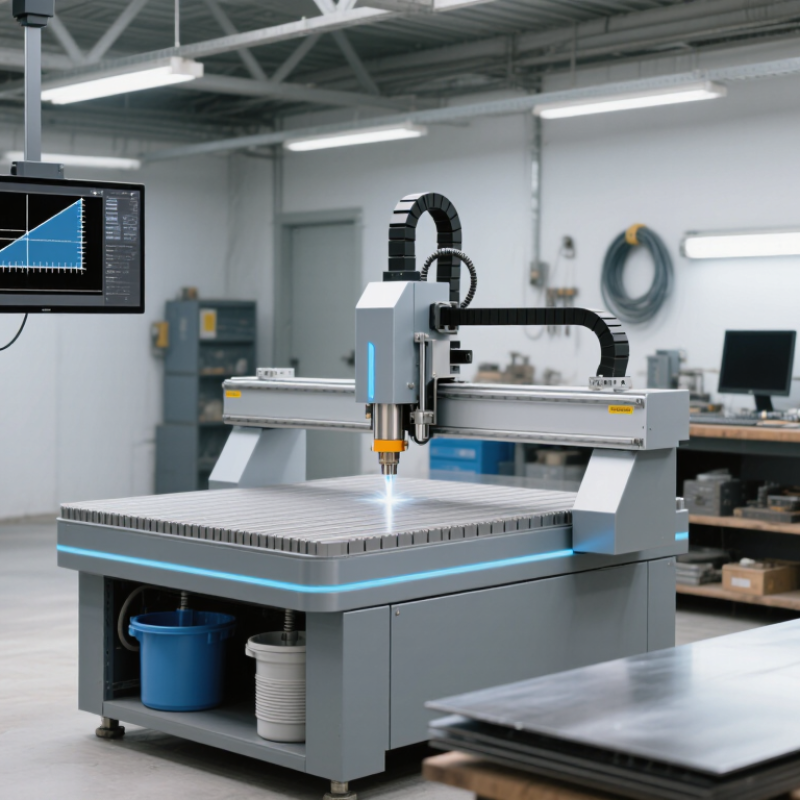
Define Small Plasma Tables by 4×4-Foot Beds and 45–85A Power Ratings
A small plasma table is best defined by its working envelope, not its footprint alone. A 4×4-foot bed provides 16 square feet of cutting area, enough for brackets, panels, and many repair parts. It will not comfortably handle a full 4×8 sheet without repositioning. That sounds obvious, but sheet handling is often the real bottleneck.
A 45–85A power range covers a useful middle ground for light fabrication. The AWS Welding Handbook describes plasma arc cutting as a process whose results depend on current, material, thickness, and cutting speed—not amperage alone.
Treat rated amperage as a guide, not a promise of production speed. On a real job, test cuts reveal more than a brochure: check edge bevel, dross, and whether the torch can keep moving smoothly. Small details matter.
For a compact shop, confirm the table’s usable travel, slat spacing, and extraction arrangement before comparing power ratings. A 4×4 bed can still feel cramped when clamps, a torch mount, or a warped sheet occupy the edges.
The best fit is usually the machine that handles your common material thickness cleanly, rather than the one with the highest rating. There is no perfect spec. A careful test cut may change your mind.
Compare Cut Capacity Using 2026 Thickness, Speed, Kerf, and Accuracy Data
Choosing the best small plasma table in 2026 starts with measurable cut capacity, not advertised amperage. ISO 9013:2017 classifies thermal-cut edges by tolerance, dross, and surface quality. Practical 40–65 amp systems usually cut 6 mm mild steel at 1,500–3,000 mm per minute. At 12 mm, speed often falls to 400–900 mm per minute. Expect 16 mm as a slower severance limit, not a production thickness. That distinction matters.
Real shop data is less tidy. Published 2025 thermal-cutting surveys commonly report kerf widths near 1.0–1.5 mm on thin steel, widening with amperage and poor air pressure. A compact table should hold approximately ±0.1–0.3 mm positional accuracy after calibration. That sounds impressive. It is not guaranteed. Heat distortion, warped sheet, and loose slats can quickly erase that advantage. ISO 9013 also shows why edge squareness deserves attention: a clean top edge may hide a visibly tapered lower edge.
For 2026 comparisons, test three plates: 3 mm, 6 mm, and 12 mm steel. Record pierce delay, cutting speed, kerf, dross, and dimensional error. Use the same air pressure and consumables. Measure a 100 mm square with calipers. I would favor a table that cuts 6 mm steel consistently at 2,000 mm per minute, rather than one claiming extreme thickness. The uncomfortable detail is maintenance. A worn electrode can change the result before the machine appears faulty.
Verify Duty Cycle and Electrical Ratings Under IEC 60974-1 Standards
What Is the Best Small Plasma Table in 2026?
A compact plasma table can cut brackets, panels, and repair parts without taking over a workshop. But a small footprint does not guarantee steady performance. Before comparing cutting speed or bed size, check the machine’s duty cycle and electrical ratings against IEC 60974-1, the standard covering arc-welding equipment requirements. Confirm that the documentation identifies the applicable edition and relevant equipment classification; a vague “compliant” claim is not enough.
Duty cycle describes how long a power source can operate within a stated period at a specified output. Read the rating at the current you expect to use, not just the highest number on the display. For example, a table cutting at higher amperage may need pauses sooner than one running lighter sheet. Note the test conditions, ambient temperature, and rating period. Small details matter.
Check input voltage, frequency, rated input current, and required circuit protection against your actual workshop supply. A mismatch can cause nuisance trips or unstable operation. Ask for test documentation or a clear rating plate, then compare it with the manual. I would still verify the figures with a qualified electrician; specifications can be easy to misread. The best small table is not simply the most powerful one. It is the one whose verified ratings suit your material, workload, and available electrical service.
What Is the Best Small Plasma Table in 2026?
IEC 60974-1 duty-cycle timing reference for comparing plasma power sources
Under IEC 60974-1, a duty-cycle rating is based on a 10-minute period. For example, 40% represents 4 minutes at the rated load followed by 6 minutes of rest. These bars show the time conversion, not test results for any particular machine. Compare each unit’s nameplate duty cycle at its rated current, and verify its rated input voltage and current against your supply before buying.
Calculate Operating Cost from Air Demand, Power Use, and Consumable Life
A small plasma table’s purchase price tells only part of the story. Estimate operating cost per cutting hour: multiply measured machine and compressor kilowatts by your electricity rate, then add consumables used per hour. The U.S. Energy Information Administration reported an average industrial electricity price of about 8.1 cents per kilowatt-hour in 2024. At that rate, a 6 kW cutter running for one hour uses roughly 49 cents of electricity, before compressor power.
Air demand makes the estimate less tidy. Check the table’s required pressure and flow, then measure compressor input power under real cutting conditions; its rated motor size is not the same as continuous draw. The U.S. Department of Energy notes that compressed air can account for around 10% of electricity use in industrial facilities, a reminder that leaks and poor compressor control matter. Small leaks add up. Log actual compressor runtime, too.
Consumable life depends on material, thickness, pierce frequency, air quality, and operator settings. Track nozzle and electrode changes over several jobs, recording arc-on hours rather than shop hours. Divide each replacement set’s cost by its measured cutting life. One short test is misleading. A useful comparison should show electricity, compressed-air energy, and consumables separately, using the same material and cut schedule for every table. Recheck the figures after a month; real shop patterns rarely match a brochure estimate.
What Is the Best Small Plasma Table in 2026? — Calculate Operating Cost from Air Demand, Power Use, and Consumable Life
The best choice depends on material thickness, cutting workload, and available shop air. The figures below compare representative small-table configurations, not specific products. Operating-cost estimates use an electricity rate of $0.15/kWh and include the plasma system and compressor electricity; they exclude labor, maintenance, and material.
| Small-table configuration |
Typical output class |
Compressed-air demand |
Estimated system power while cutting |
Consumable set life* |
Estimated consumable cost per set |
Estimated operating cost per arc-on hour |
Best suited to |
| Compact, light-duty table |
30–45 A |
About 120–170 L/min (4.2–6.0 CFM) at the pressure specified by the cutter |
About 3.0 kW, including compressor electricity |
About 1.5 arc-on hours |
About $2.25 |
$1.95 ($0.45 electricity + $1.50 consumables) |
Thin sheet, occasional projects, and limited shop space |
| General-purpose small table |
45–65 A |
About 170–230 L/min (6.0–8.1 CFM) at the pressure specified by the cutter |
About 3.8 kW, including compressor electricity |
About 1.5 arc-on hours |
About $3.60 |
$2.97 ($0.57 electricity + $2.40 consumables) |
Mixed fabrication with a balance of capacity and running cost |
| Higher-capacity small table |
65–85 A |
About 230–300 L/min (8.1–10.6 CFM) at the pressure specified by the cutter |
About 5.0 kW, including compressor electricity |
About 1.5 arc-on hours |
About $5.70 |
$4.55 ($0.75 electricity + $3.80 consumables) |
Frequent cutting of thicker material when the shop has adequate air and electrical supply |
How the estimates are calculated: Electricity cost = system kW × $0.15/kWh. Consumable cost per hour = estimated set cost ÷ estimated arc-on life. The air-demand ranges are indicative; use the cutting system’s specified inlet pressure and flow requirement when sizing a compressor.
Important: Consumable life varies substantially with material, cut quality settings, piercing frequency, torch height, air cleanliness, and operator practice. Treat these values as planning estimates and compare them with measured shop usage and current local consumable prices before purchasing.
Rank Safety and Workflow Features Against OSHA, UL 508A, THC, and CAD/CAM Criteria
What Is the Best Small Plasma Table in 2026?
The best small plasma table is not simply the fastest cutting machine. It should make safe, repeatable work easier. A guarded cutting area, clear emergency stop, reliable grounding, and controlled fume extraction deserve close inspection. OSHA guidance can help evaluate workplace hazards, but it does not certify a complete machine. UL 508A is mainly relevant to industrial control panels and their construction. Ask for wiring diagrams, component ratings, and inspection records. Missing paperwork is a warning sign.
Torch height control, or THC, strongly affects cut quality. It should sense plate height, respond smoothly, and avoid diving into warped steel. Check whether THC settings can be adjusted for different materials. CAD/CAM performance matters just as much. The software should handle common file formats, kerf compensation, lead-ins, nesting, and a suitable post processor. A clean preview can prevent an expensive mistake. Still, software claims can sound better than real shop results.
Tips: Test a sample file before purchase. Measure pierce delay, edge bevel, slag, and small-hole accuracy. Keep the test material similar to your daily work. Confirm that the table has practical cable routing and accessible filters. Review maintenance steps with the operator, not only the salesperson. I would not call one model “best” without checking noise, dust control, service access, and operator training. Some compact designs save floor space but sacrifice workspace around the plate. That trade-off is easy to overlook.