China Top 10 Plasma Table Manufacturers for Global Buyers
Global steel demand remains a useful signal for metalworking equipment buyers. The World Steel Association’s October 2024 Short Range Outlook projected demand of 1.751 billion tonnes in 2024 and 1.772 billion tonnes in 2025. These figures do not measure Plasma Table sales. They do, however, show the scale of the material-processing sector that supports fabrication shops worldwide.
A capable table must do more than move a torch. Buyers should examine cut accuracy, gantry rigidity, controller usability, extraction provisions, service access, and spare-part availability. Small details matter: a loose slat can affect support, while unclear control software can slow a new operator. Jim Colt, a veteran plasma-cutting specialist associated with Hypertherm, is often cited for practical shop-floor guidance. The buying principle here is an editorial paraphrase, not a verbatim quotation: “Judge a cutting system by repeatable results, not speed claims alone.” That distinction matters. Product specifications are not independent test results, and performance depends on the torch, material, settings, maintenance, and operator.
This guide compares ten China-based manufacturers for global buyers. It focuses on verifiable product information, configuration options, quality documentation, communication, and after-sales support. Readers should confirm specifications and request sample-cut evidence before placing an order. A polished brochure is not proof. The right Plasma Table is the one that fits the work, the workshop, and the support the supplier can actually provide.
Plasma Table Fundamentals: CNC Motion, Torch Height Control, and Plasma Power
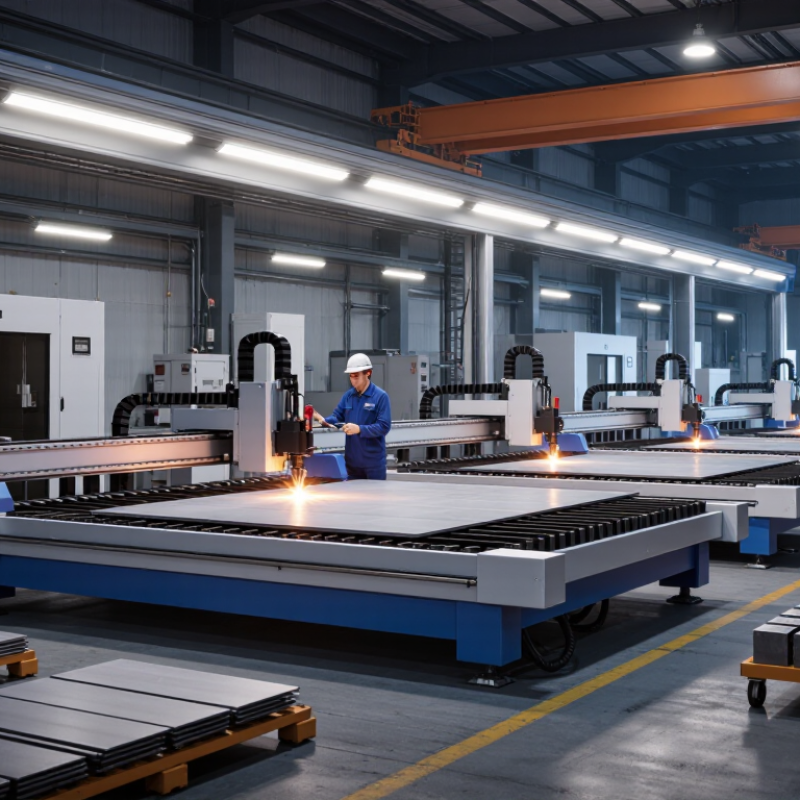
A plasma table depends on three systems working together: CNC motion, torch height control, and plasma power. The motion system guides the torch along programmed X and Y paths, while the gantry must stay steady during acceleration and sharp corners. On a test cut, watch for rounded corners, uneven edges, or vibration. These clues can point to motion settings or mechanical issues, not just torch problems. Small details matter.
Torch height control helps maintain the distance between the nozzle and metal as a sheet rises or bends. Many systems use initial height sensing, then adjust torch height using arc voltage during cutting. Correct settings can improve cut consistency and reduce nozzle wear. Plasma power should match the material and thickness, but the highest rating alone does not guarantee a better result. Check the rated cutting capacity, duty cycle, and availability of suitable consumables. For example, a table cutting thin steel needs stable low-speed motion as much as adequate power. Specs can look convincing on paper. I would still ask for a sample cut using comparable material, and inspect the edge for dross and bevel. Even then, setup and operator skill affect the result. One test is not the whole story.
Plasma Table Fundamentals: CNC Motion, Torch Height Control, and Plasma Power
Illustrative plasma arc power calculated at a constant 120 V using Power (kW) = Voltage (V) × Current (A) ÷ 1,000.
The chart isolates the relationship between current and calculated arc power; actual arc voltage varies with the plasma system, consumables, material, and cutting conditions. CNC motion controls the programmed path, while torch height control adjusts torch-to-work distance, commonly using arc voltage as a feedback signal.
How to Evaluate China’s Top 10 Manufacturers by Build, Support, and Export Experience
China Top 10 Plasma Table Manufacturers for Global Buyers
How to Evaluate China’s Top 10 Manufacturers by Build, Support, and Export Experience
For global buyers, a plasma table should prove its value on the shop floor, not just in a catalogue. The World Steel Association reported 1,888.2 million tonnes of crude steel production worldwide in 2023. This signals the scale of metalworking, not plasma-table demand. Still, it makes reliable, repeatable cutting an important purchasing question. Compare frame rigidity, gantry alignment, torch-height control, and stated duty cycle. Ask each supplier to cut the same material thickness and share close-up edge samples. Check the cut face. A glossy brochure proves little.
Support and export experience deserve equal scrutiny. Request a parts list, clear operating instructions, commissioning options, and realistic response times. Ask for references from buyers in your region, then confirm spare-parts lead times in writing. For export readiness, review crate protection, packing details, and document accuracy. A supplier’s past shipments are useful evidence, but they do not guarantee smooth service. Ask how technical questions are handled after installation. Small gaps here can become costly delays.
Tips: Send one test drawing and material specification to every shortlisted manufacturer. Compare the resulting cut quality, consumable use, and quoted delivery terms. Ask for a live machine demonstration. Keep an open mind: remote demonstrations help, but they cannot fully show long-term build quality.
China Top 10 Plasma Table Manufacturers for Global Buyers: How to Evaluate Build, Support, and Export Experience
Use this evidence-based checklist to compare shortlisted manufacturers. The criteria below are buyer evaluation points—not verified rankings or claims about specific companies.
| No. | Evaluation Dimension | What to Check | Evidence to Request | Buyer Assessment |
|---|---|---|---|---|
| 1 | Frame and gantry construction | Check frame material, welded or bolted construction, gantry design, machining quality, and the stated working area. | Model-specific drawings, photographs of the actual machine, working-area dimensions, and a description of frame fabrication and assembly. | Compare construction details with the intended workload; do not judge by appearance alone. |
| 2 | Motion system | Review the drive arrangement, guides, motors, control system, positioning specifications, and availability of replacement components. | Component list, motion-system specifications, machine accuracy claims with test conditions, and a demonstration video or acceptance test. | Confirm that specifications apply to the quoted model and are documented in writing. |
| 3 | Cutting capacity and compatibility | Verify the recommended material types and thickness range, power-source compatibility, torch interface, and consumable requirements. | Model-specific cutting charts, sample-cut results, compatible power-source details, and a list of required consumables. | Match the documented capacity to your material, thickness, and production needs. |
| 4 | Table design and fume management | Determine whether the table uses a water bed or downdraft arrangement, and check how the system is configured for the buyer’s facility. | Table layout, installation requirements, ventilation or extraction details, and applicable local compliance information. | Confirm site requirements before purchase; extraction needs depend on the installation and local rules. |
| 5 | Quality management and inspection | Ask how incoming parts, assembly, wiring, and final machine performance are inspected. | Inspection checklist, factory acceptance test procedure, sample test report, and any quality-system certificate with its scope and validity details. | Check that certificates are current and cover the relevant manufacturing activities; a certificate alone does not prove machine performance. |
| 6 | Software, training, and documentation | Review included software, file-format compatibility, operating manuals, electrical documentation, and operator training arrangements. | Software feature list, sample manual, supported file formats, training agenda, and details of any license or subscription terms. | Confirm language, licensing, and training provisions in the quotation or contract. |
| 7 | Warranty and after-sales support | Clarify warranty duration, covered parts and labor, exclusions, remote support, and the process for service requests. | Written warranty terms, support contact channels, stated service hours, response targets if offered, and escalation procedure. | Compare written commitments; response times and warranty coverage are supplier-specific, not universal standards. |
| 8 | Spare parts and maintenance | Identify wear parts and service items, their ordering process, and the maintenance tasks expected from the operator. | Recommended spare-parts list, part numbers, maintenance schedule, and quoted lead times or availability terms. | Assess whether critical items can be sourced and maintained within your operating plan. |
| 9 | Export packing and logistics | Check packing method, shipment dimensions and weight, loading arrangements, and the proposed delivery term. | Packing specification, package dimensions and gross weight, loading photos where available, and a quotation stating the applicable delivery term. | Confirm that responsibilities, destination costs, and shipment arrangements are clear in the purchase documents. |
| 10 | Export documentation and references | Ask whether the supplier has experience preparing documents for the destination market and can provide relevant customer references. | Sample commercial invoice and packing list with sensitive details removed; shipping document examples where available; references for comparable installations. | Document requirements vary by destination and transaction; verify required documents with your customs broker or import authority. |
Comparison method: Apply the same questions to every shortlisted supplier, record evidence rather than verbal assurances, and compare only specifications and commitments confirmed for the exact model and order.
Technical Benchmarks: 30–400 A Power Sources, Cutting Capacity, and Table Size
China’s leading plasma table manufacturers should be compared by working specifications, not amperage alone. Power sources commonly range from 30 to 400 A, but the right output depends on material, thickness, torch setup, and duty cycle. At the lower end, a system may suit thin sheet and detailed parts. Higher amperage can support thicker plate, though cutting speed and edge quality still matter. Check both recommended and maximum cutting capacity. They are not the same. A maximum rating may describe a slower cut with more edge cleanup.
Table dimensions determine what can be loaded and cut in one setup. A 1,500 × 3,000 mm bed, for example, suits many standard sheet formats, while larger panels need more usable travel and loading clearance. Confirm the cutting area, not just the machine’s outer footprint. Also inspect gantry clearance, slat spacing, and how easily the bed handles scrap. These details are easy to overlook. In a technical review, ask for cut samples at your actual material thickness and request the stated duty cycle behind the amperage rating. Published figures can look precise; real production conditions are less tidy. A little uncertainty should be acknowledged, not hidden.
Cut Quality and Safety: ISO 9013:2017 Quality Ranges 1–5 and CE Requirements
For global buyers comparing plasma tables, ISO 9013:2017 offers a practical way to discuss cut quality. The standard classifies thermal cuts into five quality ranges, with Range 1 representing the tightest tolerances and Range 5 the broadest. It evaluates features including perpendicularity or angularity tolerance and mean profile height. These are measurable results, not promises based on a machine’s price or appearance.
The standard’s tables make clear that acceptable tolerances depend on material thickness and the selected quality range. Ask suppliers for sample cuts made on the plate thickness you actually use. Check the edge with a square, inspect the bevel, and look for drag lines or heavy dross. Small details matter. A polished sample can still hide inconsistent results across a full sheet. This is why quoting ISO 9013:2017, rather than simply claiming “high precision,” makes comparisons more useful.
Cut quality is only one part of procurement. European Commission guidance on CE marking requires manufacturers to assess applicable safety requirements, prepare technical documentation, provide instructions, and issue an EU Declaration of Conformity. CE marking does not certify a particular ISO 9013 quality range. Buyers should review the declaration and safety documentation, including safeguards around moving gantries, electrical systems, and fume extraction. Documentation can look complete, yet the real installation may differ; verify the delivered configuration before acceptance.
Global Buyer Checklist: Consumables, Warranty, Lead Time, and Total Cost of Ownership
China Top 10 Plasma Table Manufacturers for Global Buyers
A low machine price can hide expensive consumables. Ask suppliers for electrode and nozzle life at your intended amperage, material, and cutting speed. Request a sample cost-per-meter calculation, then compare it with your own expected shift hours. Keep common spares on hand. A delayed nozzle can idle an entire job. Warranty terms also deserve close reading: confirm coverage for the torch, drive components, controller, and on-site labor. Some buyers focus on the table frame and overlook service response time.
Lead time should include more than factory assembly. Confirm production, inspection, export packing, freight, installation, and operator training separately. McKinsey’s predictive-maintenance research cites potential industrial benefits of 10–40% lower maintenance costs and 30–50% less downtime. These are broad benchmarks, not plasma-table guarantees. Still, they show why service access and parts availability affect total cost of ownership. Add extraction equipment, software, power use, consumables, and training to the purchase price. Then ask for written assumptions behind every estimate. A spreadsheet helps. It can still miss local labor costs or unexpected setup delays.
Related Posts
-
China Top 10 Best CNC Plasma Table Manufacturers
-
How to Choose the Best CNC Plasma Cutting Table for Your Needs?
-
What Are the Top 10 Types of CNC Plasma Tables?
-
What Is the Best Plasma Cutting Table in 2026?
-
How to Choose the Best CNC Plasma Table?
-
Understanding the Advantages of the Best CNC Plasma Table for Your Manufacturing Needs